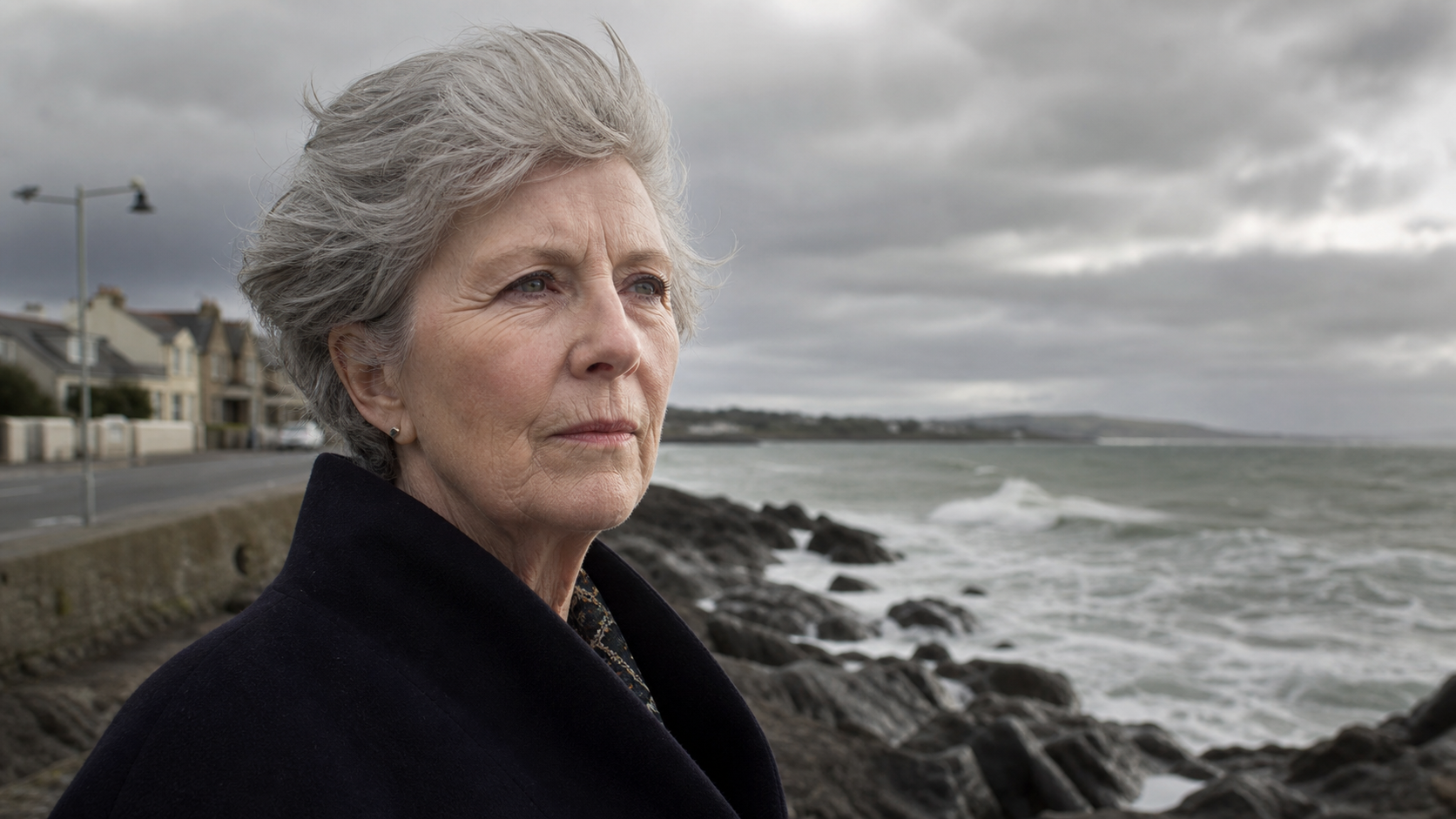
Olwen Fouéré Says We Are in the 'Last Days of the Anthropocene' as Irish Actor Reflects on Art and Climate Crisis
Veteran Irish actor Olwen Fouéré has declared that she 'firmly believes' humanity is living through the 'last days of the Anthropocene' in a wide-ranging interview that touches on her extraordinary career, her relationship with language and performance, and her conviction that art has a responsibility to engage with the existential challenges facing the planet — a statement of artistic and philosophical purpose from one of the most distinctive and uncompromising performers in Irish cultural life.
Background
Olwen Fouéré is one of the most respected and distinctive actors in Irish theatre and film, with a career spanning more than four decades that has taken her from the stages of the Abbey Theatre and the Gate to international productions and major film roles. Born in Brittany to a Breton father and an Irish mother, she grew up between France and Ireland and has always occupied a liminal cultural space — neither entirely Irish nor entirely French, but deeply connected to both traditions.
Fouéré's work is characterised by an intensity and a commitment to the text that sets her apart from many of her contemporaries. She has been associated with some of the most challenging and innovative productions in Irish theatre, including her celebrated solo performance in riverrun — a theatrical adaptation of the final chapter of James Joyce's Finnegans Wake — which toured internationally and was widely regarded as one of the most remarkable theatrical achievements of recent years.
Her film career has also been distinguished, with roles in major productions including The Northman, in which she played the role of Queen Gudrún, and various other international productions that have brought her work to a global audience. She has spoken in previous interviews about the relationship between her stage and screen work, and about the particular demands of each medium.
Key Developments
In the interview published this weekend, Fouéré spoke with characteristic directness about her belief that humanity is approaching a civilisational crisis. Her reference to the 'last days of the Anthropocene' — the geological epoch defined by human impact on the planet — is a statement about the urgency of the climate crisis and about the responsibility of artists to engage with it. For Fouéré, art is not a refuge from the world's problems but a means of confronting them, and her work has consistently reflected that conviction.
She also reflected on her relationship with language — a subject that has been central to her work throughout her career. As a performer who works in English, French, and Irish, and who has engaged deeply with the linguistic experiments of Joyce and Beckett, Fouéré has a particular sensitivity to the ways in which language shapes and limits our understanding of the world. Her comments about the Anthropocene are themselves a form of linguistic intervention — a choice of words that carries a specific scientific and philosophical weight.
The interview also touched on her current projects, which include several theatrical and film productions that are in various stages of development. Fouéré has been in demand internationally as a performer and as a collaborator, and her schedule for the coming year reflects the breadth of her artistic interests and the range of her professional relationships.
Why It Matters
Fouéré's comments matter because they come from an artist who has spent her career engaging seriously with the most difficult questions of human existence. Her conviction that we are living through a civilisational crisis is not a casual observation — it is the considered view of someone who has spent decades thinking about the relationship between art, language, and the human condition. When an artist of her stature and seriousness makes a statement of this kind, it deserves to be taken seriously.
The climate crisis has been a subject of increasing engagement for Irish artists in recent years, reflecting the broader shift in public consciousness about the urgency of the issue. Ireland's own experience of climate-related events — the flooding in Killarney this week, the hosepipe bans in parts of the country, the changing patterns of weather that are affecting agriculture and tourism — has made the issue more immediate and more personal for many people.
For the Irish arts community, Fouéré's willingness to speak directly about the climate crisis is a reminder that art has always been one of the primary means by which societies process and respond to existential challenges. The great works of Irish literature — from Yeats's apocalyptic visions to Beckett's explorations of endurance — have always engaged with the darkest aspects of human experience, and the climate crisis is the defining dark aspect of our time.
Local Impact
In Ireland, Fouéré's work has had a profound influence on the development of contemporary theatre. Her willingness to take on challenging material — from Joyce to Beckett to original new work — has set a standard for artistic ambition that has inspired generations of younger performers and directors. The Abbey Theatre, where she has performed on numerous occasions, has benefited from her association, and her international reputation has helped to raise the profile of Irish theatre globally.
Her comments about the Anthropocene will resonate particularly strongly in the context of the current summer, which has seen extreme weather events across Ireland — from the Killarney floods to the hosepipe bans in the east — that are consistent with the patterns of climate change that scientists have been predicting for decades. For Irish audiences who are experiencing these changes in their daily lives, Fouéré's artistic engagement with the crisis provides a framework for understanding what is happening and for thinking about how to respond.
What's Next
Fouéré's upcoming projects include several theatrical productions that are expected to premiere in the coming months, as well as film work that is currently in post-production. She has indicated that her artistic focus in the coming period will be on work that engages directly with the climate crisis and with the broader questions of human survival and adaptation that it raises. The Irish theatre community will be watching her next projects with the same attention and respect that has always greeted her work, and the international arts world will be equally interested in what one of Ireland's most distinctive artistic voices has to say about the defining challenge of our time.