A Landmark Report on Drug Policy Reform
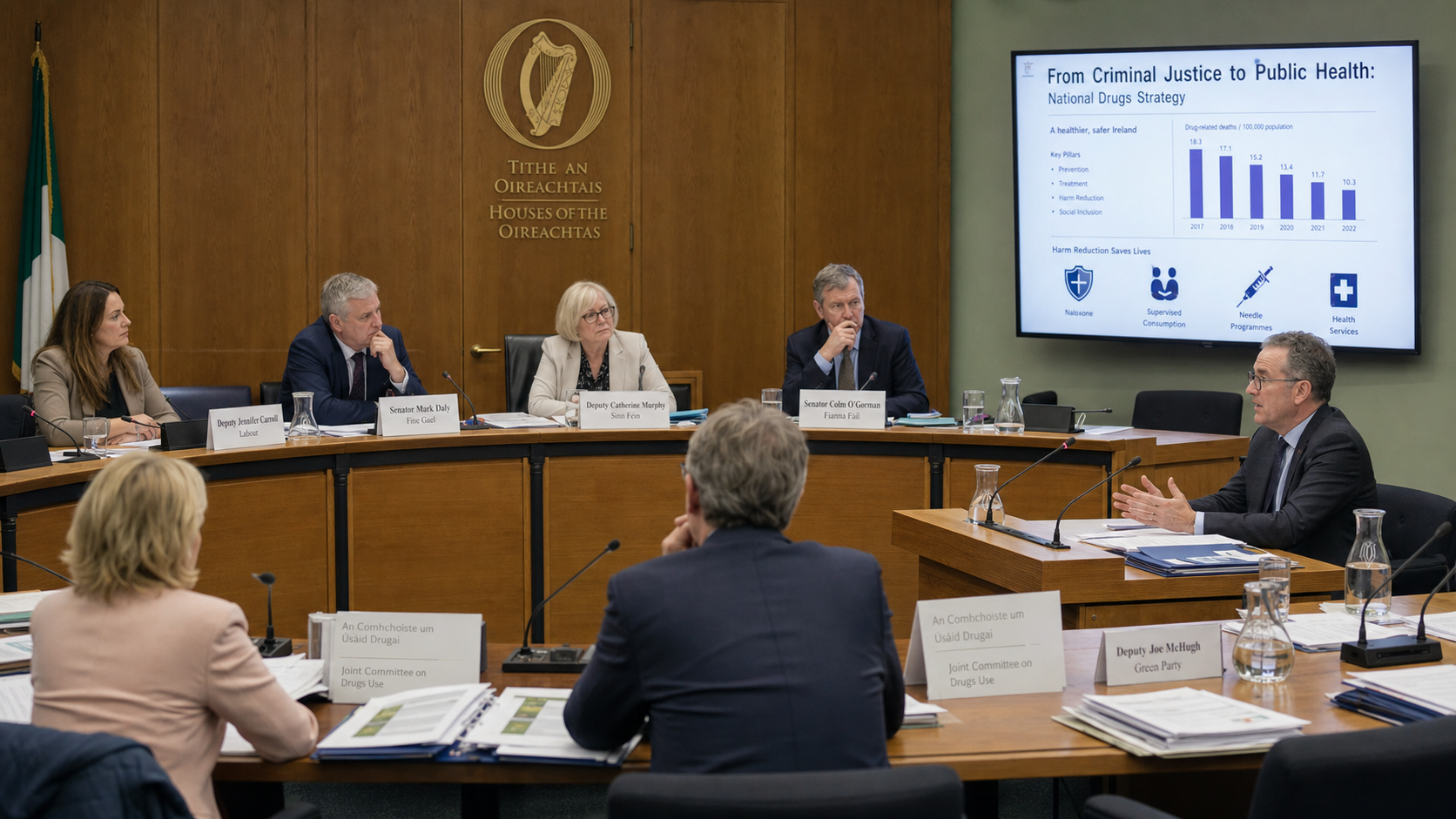
The Oireachtas Joint Committee on Drugs Use has published what it describes as the most comprehensive review of Irish drug policy in a generation, recommending a fundamental shift away from criminal sanctions and towards a public health model centred on treatment, harm reduction, and social support. The report, published on Wednesday, calls on the Government to implement a programme of reform that would see personal drug possession treated as a health matter rather than a criminal offence.
The committee, which spent eighteen months taking evidence from medical professionals, addiction specialists, community workers, people with lived experience of drug use, and international experts, concluded that Ireland's current approach to drug policy is failing on multiple fronts. It is not reducing drug use, it is not protecting communities, and it is not helping people who are struggling with addiction to access the support they need.
The Case for a Public Health Approach
At the heart of the committee's recommendations is a call to decriminalise the possession of drugs for personal use. Under the proposed model, people found in possession of small quantities of drugs would not face criminal prosecution but would instead be referred to health services and offered support. The committee argues that this approach, which has been implemented with considerable success in Portugal and a number of other European countries, would reduce the stigma associated with drug use and make it easier for people to seek help.
The report draws extensively on the Portuguese experience, where decriminalisation was introduced in 2001. Evidence presented to the committee showed that in the years following decriminalisation, Portugal saw significant reductions in drug-related deaths, HIV infections among people who inject drugs, and drug-related crime. The committee acknowledges that the Portuguese model involved not just decriminalisation but a substantial investment in treatment and social support services, and it recommends that Ireland take a similarly comprehensive approach.
Medical professionals who gave evidence to the committee were broadly supportive of the public health approach. The Irish College of General Practitioners told the committee that criminalisation was a significant barrier to people seeking help for drug problems, and that a health-centred approach would make it easier for GPs and other healthcare providers to engage with patients who use drugs. The College of Psychiatrists of Ireland made similar arguments, emphasising the importance of treating addiction as a health condition rather than a moral failing.
Community Voices and Lived Experience
One of the distinctive features of the committee's work was its commitment to hearing from people with direct experience of drug use and addiction. Community organisations from areas most affected by drug-related harm gave evidence about the impact of current policies on their communities, and individuals who had experienced addiction and recovery shared their personal stories.
A recurring theme in this testimony was the damage done by criminalisation — not just to individuals who received criminal records for drug possession, but to families and communities. Several witnesses described how a criminal conviction for drug possession had made it harder to find employment, access housing, or travel abroad, compounding the difficulties already associated with addiction and recovery.
Community workers from areas with high levels of drug use told the committee that the current approach was not working and that a shift to a public health model was urgently needed. They described the toll that drug-related harm was taking on their communities and argued that investment in treatment, housing, and social support would do far more to address the problem than criminal sanctions.
Government Response and Next Steps
The Government's response to the committee's report has been cautious. The Minister with responsibility for drug policy welcomed the report and said it would be carefully considered, but stopped short of committing to implement its recommendations. The Minister acknowledged that the current approach needed to evolve but said that any changes would need to be carefully managed and would require broad political and public support.
Opposition parties have been more enthusiastic. Several TDs and Senators who served on the committee have called on the Government to move quickly to implement the recommendations, arguing that the evidence base for reform is now overwhelming. They point to the growing consensus among medical and public health professionals that decriminalisation is the right approach and argue that further delay will cost lives.
Harm reduction organisations have welcomed the report as a significant step forward. The Ana Liffey Drug Project, one of Ireland's leading harm reduction services, said the committee's recommendations reflected the reality of what works in addressing drug-related harm and called on the Government to act without delay. The organisation said that every year of inaction meant more preventable deaths and more families devastated by addiction.
The committee has recommended that the Government publish a formal response to the report within six months and that implementation of the key recommendations begin within twelve months. It has also called for the establishment of a dedicated oversight body to monitor progress on drug policy reform and to ensure that the public health approach is implemented consistently across the country.