Oberstown Staffing Dispute Resolved After Late-Night WRC Talks as Fórsa Union Recommends Members Accept Deal
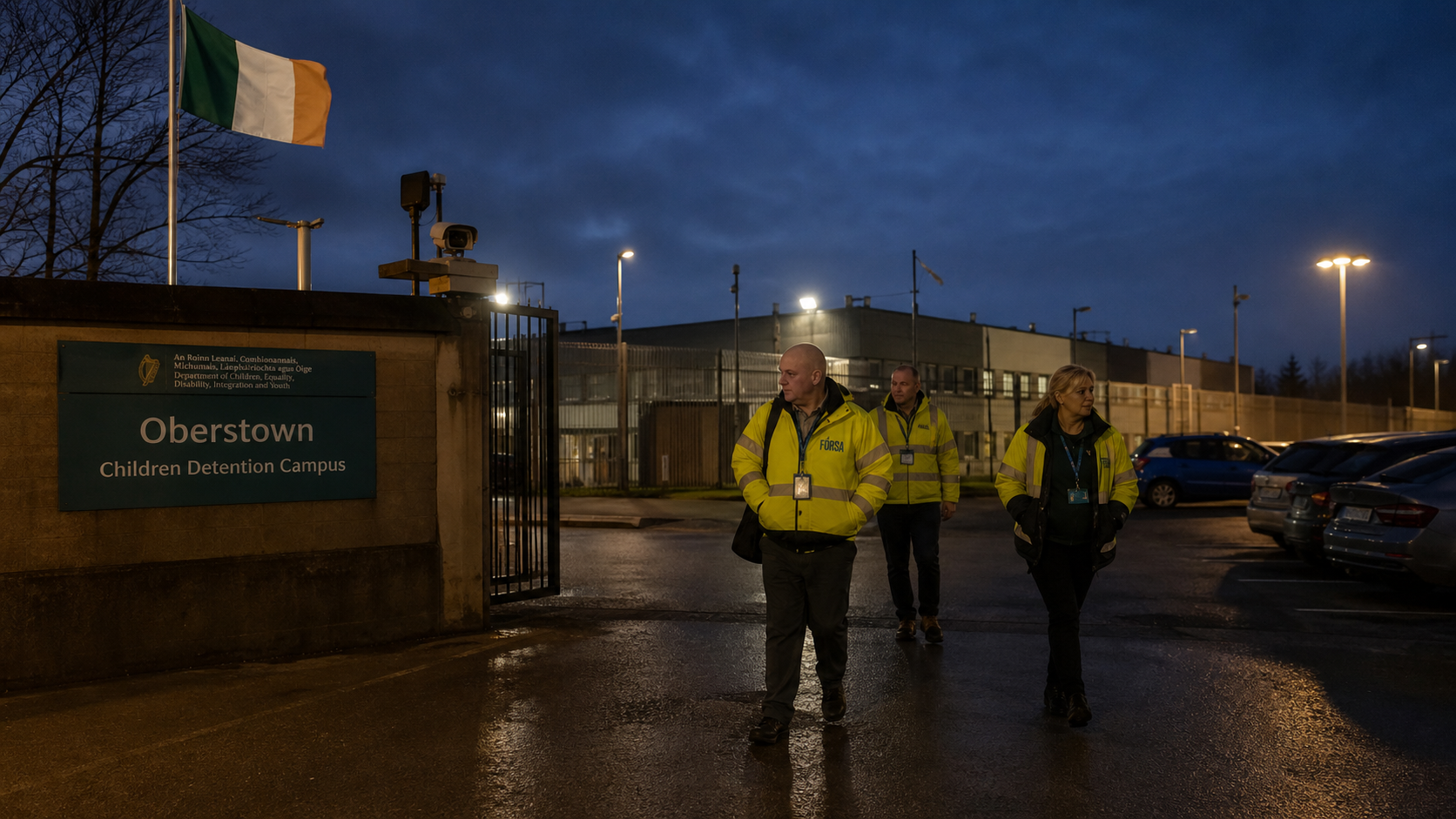
A protracted industrial dispute at the Oberstown Children Detention Campus in Co Kildare has been resolved following talks at the Workplace Relations Commission that concluded shortly after midnight on August 28th, with the Fórsa trade union recommending that its members accept a deal providing a structured, time-bound roadmap to address safe staffing levels, and pausing all planned industrial action pending a member ballot.
Background
The Oberstown Children Detention Campus, located near Lusk in north Co Dublin, is Ireland's only dedicated detention facility for young people under the age of 18. It houses young people who have been remanded in custody or sentenced by the courts, and its staff — who work in a demanding and often challenging environment — have been raising concerns about safe staffing levels for several years. The dispute that came to a head in the summer of 2026 had its roots in a fundamental disagreement between staff and management about the minimum number of frontline workers required to safely operate the campus.
Staff members had reported that numerous colleagues had suffered injuries on the job, leading to long-term sick leave or early retirement, and that the current staffing levels were creating foreseeable risks for both the young people in detention and the employees working with them. The Fórsa trade union, which represents the majority of frontline staff at Oberstown, had been seeking a binding commitment from management and the Department of Children, Disability and Equality to address these concerns in a concrete and measurable way.
The dispute escalated through the summer, with staff engaging in work-to-rule measures from June 25th before moving to a series of weekly work stoppages. A 12-hour strike took place on August 25th, and a 48-hour strike had been scheduled for the following week when the breakthrough at the WRC was announced. Earlier attempts to reach agreement at the WRC in June and July, which included attendance by the Department of Children, had been unsuccessful, making the August resolution all the more significant.
Key Developments
Representatives from Fórsa and Oberstown management met at the WRC on August 27th, with talks concluding shortly after midnight. The parties successfully negotiated what Fórsa national secretary Hazel Nolan described as a "clear roadmap" to address the remaining staffing issues in a time-bound and structured manner. Nolan credited the breakthrough to a demonstration of political will that had been absent from earlier rounds of negotiations, suggesting that the escalation of industrial action had been necessary to bring management and the Department to the table with the seriousness the situation demanded.
Oberstown management welcomed the progress made at the WRC, noting that the campus had taken a proactive approach to recruitment over the preceding 12 months, adding 23 frontline staff and recording a 29% reduction in campus incidents between 2025 and 2026. The Department of Children had previously allocated €2.2 million in additional funding in Budget 2026 to support staffing increases, though staff representatives argued that this investment had not translated into the concrete improvements in working conditions that were needed.
The Fórsa union has recommended that its members vote in favour of the new proposals during a 24-hour ballot. Subject to the outcome of that ballot, all planned industrial action — including the 48-hour strike that had been scheduled for the following week — has been paused. The union has indicated that it will monitor implementation of the roadmap closely and will not hesitate to return to industrial action if the commitments made at the WRC are not honoured.
Why It Matters
The Oberstown dispute highlights the particular challenges of managing a secure residential facility for young people in a context of chronic staffing pressures across the public sector. Unlike adult prisons, where staffing disputes have a long history and established mechanisms for resolution, Oberstown operates in a more specialised environment where the welfare of vulnerable young people is directly affected by the quality and continuity of staffing. The resolution of the dispute is therefore welcome not only for the staff involved but for the young people in the campus's care, whose rehabilitation and welfare depend on a stable and adequately resourced staff team.
The case also illustrates the broader tensions in the Irish public sector between the government's desire to control staffing costs and the operational realities facing frontline services. The Department of Children's initial reluctance to engage substantively with the union's concerns, despite the evidence of staff injuries and the escalating industrial action, reflects a pattern that has been repeated across multiple public sector disputes in recent years.
Local Impact
For the young people detained at Oberstown, the resolution of the dispute brings a measure of stability to an environment that had been disrupted by the industrial action. The campus serves young people from across the Republic, with residents drawn from Dublin, Cork, Galway, Limerick, and other regions. The HSE's Child and Adolescent Mental Health Services, which provides support to young people at Oberstown, had expressed concern about the impact of the dispute on the continuity of care, and the resolution will allow those services to resume normal operations.
What's Next
The Fórsa member ballot on the proposed deal is expected to take place within the next 24 hours. If members vote to accept, the roadmap for addressing staffing levels will be implemented over a defined timeframe, with regular reviews to assess progress. The Department of Children has indicated it will engage constructively with the implementation process. If members vote to reject the deal, further industrial action is likely, and the parties would return to the WRC for additional negotiations.