Northern Ireland's Health Service Faces Decade of Decline as Hospital Beds Fall 10%, Maintenance Backlog Hits £1.6 Billion
Northern Ireland's health service is in a state of sustained, long-term decline, with hospital bed capacity having fallen by 10% over the decade to 2020 — and by more than 20% in Belfast — a maintenance backlog exceeding £1.6 billion hindering modernisation, and a workforce shortage that a 2024 review warned would require 2,488 additional senior doctors by 2026 to avoid crisis, with health trusts regularly cancelling non-urgent operations and staff describing "battlefield" conditions in emergency departments during peak periods.
Background
The crisis in Northern Ireland's health service is not a recent phenomenon — it is the product of decades of underinvestment, political instability, and a failure to implement the recommendations of successive reviews of health service delivery. The Bengoa Report of 2016, which called for a fundamental transformation of how health services are organised and delivered in Northern Ireland, remains largely unimplemented a decade after its publication. The Acute Services Review, the Mental Health Strategy, and numerous other policy documents have set out clear visions for a better health service, but the combination of political dysfunction at Stormont and chronic underfunding has prevented those visions from being realised.
The five health and social care trusts that deliver services across Northern Ireland — the Belfast Trust, the South Eastern Trust, the Southern Trust, the Western Trust, and the Northern Trust — are all operating under severe pressure. Each trust has its own particular challenges, reflecting the different demographics, geographies, and historical patterns of service provision in its area, but all share the common experience of trying to deliver an increasing volume of care with resources that have not kept pace with demand.
The political context is important. Northern Ireland's health service is funded through the block grant from Westminster, and the level of that funding is determined by negotiations between the Stormont Executive and the UK Treasury. The three-year period of Assembly suspension between 2022 and 2024 meant that there was no functioning Executive to make the case for increased health funding, and the consequences of that absence are still being felt in the health service's budget position.
Key Developments
The reduction in hospital bed capacity is one of the most striking indicators of the health service's long-term decline. The loss of 10% of beds across Northern Ireland over the decade to 2020 — and more than 20% in Belfast, where the concentration of acute services means that bed losses have a particularly significant impact — has left the system with insufficient capacity to manage normal levels of demand, let alone the surges that occur during winter or periods of increased illness.
The maintenance backlog of £1.6 billion is a related problem. Northern Ireland's hospital estate includes many buildings that are decades old and in poor physical condition. The failure to invest in maintenance and modernisation has left the estate in a state of deterioration that is both a safety concern and a barrier to the kind of service transformation that the Bengoa Report recommended. It is difficult to redesign services around modern models of care when the physical infrastructure is not fit for purpose.
The workforce shortage is perhaps the most acute challenge. The 2024 review's warning that 2,488 additional senior doctors would be needed by 2026 to avoid crisis was not a prediction of a future problem — it was a description of a problem that was already developing. The shortage of consultants, specialist nurses, and allied health professionals is a direct consequence of years of inadequate pay, poor working conditions, and the failure to plan for the workforce needs of a growing and ageing population.
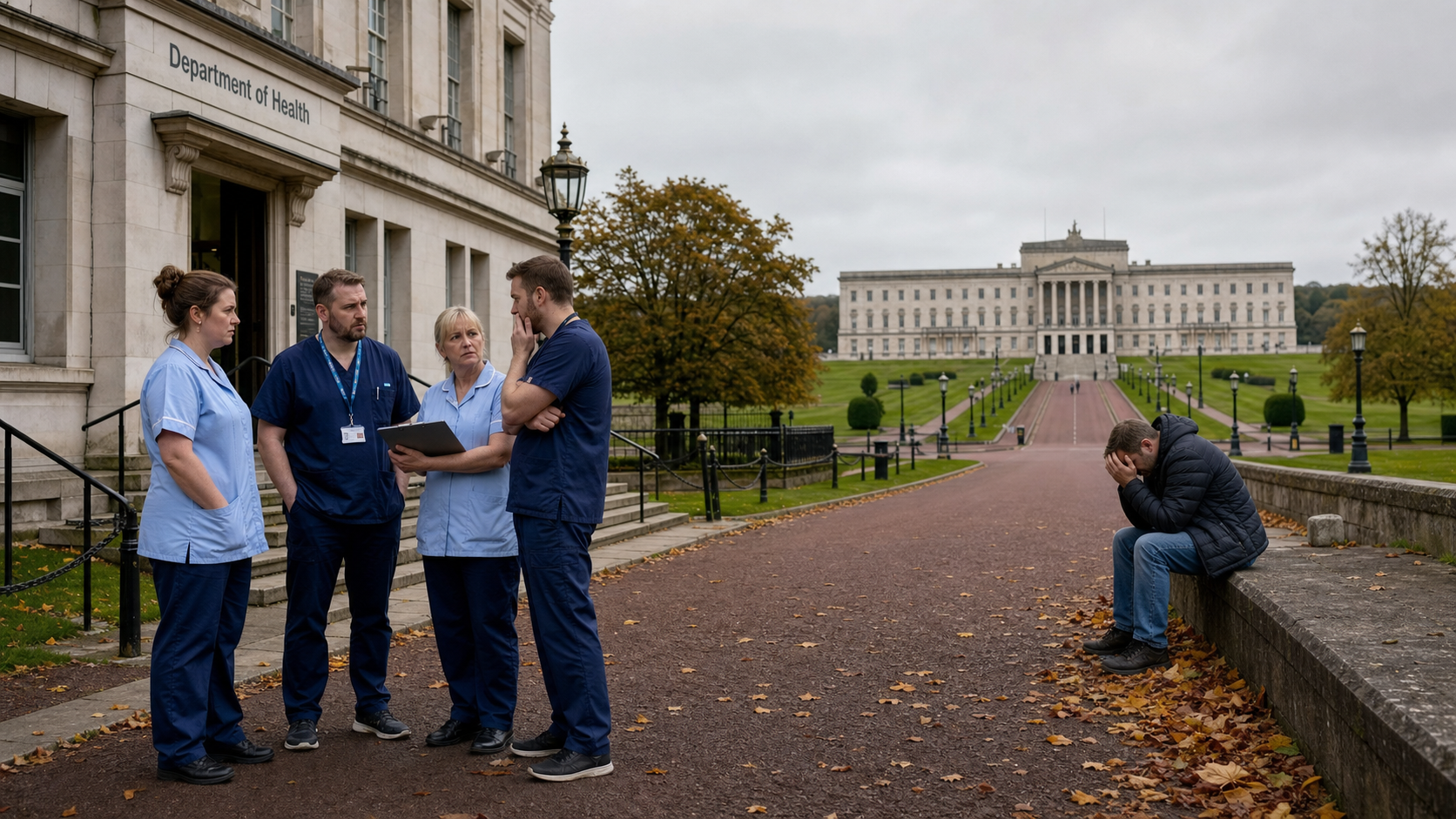
The practical consequences of these systemic failures are felt every day by patients and staff. Health trusts across Northern Ireland are regularly cancelling non-urgent operations and elective procedures to "firefight" — to manage the intense pressure in emergency departments that results from a system that does not have enough capacity to absorb normal levels of demand. Staff who work in those emergency departments have described conditions that they characterise as "battlefield" — a term that conveys both the intensity of the pressure and the sense that they are managing a crisis rather than delivering planned, organised care.
Why It Matters
The state of Northern Ireland's health service matters for every person who lives in the region. Health is not an abstract policy issue — it is the most fundamental of public services, the one that people turn to at the most vulnerable moments of their lives. When that service is in crisis, the consequences are measured in pain, in anxiety, in delayed diagnoses, and in preventable deaths.
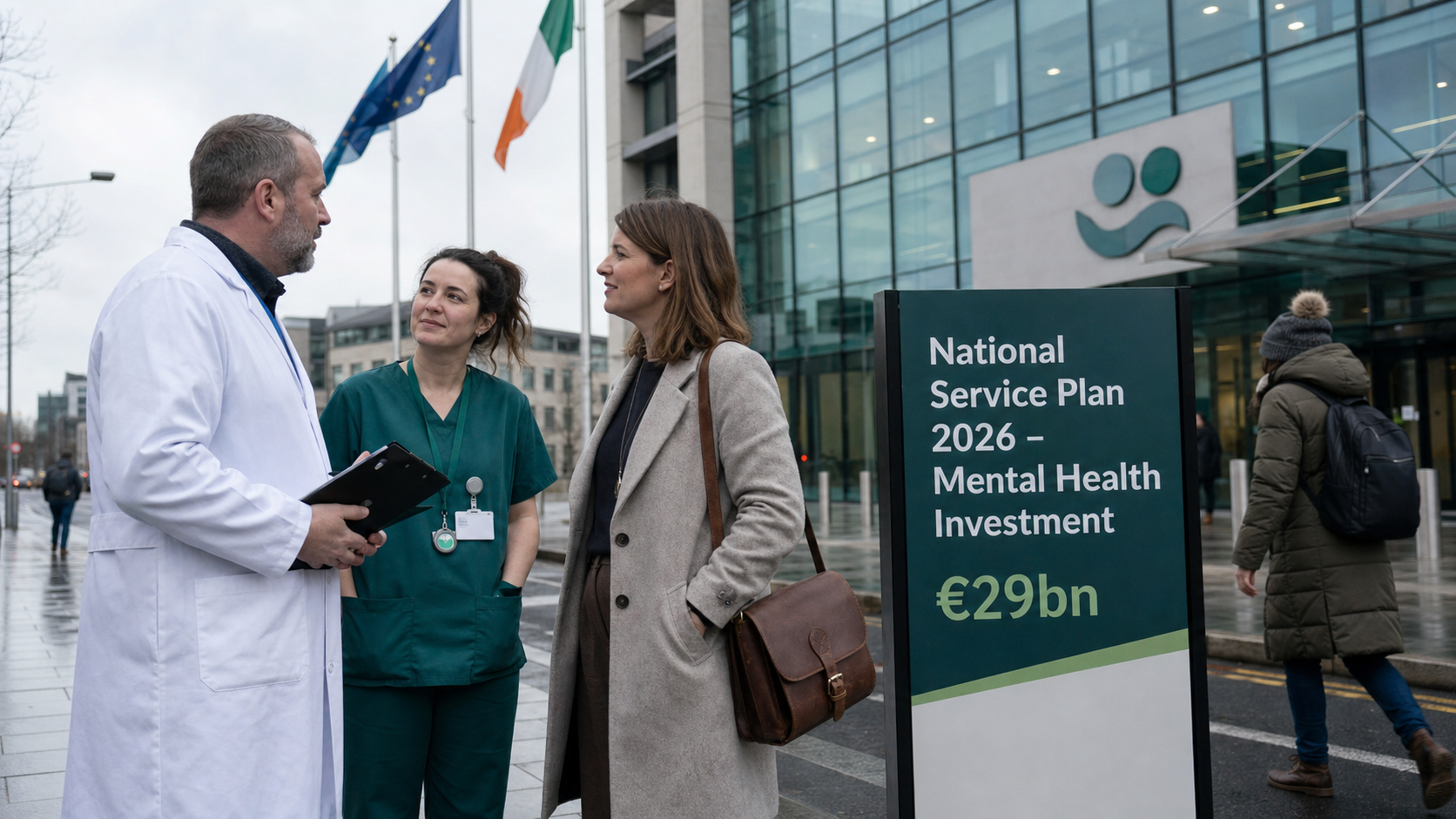
The comparison with the Republic of Ireland is instructive, if uncomfortable. The Republic's health service has its own significant problems — the CAMHS crisis, the HSE's budget difficulties, the persistent waiting lists — but it has been able to respond to those problems with a record €27.4 billion health budget for 2026. Northern Ireland's per-capita health spending is significantly lower, and the structural constraints of the devolution settlement mean that the gap is unlikely to close without a significant increase in the block grant from Westminster.
The cross-border dimension of the health crisis is also significant. The Northern Ireland Planned Healthcare Scheme, which allows patients from the Republic to access private treatment in Northern Ireland, has been used by thousands of patients seeking to bypass HSE waiting lists. But the scheme works in both directions — Northern Ireland patients are also seeking treatment in the Republic, and the cross-border flow of patients reflects the shared nature of the health crisis on the island.
Local Impact
In Belfast, the impact of the health service crisis is felt most acutely at the Royal Victoria Hospital and the Belfast City Hospital, both of which are part of the Belfast Health and Social Care Trust. The Royal Victoria, which serves as the main trauma centre for Northern Ireland, has been operating under sustained pressure, with emergency department waiting times regularly exceeding the four-hour target by significant margins. The Belfast City Hospital, which provides a range of specialist services including cancer care and renal services, has similarly been struggling with capacity constraints.
In the Western Trust area — which covers Derry, Londonderry, and the surrounding counties of Fermanagh and Tyrone — the health service challenges are compounded by the rural geography of the area. Patients in remote parts of Fermanagh or Tyrone face long journeys to access hospital services, and the shortage of GPs in rural areas means that many people are presenting at emergency departments with conditions that could have been managed in primary care if the services had been available.
In the Southern Trust area — covering Armagh, Banbridge, Craigavon, and surrounding areas — the Craigavon Area Hospital has been a particular focus of concern, with the emergency department regularly at or beyond capacity. The trust has been working to develop alternative pathways for patients who do not need emergency care, but the development of those pathways requires investment in community services that has not been forthcoming.
What's Next
The immediate priority for the health service is to secure a finalised Stormont budget that allows the trusts to plan their services and implement the pay awards that are needed to avert further industrial action. Health Minister Mike Nesbitt has indicated he hopes to be in a position to make pay award announcements before the end of the summer, but this is contingent on the budget negotiations with the UK Treasury reaching a conclusion.
In the longer term, the health service needs a credible transformation plan that addresses the structural problems identified in the Bengoa Report and subsequent reviews. That plan needs to be backed by sustained investment — in workforce, in infrastructure, and in community services — and it needs to be implemented with a consistency and determination that has been absent from health policy in Northern Ireland for too long.
The Stormont Assembly's health committee is expected to hold emergency hearings on the waiting list crisis in the coming weeks, and there is growing pressure on the Executive to publish a credible recovery plan with specific targets and timelines. Whether the political will exists to deliver such a plan — and the funding to back it — remains the central question facing Northern Ireland's health service.