Northern Ireland Renewable Energy Hits Record 53% of Generation as Wind Power Drives Green Transition
Northern Ireland has set a new record for renewable electricity generation, with clean energy sources accounting for 53% of total electricity produced in the twelve months to June 2026 — the first time in the history of the data series, which began in 2018, that renewables have consistently outperformed non-renewables on a rolling annual basis. Economy Minister Dr Caoimhe Archibald released the figures on 3 September, describing them as a significant milestone on the path to the region's 2030 target of generating 80% of electricity from renewable sources.
Background
Northern Ireland's renewable energy journey has been shaped by a combination of geography, policy, and investment. The region's Atlantic-facing coastline and elevated terrain make it one of the windiest parts of the British Isles, and wind power has been the primary driver of the renewable transition since the early 2000s. The first commercial wind farms were developed in the 1990s, and the sector has expanded steadily since, supported by successive rounds of government incentives and falling technology costs.
The policy framework underpinning the transition is set out in the Northern Ireland Executive's Path to Net Zero Energy strategy, which was published in 2021 and subsequently given statutory force through the Climate Change Act (Northern Ireland) 2022. The Act commits Northern Ireland to achieving net zero greenhouse gas emissions by 2050, with the 80% renewable electricity target for 2030 representing one of the most ambitious interim milestones in the UK.
Progress toward that target has been uneven. The 2022/23 period saw renewable generation reach 50% of gross final electricity consumption — a figure that matched the new record when measured against the same metric. But the 2025/26 data, released this week, shows that the 53% figure represents a genuine step forward, driven by continued investment in wind capacity and a modest but growing contribution from solar and bioenergy.
Key Developments
Of the 8,286 gigawatt hours of electricity generated in Northern Ireland in the twelve months to June 2026, 4,431 GWh — 53% — came from renewable sources. Wind power dominated the renewable mix, contributing 74% of total renewable generation, with bioenergy accounting for 18%, solar for 6%, and landfill gas and hydro/tidal generation making up the remaining 2%.
When measured against gross final electricity consumption — a metric adopted in March 2026 to better reflect total demand, including imports — renewable generation accounted for 50% of the 8,865 GWh consumed. This figure matches the previous record set during the 2022/23 period, reflecting the fact that Northern Ireland remains a net importer of electricity from the Republic of Ireland and Great Britain.
Minister Archibald emphasised that the transition to local renewable generation is essential for reducing Northern Ireland's exposure to volatile fossil fuel markets, which have driven up energy costs for households and businesses in recent years. The minister also acknowledged the challenge of "dispatch down" events, where wind turbines are occasionally disconnected from the grid during periods of low demand to maintain grid stability — a technical constraint that limits the effective contribution of wind power and that will require investment in grid infrastructure and storage to resolve.
Why It Matters
The 53% figure is a genuine achievement, but it also illustrates the scale of the challenge that remains. To reach 80% by 2030, Northern Ireland will need to more than double its current renewable generation capacity in less than four years — a task that will require not only new wind and solar installations but also significant investment in grid infrastructure, interconnection, and energy storage. The Republic of Ireland, which has set a target of 80% renewable electricity by 2030 under its Climate Action Plan, is facing similar challenges, and the two jurisdictions have been exploring opportunities for cross-border cooperation on grid development and storage.
For Northern Ireland businesses, the renewable energy milestone has practical implications. Companies with sustainability commitments are increasingly seeking to source electricity from renewable generators, and the growing share of renewables in the grid mix makes it easier to make credible claims about the carbon footprint of locally produced goods and services. The agri-food sector, which is Northern Ireland's largest industry and a significant energy consumer, has been particularly active in exploring renewable energy options, including on-farm wind and solar installations.
Local Impact
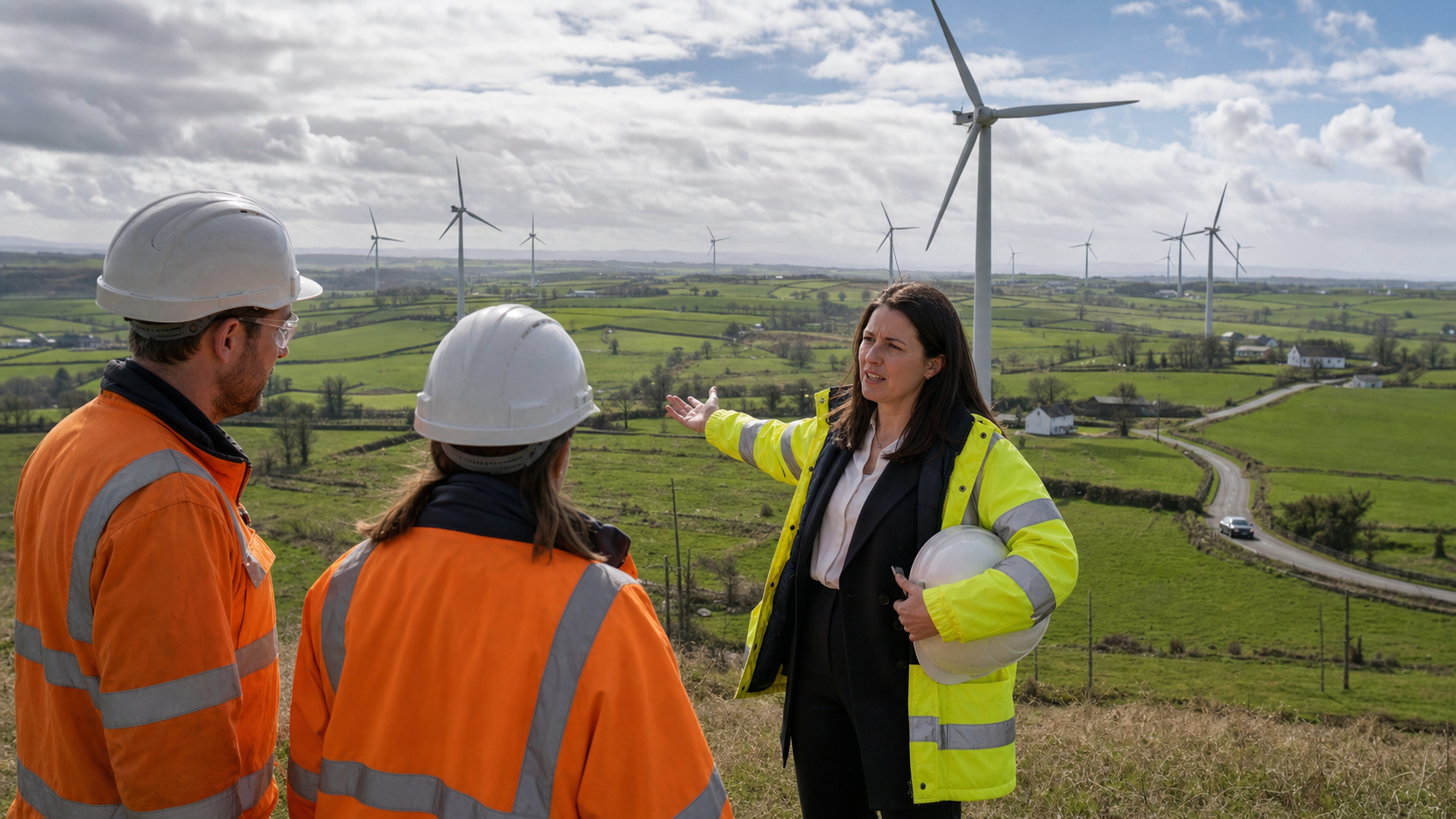
The renewable energy transition is visible across Northern Ireland's landscape, from the wind farms on the Antrim plateau and the Sperrins to the solar panels appearing on farm buildings and commercial rooftops across Down, Armagh, and Fermanagh. In Belfast, the Harbour Estate has been the site of significant investment in renewable energy infrastructure, and the city's industrial base is increasingly powered by clean electricity. Translink, which operates bus and rail services across Northern Ireland, has been expanding its fleet of electric and hydrogen buses, reducing the carbon footprint of public transport in Belfast and beyond.
For rural communities in counties Tyrone, Fermanagh, and Derry/Londonderry, wind energy has become an important source of income for landowners who host turbines, providing a revenue stream that supplements farming income and contributes to the economic resilience of rural areas.
What's Next
The Department for the Economy will publish its next quarterly update on electricity consumption and renewable generation in December 2026. In the meantime, the Executive is expected to publish a revised action plan for the renewable energy sector in autumn 2026, setting out the specific policy measures and investment commitments needed to reach the 80% target by 2030. A consultation on offshore wind development in Northern Ireland's coastal waters is also expected before the end of the year, with the potential for significant new capacity in the Irish Sea.