Northern Ireland Health Service in Crisis with 500,000 on Waiting Lists and A&E Waits Topping 13 Hours
Northern Ireland's health service is facing a crisis of unprecedented scale, with more than 500,000 patients waiting for a first consultant-led outpatient appointment, emergency departments reporting average waits of over 13 hours at some sites, and senior clinicians warning that the situation has reached a point where patient safety is being compromised on a daily basis.
Background
The health crisis in Northern Ireland has been building for more than a decade, driven by a combination of chronic underfunding, workforce shortages, and the structural fragmentation of health and social care services across the region's five trusts. The Covid-19 pandemic dramatically worsened a situation that was already critical, adding hundreds of thousands of patients to waiting lists that were already among the longest in the United Kingdom and creating a backlog in elective care that will take years to clear even with sustained investment.
Northern Ireland's health system is unique in the UK in combining health and social care within a single integrated structure — a model that was intended to improve coordination between the two sectors but that has in practice created additional complexity and cost pressures. The five health and social care trusts — Belfast, South Eastern, Southern, Western, and Northern — each face their own specific challenges, but all share the common problem of insufficient capacity to meet the demand for both elective and emergency care.
The workforce crisis is particularly acute. Northern Ireland has significant shortages of consultants, nurses, and allied health professionals across virtually every specialty, driven by a combination of retirement, emigration to better-paid positions in England and the Republic, and the difficulty of recruiting internationally in a competitive global market. The shortages are most severe in rural areas, where the challenge of attracting and retaining staff is compounded by the limited range of professional and social opportunities available.
Key Developments
The latest figures reveal a health system under extreme and multi-directional pressure. More than 500,000 patients are waiting for a first consultant-led outpatient appointment — a figure that represents more than a quarter of the entire population of Northern Ireland. Of those, more than half have been waiting for over a year, and tens of thousands have been waiting for more than four years. The Department of Health's Elective Care Framework, a five-year plan to clear the backlog, has been hindered by funding shortfalls, and targets set for March 2026 have not been met.
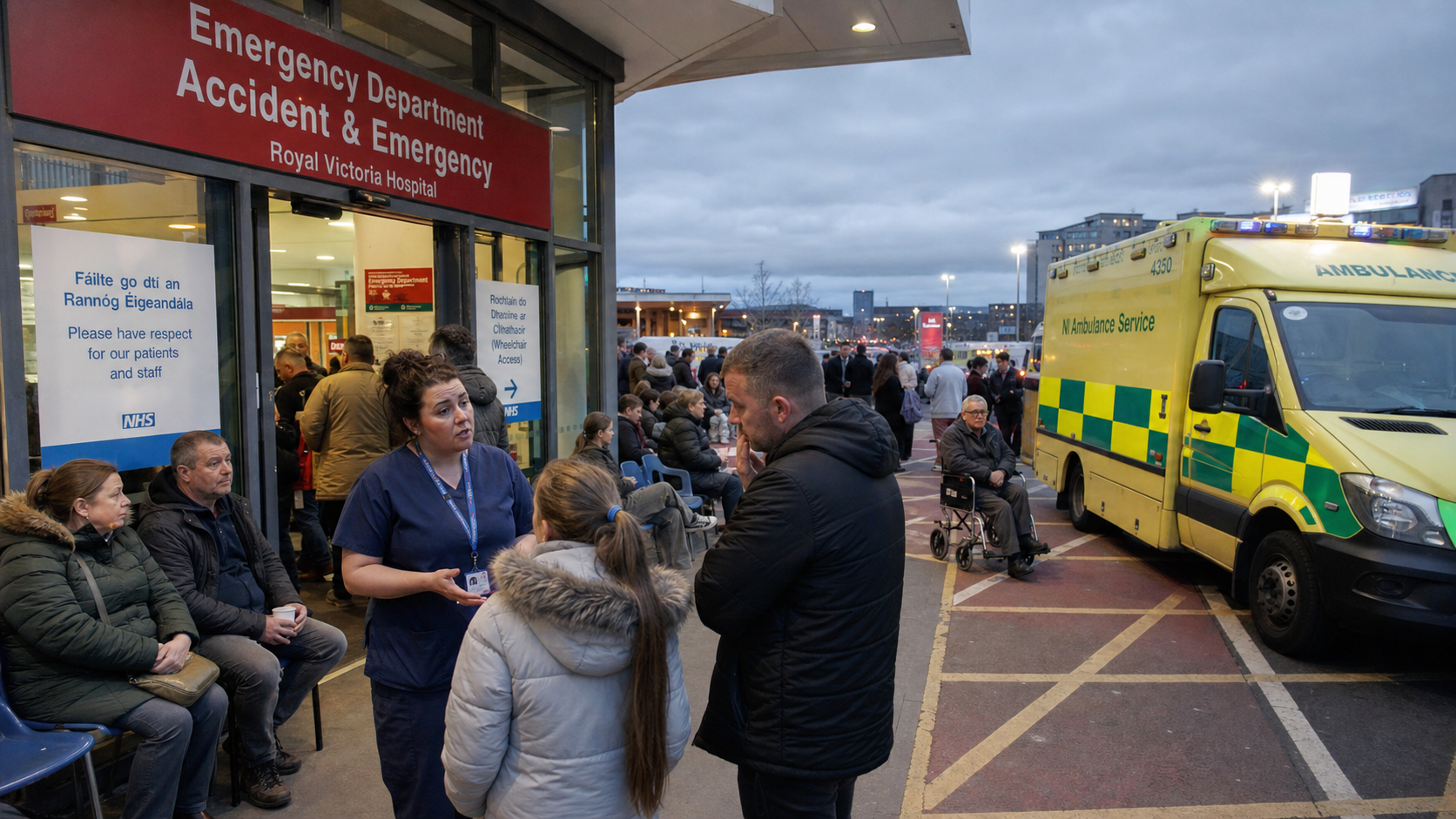
In emergency care, the situation is equally alarming. Average waiting times at Craigavon Area Hospital and Causeway Hospital have exceeded 13 hours, with some patients spending up to 19 hours in ambulances outside emergency departments before being handed over to hospital staff. The Northern Ireland Ambulance Service has reported that handover delays are now a daily occurrence at multiple sites, significantly reducing the service's operational capacity. Senior GPs have warned that patients are becoming frightened to attend hospital, raising serious concerns about the safety implications of A&E avoidance.
Health Minister Mike Nesbitt has announced a £80 million investment package for 2026/27, ringfenced for elective care, but has been candid about the limitations of this intervention. Speaking about the state of the health service, Nesbitt acknowledged that it remains in a "precarious" state and that the service is "only at the foothills of what will be a long uphill trek." The minister has emphasised that there is "no quick fix" and that sustainable improvement will require both sustained investment and fundamental reform of how services are organised and delivered.
Why It Matters
The scale of Northern Ireland's health crisis is difficult to overstate. A waiting list of 500,000 in a population of 1.9 million means that more than one in four people in Northern Ireland is waiting for a hospital appointment. Many of those people are in pain, their conditions are deteriorating, and their quality of life is being significantly diminished by the wait. For some, the delay will have serious clinical consequences — conditions that could have been treated effectively at an earlier stage will have progressed to a point where treatment is more complex, more expensive, and less likely to be successful.
The A&E crisis adds another dimension of urgency. Emergency departments are the safety net of the health system — the place where people go when they have nowhere else to turn. When that safety net is overwhelmed, the consequences are felt across the entire system. Patients who cannot be seen in A&E may deteriorate at home. Ambulances that are stuck outside emergency departments cannot respond to new calls. GPs who cannot refer patients to hospital are left managing conditions that require specialist care. The crisis in emergency care is not a separate problem from the waiting list crisis — it is the same crisis, manifesting in a different part of the system.
The comparison with the Republic of Ireland is instructive. The HSE's emergency department performance — while far from perfect — has shown more consistent improvement in recent years, driven by investment in community and primary care alternatives that reduce emergency department demand. Northern Ireland's slower progress in developing these alternatives reflects both funding constraints and the structural challenges of reforming a complex integrated health and social care system.
Local Impact
The impact of the health crisis is felt differently in different parts of Northern Ireland. In Belfast, the concentration of major acute hospitals — the Royal Victoria, Belfast City, and Mater — means that patients have more options, though all are under pressure. In rural areas — in Fermanagh, Tyrone, south Armagh, and the Glens of Antrim — the situation is more acute, with patients facing long journeys to access specialist care and limited alternatives when local services are unavailable.
For patients in the Western Health and Social Care Trust area — covering Derry/Londonderry, Strabane, Omagh, and Enniskillen — the crisis at Altnagelvin Hospital and South West Acute Hospital is a daily reality. The Western Trust has consistently had some of the longest waiting times in Northern Ireland, reflecting the particular challenges of providing services to a large, geographically dispersed, and relatively deprived population. Translink's bus services connect many communities in the west to hospital sites, but for patients who are unwell, public transport is often not a viable option.
What's Next
The Department of Health is expected to publish updated waiting list and A&E performance statistics for June 2026 later this week. Health Minister Nesbitt has indicated he will meet with trust chief executives to discuss emergency care performance before the end of July. The Stormont health committee has requested an urgent briefing on the ambulance handover situation, with a hearing scheduled for the week of July 21. The British Medical Association's Northern Ireland committee has called for an emergency summit on A&E capacity to be convened before the summer recess. The Department of Health's Elective Care Framework annual review is scheduled for October.