Finglas Youth Services at Full Capacity as Demand Surges Amid Intergenerational Trauma and Mental Health Crisis
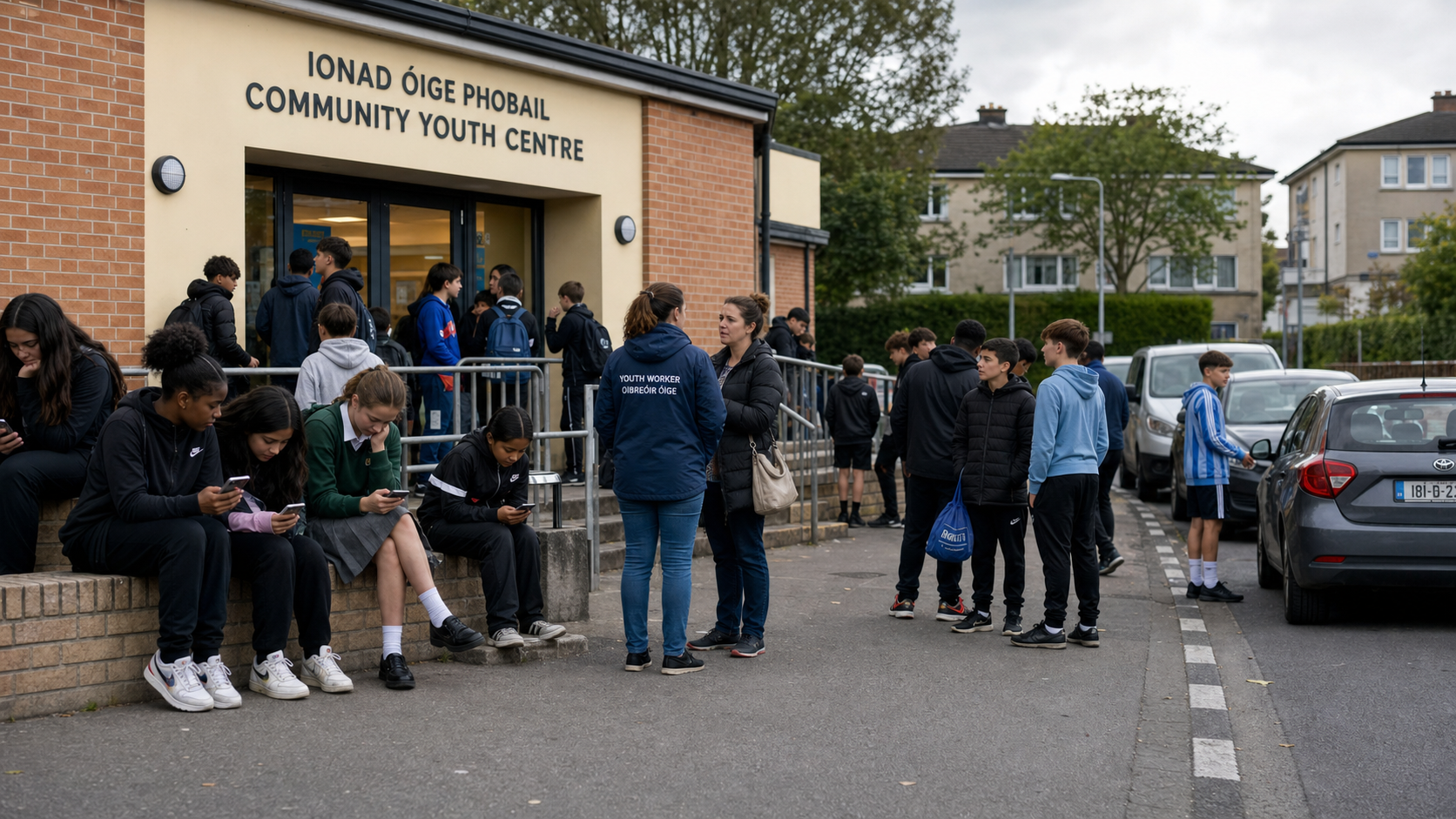
Youth services in the north Dublin suburb of Finglas have reached full capacity, with the area's main facilities now accommodating approximately 450 young people and unable to take on new referrals — a situation that advocates describe as a crisis in the making, as demand for support continues to grow against a backdrop of intergenerational trauma, substance misuse, and a deepening mental health emergency among young people in the area.
Background
Finglas is a large residential suburb in the north-west of Dublin city, with a population of approximately 30,000 people. The area has a complex social profile, characterised by a mix of established working-class communities, newer residential developments, and pockets of significant deprivation. Like many large urban suburbs, Finglas has experienced the social consequences of economic inequality, including higher-than-average rates of unemployment, educational disadvantage, and involvement in the criminal justice system.
The area has also been significantly affected by the drugs crisis that has devastated communities across Dublin's north inner city and suburbs over the past three decades. The impact of drug addiction on families — including the intergenerational trauma experienced by children who grow up in households affected by addiction — is one of the most significant challenges facing youth services in Finglas and in similar communities across the city. This trauma manifests in a range of ways, including mental health difficulties, behavioural problems, educational disengagement, and vulnerability to exploitation by criminal networks.
Youth services in Finglas have been working to address these challenges for many years, providing a range of supports including after-school programmes, mentoring, counselling, sports and recreation activities, and crisis intervention. The main providers include Crosscare's Finglas Youth Service, the Finglas Youth Resource Centre, and a number of smaller community organisations. These services operate on a combination of statutory funding from Tusla, the Child and Family Agency, and voluntary donations.
Key Developments
A recent report on youth services in Finglas has revealed that the area's main facilities have reached full capacity, with approximately 450 young people currently being supported across the various programmes. Both Crosscare's Finglas Youth Service and the Finglas Youth Resource Centre have indicated that they are unable to accept new referrals, meaning that young people who need support are being turned away or placed on waiting lists that can stretch for months.
The report highlights the scale and complexity of the challenges facing young people in Finglas. Intergenerational trauma — the transmission of the psychological effects of trauma from one generation to the next — is identified as a pervasive issue, with many young people growing up in families that have been affected by addiction, domestic violence, or involvement in the criminal justice system for multiple generations. Substance misuse among young people is also a significant concern, with the report noting that the age of first drug use in the area has been falling in recent years.
Mental health is identified as the most pressing immediate challenge. The report notes that demand for mental health support among young people in Finglas has increased dramatically in recent years, driven by a combination of the Covid-19 pandemic's social and psychological impact, social media pressures, and the underlying social challenges of the area. The services describe themselves as providing a vital chain of support for the community, but stress the urgent need for increased funding and more accessible spaces to cope with demand.
Why It Matters
The situation in Finglas is not unique — similar pressures are being experienced by youth services in communities across Dublin and in other Irish cities. But Finglas is a particularly instructive case because it illustrates the consequences of decades of underinvestment in community infrastructure in areas of social disadvantage. The young people who are being turned away from Finglas's youth services today are the same young people who, without support, are at greatest risk of becoming involved in crime, addiction, and long-term social exclusion tomorrow.
The cost of failing to invest in youth services is ultimately borne by the criminal justice system, the health service, and the social welfare system — all of which are far more expensive interventions than the community-based support that youth services provide. The evidence from comparable communities in Ireland and internationally is clear: early intervention and sustained community support are the most effective and cost-efficient ways of breaking cycles of disadvantage and preventing the social problems that generate enormous costs for the state.
The mental health dimension is particularly urgent. Ireland's Child and Adolescent Mental Health Services (CAMHS) are under severe pressure, with waiting lists in Dublin running to many months for a first appointment. Community-based youth services like those in Finglas provide a critical first line of support for young people with mental health difficulties, offering early intervention that can prevent the escalation of problems to the point where specialist clinical services are required. When those community services are at capacity, the pressure on CAMHS increases further.
Local Impact
For families in Finglas, the news that youth services are at capacity is deeply concerning. Parents who are struggling to support children with mental health difficulties, behavioural problems, or involvement in risky activities have limited options when the community services that would normally provide support are unable to take on new cases. The waiting lists for CAMHS in the Dublin North area are among the longest in the country, and the gap between community services and specialist clinical services is a significant vulnerability in the support system for young people.
The Finglas Youth Resource Centre is located on Mellows Road in the heart of the suburb, accessible by Dublin Bus routes from across the north-west of the city. Crosscare's Finglas Youth Service operates from multiple locations across the area, including outreach services that bring support to young people in their own communities rather than requiring them to travel to a central facility. Both organisations have indicated that they are working with Dublin City Council and Tusla to identify additional premises that could allow them to expand their capacity.
What's Next
Tusla, the Child and Family Agency, is expected to review the funding allocation for youth services in Finglas before the end of the year, in light of the capacity crisis identified in the recent report. Dublin City Council's social inclusion unit has indicated it will work with the youth services to identify suitable additional premises in the area. The Department of Children, Equality, Disability, Integration and Youth is expected to publish a new national youth strategy in September, which will include measures to address capacity constraints in community youth services. A public meeting on youth services in Finglas has been organised by local community groups for later this month.