Northern Ireland's Infant Mortality Rate Now Highest in UK as Doctors Demand Urgent Action
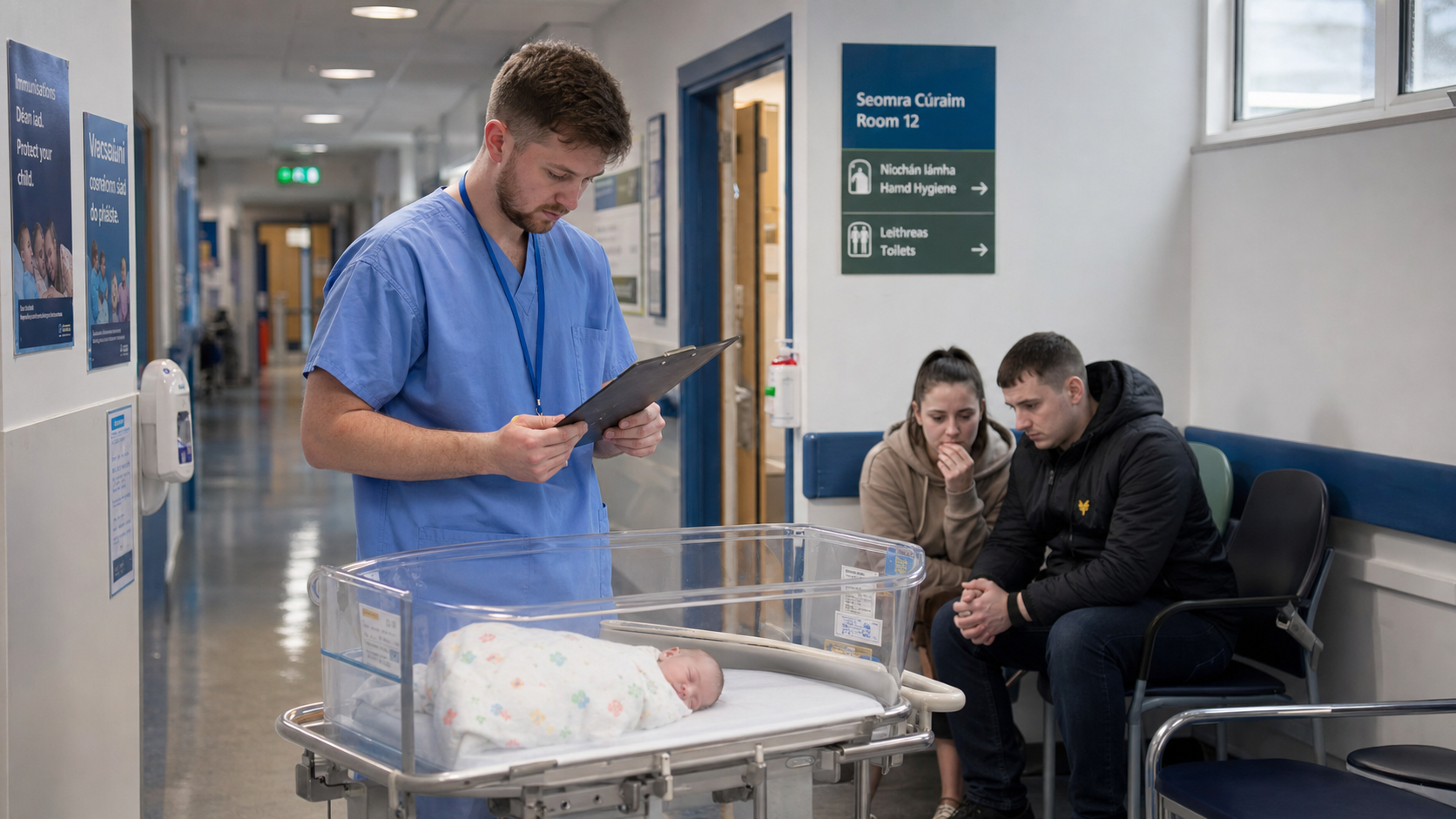
Northern Ireland has the highest infant mortality rate in the United Kingdom, with 4.5 deaths per 1,000 live births — up from 4.2 in 2018 — according to a new report from the Royal College of Paediatrics and Child Health published today. The findings, which also reveal alarming declines in vaccination uptake, mental health, and childhood obesity indicators, have prompted paediatricians to issue an urgent warning that children in Northern Ireland are paying the price for years of political instability, underinvestment, and a failure to prioritise child health and wellbeing.
Background
The Royal College of Paediatrics and Child Health's UK State of Child Health 2026 report evaluates progress across 12 key indicators of child health, including infant mortality, mental health, obesity, immunisation, and asthma. The Northern Ireland-focused briefing, published alongside the UK-wide report, provides a detailed picture of how the region compares to England, Scotland, and Wales — and the picture is deeply concerning. Northern Ireland, which has the youngest population of any UK region, is performing worst on several of the most critical indicators.
The context for these findings is well understood by those working in paediatric medicine in Northern Ireland. The region has experienced prolonged periods without a functioning Executive — most recently the three-year collapse between 2017 and 2020, and the subsequent instability that has characterised Stormont politics since. During those periods, health budgets were managed under emergency arrangements, long-term planning was impossible, and the workforce challenges that were already building in the health service went unaddressed. The result is a paediatric health system that is under severe pressure, with waiting lists that are among the longest in the UK and a workforce that is stretched to breaking point.
The infant mortality rate is the most stark of the indicators. At 4.5 deaths per 1,000 live births, Northern Ireland's rate is significantly higher than the UK average and represents a deterioration from the 4.2 rate recorded in 2018. The highest concentrations of infant mortality are found in the region's most deprived areas — a pattern that reflects the well-established link between poverty and poor health outcomes, and that underlines the importance of addressing the root causes of health inequality rather than simply treating the symptoms.
Key Developments
Beyond infant mortality, the RCPCH report identifies a series of other deeply troubling trends. MMR vaccination coverage has declined steadily since 2020, with only 86 per cent of children having received both required doses by age five — well below the 95 per cent threshold needed for herd immunity. Northern Ireland also reports the lowest uptake of the 6-in-1 childhood vaccine in the UK, a finding that raises serious concerns about the potential for outbreaks of preventable diseases.
Mental health indicators are deteriorating sharply. Approximately 45.2 per cent of 16-year-olds in Northern Ireland are estimated to have a probable mental illness — a figure that is both extraordinary and deeply alarming. The reported wellbeing of 11-year-olds has reached its lowest level since 2010. These figures reflect a generation of young people who have grown up through the Covid-19 pandemic, the cost-of-living crisis, and the ongoing political instability of the Stormont institutions, and who are struggling with the cumulative impact of those pressures.
Dr Thomas Bourke, the RCPCH officer for Ireland, stated that children are "paying the price" for years of political instability and underinvestment. "Without urgent intervention," he warned, "Northern Ireland risks raising one of the unhealthiest generations of children in decades, potentially leading to lifelong health problems and persistent inequality." The College has proposed a roadmap for the Executive that emphasises the need for a sustainable workforce, a data-informed system, equitable investment, and efforts to address the root causes of health inequalities.
Why It Matters
The RCPCH report is not the first to highlight the deteriorating state of child health in Northern Ireland, but it is the most comprehensive and the most damning. The fact that Northern Ireland now has the highest infant mortality rate in the UK — a distinction it shares with some of the most deprived regions of England — is a measure of how far the region has fallen behind in terms of health outcomes. For context, the infant mortality rate in the Republic of Ireland is 2.9 per 1,000 live births, significantly lower than Northern Ireland's 4.5. The divergence between the two jurisdictions on this indicator is striking and raises questions about the impact of different health system structures, funding levels, and political priorities.
The vaccination figures are particularly alarming from a public health perspective. The decline in MMR coverage since 2020 mirrors a pattern seen in other parts of the UK and Europe, driven by a combination of pandemic disruption to routine immunisation programmes and the spread of vaccine misinformation. But Northern Ireland's figures are worse than the UK average, and the consequences of falling below the herd immunity threshold could be severe. Measles outbreaks have already occurred in parts of England where vaccination rates have declined, and Northern Ireland is not immune to that risk.
The mental health figures represent perhaps the most urgent challenge. A society in which nearly half of all 16-year-olds have a probable mental illness is a society in crisis, and the current provision of Child and Adolescent Mental Health Services in Northern Ireland is wholly inadequate to meet that level of need. CAMHS waiting lists in Northern Ireland are among the longest in the UK, and the workforce shortages that drive those waiting lists show no sign of being resolved in the short term.
Local Impact
Across Northern Ireland's five health and social care trusts — Belfast, South Eastern, Southern, Western, and Northern — the pressures described in the RCPCH report are felt acutely by frontline staff. In the Belfast Trust, which covers the city and its immediate hinterland, paediatric wards are operating at or above capacity, and the waiting list for CAMHS assessment runs to more than 18 months in some areas. In the Western Trust, which covers Derry/Londonderry and the wider north-west, the combination of geographic isolation and social deprivation creates particular challenges for child health services. The Southern Trust, covering Armagh, Newry, and the border counties, has some of the highest rates of child poverty in Northern Ireland — a factor that directly correlates with the infant mortality and deprivation indicators highlighted in the RCPCH report. The Northern Trust, covering Antrim, Ballymena, and the north coast, has faced significant workforce challenges in its paediatric services, with consultant vacancies that have proved difficult to fill.
What's Next
The RCPCH has called on the NI Executive to adopt its proposed roadmap for child health as a matter of urgency. The Department of Health is expected to respond to the report within the coming weeks. The ongoing budget deadlock at Stormont — which has left the Executive operating under contingency arrangements since April — complicates any immediate response, as new investment in child health services requires a formal budget agreement. The Secretary of State for Northern Ireland, Sir Chris Bryant, who is currently engaged in talks with Stormont parties on the budget crisis, has been urged by the RCPCH to ensure that child health is a central consideration in any funding settlement. A Stormont debate on the report is expected before the end of September.