Noah Donohoe 'Very Likely' Was Alive When He Entered North Belfast Storm Drain, Inquest Hears
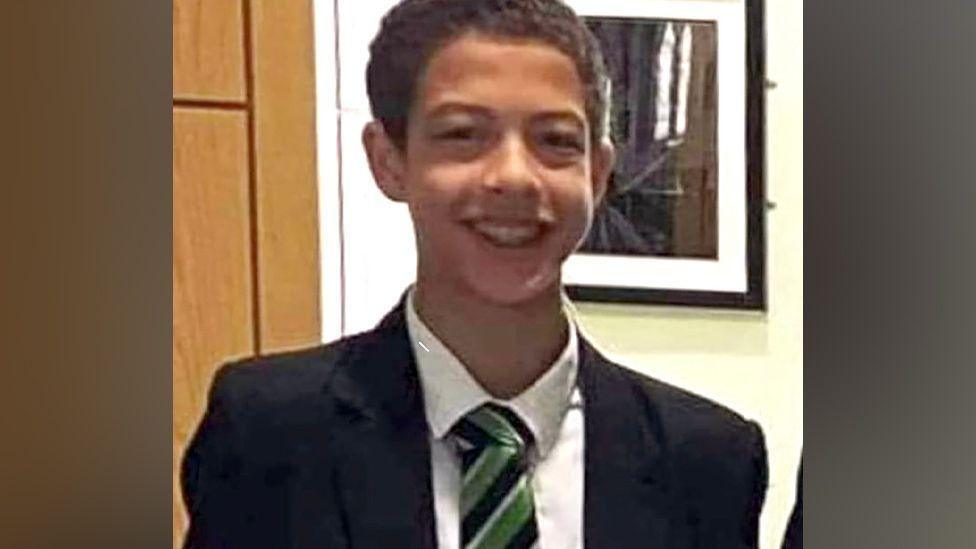
Expert witnesses at the Noah Donohoe inquest have told Belfast Coroner's Court that it is "very likely" the 14-year-old schoolboy was alive when he entered the storm drain in North Belfast where his body was later discovered, and that he probably drowned as rising tidal waters filled the culvert — findings that have brought renewed anguish and determination to a family that has spent nearly six years seeking the truth.
The inquest, which resumed in April 2026 following the Easter break, heard detailed testimony from four expert witnesses on the circumstances of Noah's death and raised serious questions about the safety of the culvert and the adequacy of risk assessments carried out by the Department for Infrastructure.
Background
Noah Donohoe left his home in South Belfast on 21 June 2020 at approximately 5:40pm, intending to meet friends. His journey, tracked extensively by CCTV, took an alarming turn as he was filmed discarding personal items — including his rucksack containing a laptop and his mobile phone — and was later seen cycling without clothing, appearing disorientated. His last confirmed sighting was at 6:08pm on Northwood Drive, where footage showed him walking toward a stream leading into the inlet of a storm drain culvert. Six days later, on 27 June 2020, his body was recovered from within the tunnel system. A post-mortem examination concluded that the cause of death was drowning.
The case has gripped Northern Ireland for nearly six years, not only because of the tragic circumstances of Noah's death but because of the unanswered questions that have surrounded it. Eyewitnesses reported hearing screams in the early hours of 22 June. The initial police search of the storm drain system failed to locate Noah, a fact that has been the subject of intense scrutiny at the inquest. His mother Fiona Donohoe has campaigned tirelessly under the banner "Justice For Noah Donohoe," and in September 2022, Belfast City Council agreed to name the Lagan Gateway bridge the "Noah Donohoe Bridge" following a public petition with over 1,000 submissions.
Key Developments
Professor Carolyn Roberts, commissioned by the Coroner's Service, told the inquest that Noah likely entered the culvert alive by climbing through the vertical metal bars of the grille at the entrance, which were spaced sufficiently wide for a large child or small adult to pass through. She said he probably crawled or walked approximately 600 metres along the Premier Drive stream culvert in near-total darkness before becoming disorientated and unable to find his way out.
Professor Roberts concluded that high tide likely occurred between 11:30pm and midnight on 21 June 2020, causing water levels to rise and fill the culvert around where Noah's body was found, creating conditions for drowning. She said it was "very likely" Noah drowned at or around this time while confused in the complex tunnel system.
Dr Mark Cooper, a health and safety expert and PSNI adviser, delivered a pointed critique of the Department for Infrastructure's approach to the culvert. He described the department's risk assessment as "very rudimentary," arguing it focused on risks to Rivers Agency staff rather than the public, despite a children's playground being located nearby. Dr Cooper testified that he was "quite certain" there was a "public safety issue" at the site, and described the decision not to install a security screen during a 2017 refurbishment as "crucial to this case." He stated that while the likelihood of someone entering the culvert may have been considered low, the consequences of doing so were "extremely serious," as it was a "very dangerous confined space."
Why It Matters
The inquest's findings carry profound implications that extend well beyond the Donohoe family's personal tragedy. The expert testimony has placed the Department for Infrastructure's stewardship of public infrastructure under a spotlight that is long overdue. Northern Ireland's network of culverts, storm drains, and watercourses runs through residential areas, past schools and playgrounds, and alongside public footpaths — yet the evidence heard at the inquest suggests that risk assessments for these structures have historically prioritised the safety of maintenance workers over members of the public. The case raises urgent questions about whether current safety standards for culverts are adequate, and whether the 2017 refurbishment of the Premier Drive culvert — which proceeded without the installation of a security screen — represents a systemic failure of duty of care. Fiona Donohoe's six-year campaign has demonstrated the power of a determined family to hold institutions to account, transforming a personal loss into a movement for accountability and change that has resonated across Northern Ireland and beyond.
Local Impact
In Belfast and across Northern Ireland, the Noah Donohoe case has resonated with a depth and intensity that few cases in recent memory have matched. For North Belfast communities in particular, the presence of the culvert system — and the questions raised about its safety — is a matter of immediate local concern. The Department for Infrastructure has faced calls from local politicians and community groups to conduct a comprehensive review of culvert safety across Northern Ireland, with particular attention to structures located near residential areas, schools, and public amenities. The inquest's findings are expected to inform that review and may ultimately lead to new safety standards for public drainage infrastructure across the region.
What's Next
The inquest is expected to continue with further evidence before the coroner delivers findings. The outcome may have significant implications for the Department for Infrastructure's obligations regarding culvert safety, and could prompt legislative or regulatory changes to how public drainage infrastructure is assessed and managed across Northern Ireland. For Fiona Donohoe and her family, the inquest represents the best — and perhaps final — opportunity to establish the full truth of what happened to Noah on the night of 21 June 2020. Sources: Irish News, Irish News — Risk Expert Testimony, BBC News