Belfast Marks 114 Years Since Titanic Sinking With City Hall Commemoration Service
Belfast has held its annual commemoration service at the Titanic Memorial Garden in the grounds of City Hall to mark the 114th anniversary of the sinking of the RMS Titanic, honouring the more than 1,500 passengers and crew who lost their lives on 15 April 1912 — a tragedy that remains as deeply felt in this city as it was on the day the news first arrived.
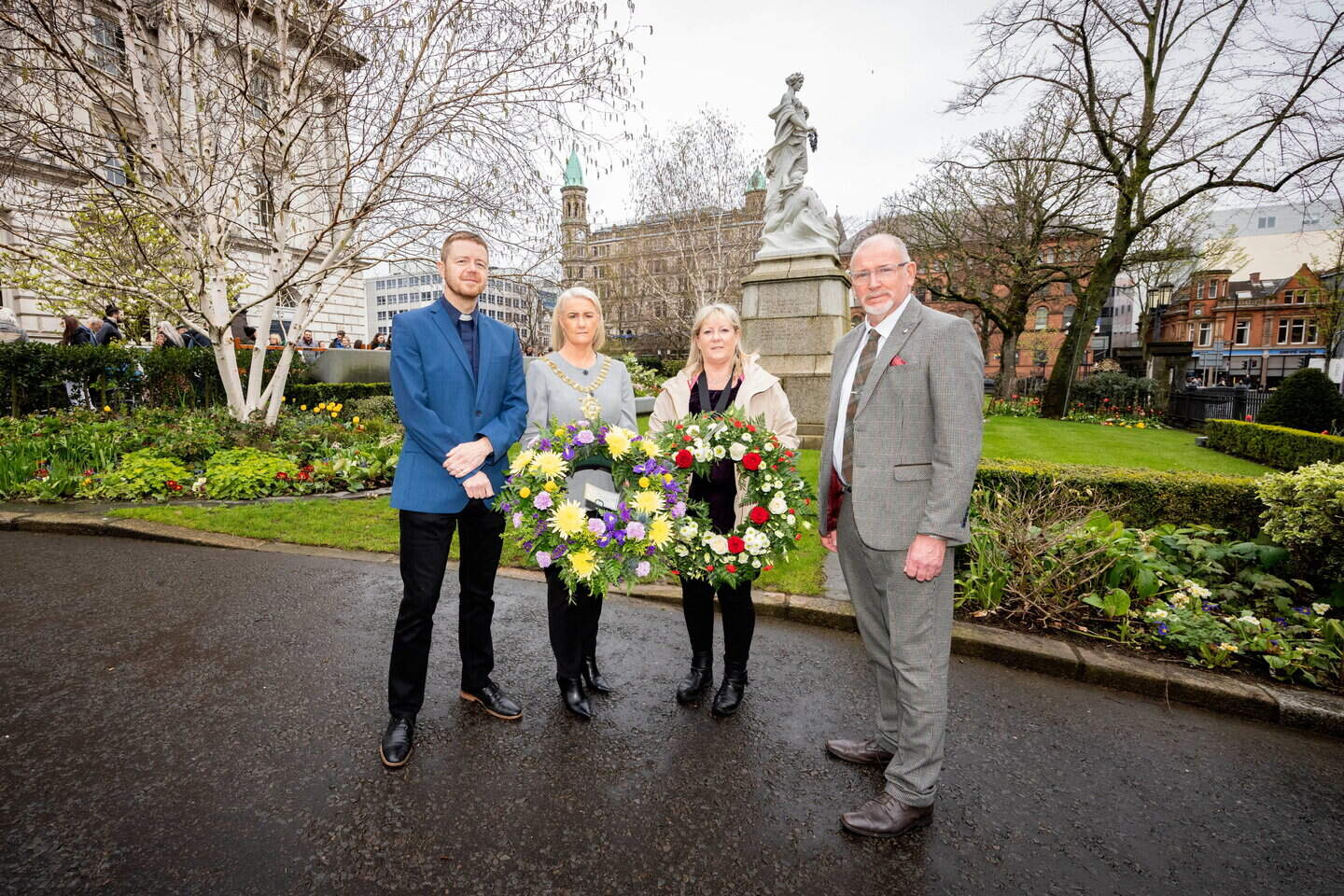
The service on 15 April 2026, attended by the Lord Mayor of Belfast, Councillor Tracy Kelly, and members of the Belfast Titanic Society, took place at the memorial that stands as the only monument in the world to record all victims' names on a single structure. Descendants of victims, civic leaders, and members of the public gathered to pay their respects in a ceremony that has become one of the most poignant fixtures in Belfast's civic calendar.
Background
The RMS Titanic was built at the Harland and Wolff shipyard in Belfast, making the city's connection to the disaster uniquely personal. The keel was laid on 31 March 1909, and the ship was launched on 31 May 1911, before departing on its fateful maiden voyage from Southampton. The construction employed over 15,000 workers and required more than 200,000 steel plates and three million rivets — a feat of engineering that made the Titanic the largest ship in the world at the time of its launch.
The original Titanic Memorial, a public sculpture by Sir Thomas Brock featuring four Carrara marble figures, was erected in 1920 and funded by public contributions, shipyard workers, and victims' families. It was moved to the City Hall grounds in 1959 and underwent restoration in 1994 and again in 2011-2012. In 2012, to mark the centenary of the sinking, a memorial garden was established around the sculpture, featuring five bronze plaques listing all 1,512 victims in alphabetical order — the first memorial globally to record every victim's name on a single monument.
Among the 1,517 lives lost, at least 79 were Irish-born. Thomas Andrews, the managing director of Harland and Wolff and the ship's designer, perished in the sinking. Nine members of the Harland and Wolff "guarantee group" — employees sent to monitor the ship's performance on its maiden voyage — were also lost. The disaster prompted sweeping maritime safety reforms, including the first International Convention for the Safety of Life at Sea (SOLAS) in 1913, which mandated sufficient lifeboats for all passengers and crew and 24-hour radio watches on ocean-going vessels.
Key Developments
The 2026 commemoration service brought together civic leaders, descendants of victims, and members of the public to pay their respects at the memorial garden, which is planted with springtime flowers including magnolias, roses, forget-me-nots, and rosemary — colours chosen to evoke water and ice. The service included a period of reflection and tributes to the 22 men from Belfast listed on the original memorial, including Thomas Andrews, who went down with the ship he had designed.
The Belfast Titanic Society, founded in 1992, plays a central role in organising the annual commemoration and preserving the city's connection to the disaster. The society's chair, Susie Millar — a descendant of a Harland and Wolff employee who died on the ship — has been a driving force behind efforts to ensure that the human stories behind the statistics are never forgotten.
Why It Matters
The annual commemoration serves as a reminder of Belfast's deep historical connection to the Titanic and the profound human cost of the disaster. For the families of those who were on board, the ceremony provides an opportunity to honour their ancestors and keep their memory alive across generations. It also reflects on the lessons learned from the tragedy — lessons that fundamentally reshaped international maritime law and saved countless lives in the century that followed.
Belfast's relationship with the Titanic is complex: a source of both immense civic pride in the engineering achievement it represented and profound sorrow at the lives lost. That duality is at the heart of what makes the annual commemoration so meaningful — it is not merely a heritage exercise, but a genuine act of collective mourning and remembrance by a city that built the ship and bore the grief of its loss.
Local Impact
Belfast continues to attract visitors from around the world to the Titanic Belfast museum and memorial sites, with the city's Titanic Quarter remaining one of Northern Ireland's most significant cultural and tourism destinations. The Titanic Belfast museum, which opened in 2012 on the site of the former Harland and Wolff shipyard, has attracted over 800,000 visitors in its peak years and has been a major driver of tourism and economic growth for the city. The annual anniversary events reinforce Belfast's status as the definitive home of the Titanic story and contribute significantly to the city's international profile.
What's Next
Belfast continues to develop its programme of Titanic-related events and exhibitions throughout 2026, with the Titanic Quarter remaining a focal point for visitors from across the world. Sources: Belfast Telegraph, Belfast Media