Noah Donohoe Inquest Returns Verdict: Boy Drowned in Storm Drain as PSNI Failings Recorded
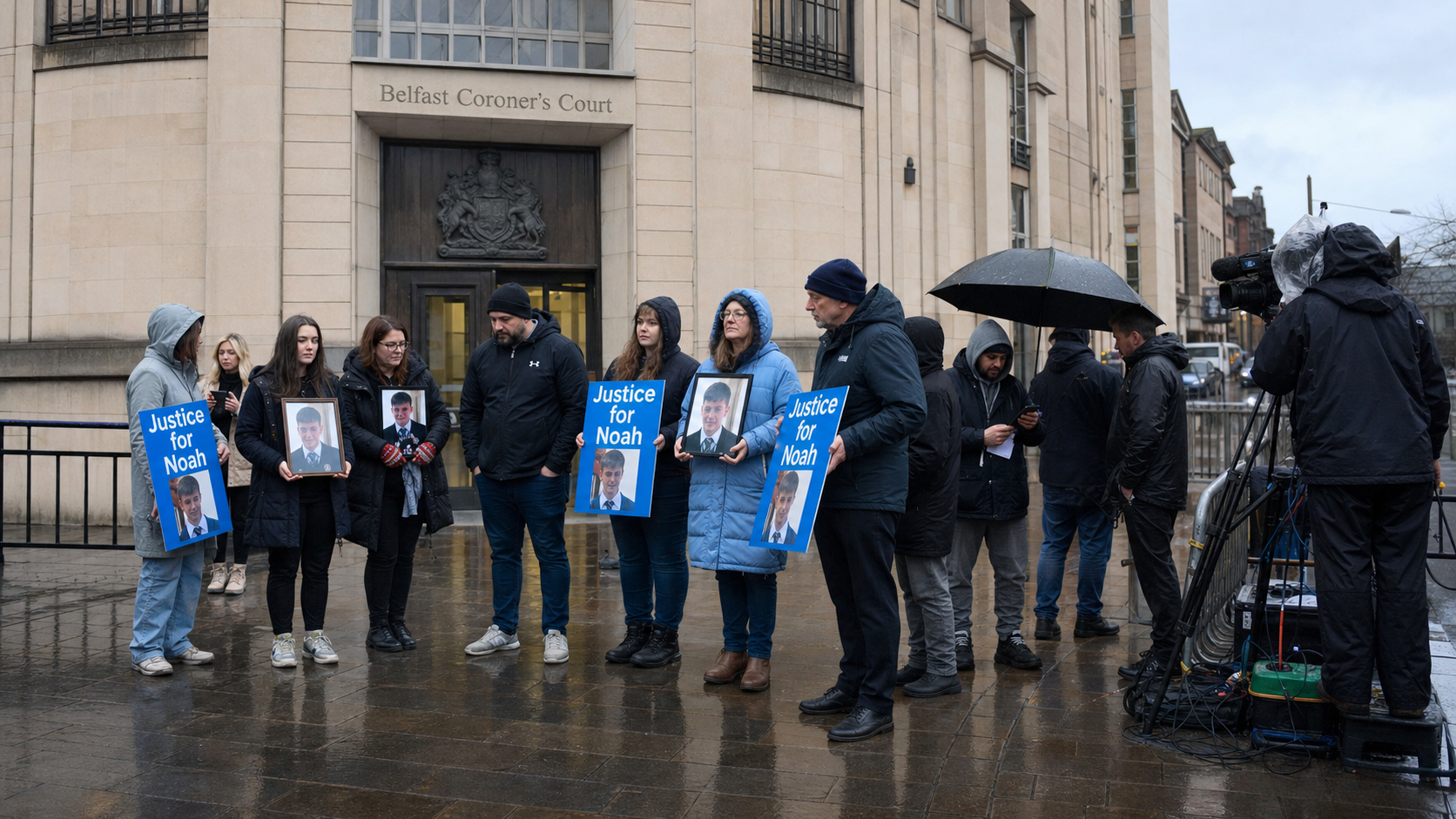
A jury of seven men and two women at Belfast Coroner's Court has returned a unanimous verdict in the inquest into the death of 14-year-old Noah Donohoe, finding that the north Belfast schoolboy drowned in a storm drain between 7pm and midnight on 21 June 2020, while recording 13 distinct investigative failings by the Police Service of Northern Ireland and finding that a failure by the Department for Infrastructure to secure the drain's entrance possibly contributed to his death.
Background
Noah Donohoe disappeared on the evening of 21 June 2020 while cycling through north Belfast. CCTV footage captured him behaving unusually — discarding his clothing and personal belongings — before he vanished from view. His body was discovered six days later in a storm drain system in the north of the city. He was 14 years old. The circumstances of his disappearance and death prompted years of anguish for his family, led by his mother Fiona Donohoe, who campaigned tirelessly for a full inquest and for answers about what happened to her son. The inquest, presided over by Mr Justice Rooney, ran for several months in 2026 and examined every aspect of the case — from the events of the evening itself to the conduct of the subsequent police investigation. The case attracted enormous public attention in Northern Ireland and beyond, partly because of the mystery surrounding Noah's behaviour in the hours before his death, and partly because of the family's determination to hold institutions to account.
Key Developments
The jury's verdict established that Noah died by drowning within the 950-metre storm drain system, with the time of death placed between 7pm and midnight on 21 June 2020. The coroner ruled out foul play, suicide, drugs, and third-party involvement, emphasising that no evidence supported any of those theories. The jury found there was insufficient evidence to explain why Noah discarded his clothing and belongings or why he experienced a sudden change in behaviour. On the question of institutional responsibility, the jury found that the Department for Infrastructure had failed to identify the culvert entrance as a potential public hazard, failed to erect warning signs, and left the inlet secured only by an unpadlocked debris screen that allowed unauthorised access. The jury found it possible, but not probable, that these systemic failings contributed to Noah's death. The PSNI's conduct was subjected to detailed scrutiny. The jury recorded 13 investigative failings, including poor CCTV preservation, flawed house-to-house search strategies, and inaccurate recording of evidence. However, the jury concluded that these failings did not contribute to Noah's death, as he had already died by the time he was officially reported missing at 9:44pm. The PSNI apologised for the missed investigative opportunities, and the Minister for Infrastructure pledged to ensure lessons were learned. Fiona Donohoe, speaking after the verdict, said her son had been failed by both the police and the infrastructure department, and described a culture of institutional defensiveness that had made the family's search for answers more difficult than it should have been.
Why It Matters
The Noah Donohoe inquest is one of the most significant coroner's proceedings in Northern Ireland in recent years, and its verdict carries implications that extend well beyond the individual case. The recording of 13 PSNI investigative failings — even where those failings were found not to have contributed to the death — is a serious finding that demands a substantive institutional response. The PSNI has faced sustained criticism over its handling of investigations in recent years, and this verdict adds to a body of evidence that systemic reform is needed. The finding regarding the Department for Infrastructure is equally significant. The failure to secure a storm drain entrance in a residential area of north Belfast — a failure that the jury found possibly contributed to a child's death — raises fundamental questions about how public infrastructure is assessed for safety risk. For families who have lost loved ones in unexplained circumstances, the Donohoe inquest also demonstrates the value of persistence. It took six years and sustained campaigning to reach this point. The verdict does not answer every question, but it provides a framework of established fact that the family can build on.
Local Impact
In north Belfast, where Noah lived and where he died, the verdict has been received with a mixture of relief and grief. The community has followed the case closely for six years, and many residents knew Noah or his family. The PSNI's north Belfast district command will face scrutiny over how the 13 recorded failings are addressed in practice. The Department for Infrastructure has been asked to provide a timeline for reviewing the security of storm drain infrastructure across Northern Ireland, with particular attention to urban areas where children are likely to be present. The inquest's findings will also be considered by Stormont's Justice Committee in the coming weeks.
What's Next
The PSNI has committed to reviewing the 13 investigative failings identified by the jury and to implementing changes to its missing persons investigation protocols. The Department for Infrastructure has been asked to report to the Stormont Assembly on its plans to audit and secure storm drain infrastructure across Northern Ireland. Fiona Donohoe has indicated that she will continue to advocate for systemic change, and her legal team is considering what further steps may be available. The coroner's report, which will include formal recommendations, is expected to be published in the coming months.