NI Race Riots Aftermath: 76 Households Left Homeless as Community Groups Warn Official Figures Undercount True Scale of Displacement
New data has revealed that 76 households presented as homeless to the Northern Ireland Housing Executive in the immediate aftermath of June's race riots, with only 39 successfully placed in temporary accommodation by early September — while community workers and advocacy groups warn that the official figures represent a significant undercount of the true scale of displacement, as many families fled without reporting to statutory authorities.
Background
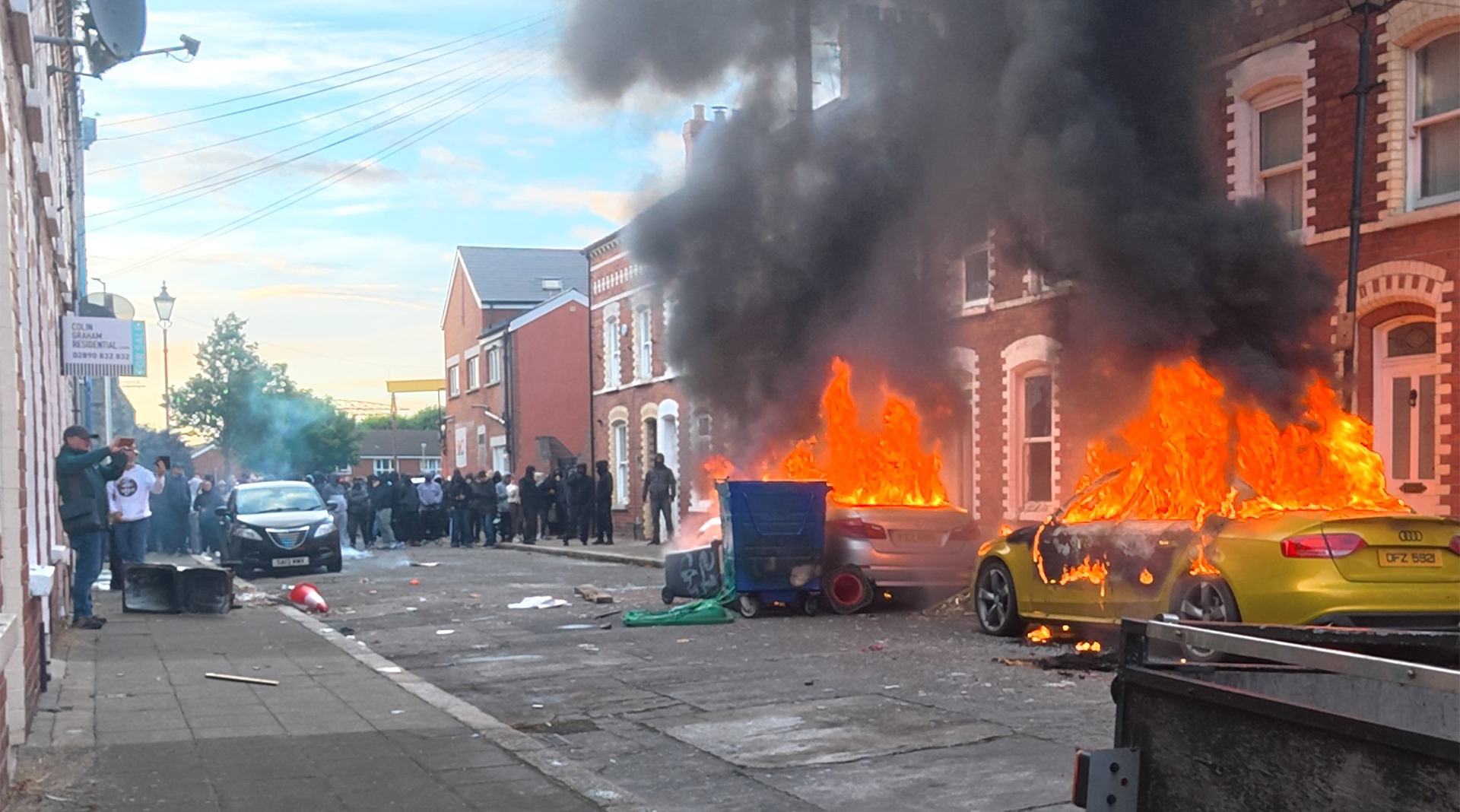
The riots that swept through parts of Northern Ireland between 9 and 11 June 2026 were among the most serious episodes of racially motivated violence the region has experienced. Triggered by a knife attack on a local man in north Belfast — an incident that was rapidly weaponised by far-right agitators on social media platforms including WhatsApp, Telegram, and X — the disorder spread across multiple areas, with masked groups conducting what witnesses described as door-to-door searches for residents they identified as immigrants or people of colour.
The violence resulted in widespread arson, property damage, and the forced displacement of families who fled their homes with little more than the clothes they were wearing. In one particularly harrowing incident, a two-month-old baby had to be rescued from an attacked property. Community volunteers — operating in the absence of immediate statutory support — organised emergency shelter, food, and transport for those targeted, with some providing accommodation in their own homes.
The riots were the third consecutive summer of racial disturbances in Northern Ireland, a pattern that experts have described as indicative of a systemic escalation of xenophobic sentiment and a failure of institutional preparedness to protect vulnerable migrant communities. The attacker responsible for the initial knife attack was charged with attempted murder, but the far-right networks that used the incident as a pretext for violence have faced limited legal consequences.
Key Developments
The NIHE figures, published in early September, show that 76 households presented as homeless in the 48 hours of most intense violence. Of those, only 39 had been successfully placed in temporary accommodation by the time the data was compiled. The remaining households are in a variety of situations — some staying with friends or relatives, some in informal arrangements organised by community groups, and some who have left Northern Ireland entirely.
Community workers and advocacy organisations have been consistent in their view that the NIHE figures underrepresent the true extent of the displacement. Many families, they argue, did not report to the housing authority because they feared further targeting, because they were unaware of their entitlements, or because the trauma of the experience left them unable to navigate statutory processes. Some families — particularly those with uncertain immigration status — were reluctant to engage with any official body.
The Irish Times investigation that brought the figures to wider public attention also documented the experiences of families who had been living in Northern Ireland for years, in some cases for over a decade, and who described the riots as having fundamentally altered their sense of safety and belonging. Several said they were considering leaving Northern Ireland permanently.
Why It Matters
The housing displacement caused by the riots is both a humanitarian crisis and a test of Northern Ireland's statutory response to racially motivated violence. The NIHE's capacity to respond to sudden, large-scale homelessness is limited — the authority was already under significant pressure from the broader housing crisis before the riots — and the gap between the 76 households that presented and the 39 that were successfully housed points to a system that was not equipped for the scale of the emergency.
More broadly, the riots and their aftermath raise fundamental questions about the safety of migrant communities in Northern Ireland and about the adequacy of the legal and institutional frameworks designed to protect them. This is the third consecutive summer of serious racial disorder, and the pattern suggests that the underlying conditions — far-right organising, social media radicalisation, economic anxiety, and inadequate community relations infrastructure — have not been meaningfully addressed.
The Stormont Executive's response has been criticised by community organisations as insufficiently urgent. While ministers have condemned the violence, concrete action on the structural issues — including investment in community relations programmes, enhanced support for migrant communities, and stronger enforcement against far-right networks — has been slow to materialise.
Local Impact
The areas most affected by the riots — parts of north and east Belfast, as well as towns in County Antrim — have seen significant changes in their demographic composition in the weeks since June. Some streets that were home to diverse communities of migrants and asylum seekers are now noticeably less so, as families have relocated to areas they perceive as safer or have left Northern Ireland altogether.
The Belfast Health and Social Care Trust has reported an increase in presentations related to trauma and anxiety among individuals from migrant backgrounds, and community health workers have noted particular concern about the mental health of children who witnessed or experienced the violence. Schools in affected areas have been working with educational psychologists to support pupils, but resources are stretched.
What's Next
The Stormont Executive's Communities Committee is due to hold a dedicated session on the housing and community impact of the riots in October, with the NIHE chief executive and representatives of community organisations expected to give evidence. The PSNI has confirmed that investigations into the riots are ongoing, with further charges expected in the coming months. The Irish Human Rights and Equality Commission has also announced a formal inquiry into the adequacy of the state's response to the displacement of families, with a report expected by the end of the year.