NI Curriculum 2028: Education Minister Launches 16-Week Consultation on Biggest School Reform in a Generation
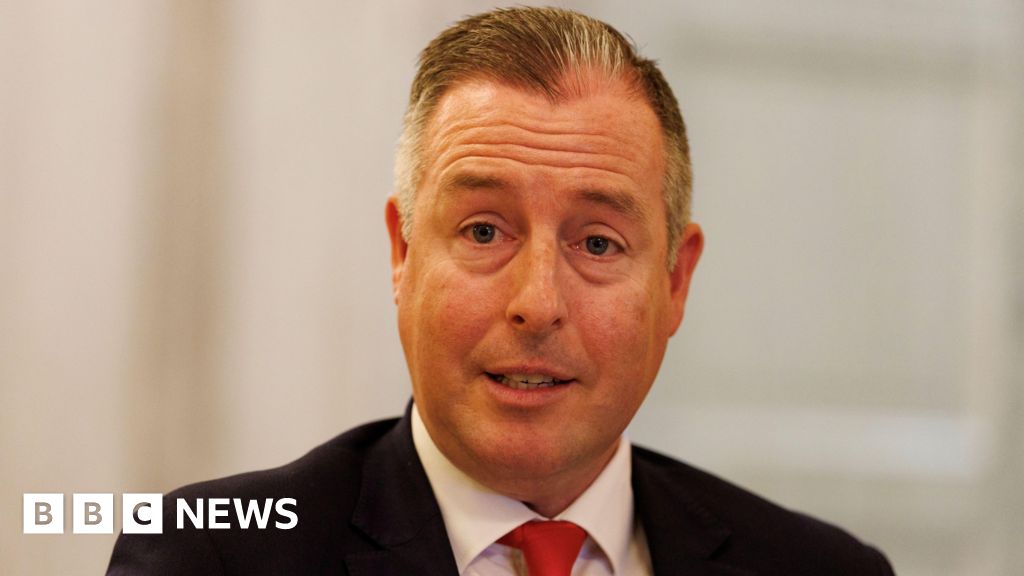
Education Minister Paul Givan has launched a 16-week public consultation on the proposed Northern Ireland Curriculum 2028, the most significant overhaul of what children learn in the region's schools in a generation — a reform that aims to equip young people with the digital skills, language competencies, and critical thinking abilities they will need in a rapidly changing world, while navigating the politically charged landscape of academic selection that has long defined NI education.
Background
Northern Ireland's school curriculum has not undergone a fundamental review since the early 2000s, when the current framework was introduced following the Revised Curriculum reforms of 2007. In the nearly two decades since, the world that young people are being educated for has changed dramatically — the rise of digital-first economies, the increasing importance of data literacy, and the growing demand for multilingual skills in a globally connected workforce have all created pressures on a curriculum that was designed for a different era.
The review that led to the Curriculum 2028 proposals was conducted by researcher Lucy Crehan, whose work examined curriculum frameworks in high-performing education systems around the world, including those of Finland, Singapore, and Canada. Crehan's analysis identified specific weaknesses in the Northern Ireland framework, including an insufficient emphasis on digital skills, a lack of coherence in how subjects connect to each other, and a tendency for primary schools to narrow their teaching in response to the pressures of the transfer test — the academic selection examination that determines which secondary school pupils attend.
The transfer test, which is administered by the Grammar School Entrance Assessment Group and the Association for Quality Education, remains one of the most contentious issues in Northern Ireland education. It is not part of the official curriculum framework, but its influence on what is taught in primary schools — particularly in Years 6 and 7 — is profound and well-documented.
Key Developments
The 16-week consultation, launched on 16 June, invites responses from teachers, parents, pupils, employers, and the wider public on the proposed Curriculum 2028 framework. The proposals include a significant expansion of digital skills education from primary level, with coding, data literacy, and computational thinking becoming core components of the curriculum rather than optional extras. Languages are also given greater prominence, with the proposals recommending that all pupils study at least one modern language to a meaningful level of proficiency.
The framework also proposes a restructuring of how subjects are organised and assessed, with a greater emphasis on cross-curricular connections and on the development of skills — critical thinking, creativity, collaboration, and communication — that are transferable across disciplines and into the workplace. Crehan's review noted that broadening the curriculum in this way could help to mitigate the pressure on primary schools to teach to the exam, though she stopped short of recommending any structural change to the transfer test itself. Minister Givan has described the consultation as an opportunity for everyone with a stake in Northern Ireland's education system to shape the future of what is taught in its schools.
Why It Matters
The Curriculum 2028 review is the most significant opportunity in a generation to reshape what Northern Ireland's young people learn and how they learn it. The stakes are high: the region's economy is increasingly dependent on a skilled, adaptable workforce, and the education system's ability to produce that workforce will determine Northern Ireland's competitiveness in the decades ahead. The emphasis on digital skills is particularly important in the context of the region's growing tech sector, which has been one of the most dynamic parts of the economy in recent years but which faces a persistent skills shortage.
The curriculum review also matters because it is happening against the backdrop of significant financial pressure on schools. Northern Ireland's education budget has been squeezed for years, and many schools are operating with reduced staffing and resources. Implementing a new curriculum requires investment in teacher training, new materials, and updated facilities — and the Department of Education will need to make a credible case for that investment at a time when the Stormont Executive is managing a precarious overall budget.
Local Impact
The consultation will be of direct relevance to every school in Northern Ireland — from primary schools in rural Fermanagh and Tyrone to grammar schools in Belfast and Derry. Teachers across the region will be invited to participate in consultation events organised by the Education Authority, and school principals have been encouraged to facilitate responses from their staff and parent communities. The proposals around digital skills will be of particular interest to schools in areas with strong tech sector connections, including the Belfast Metropolitan area and the North West, where Ulster University's Magee campus has been developing digital skills programmes in partnership with local employers. The transfer test question, while not directly addressed in the proposals, will inevitably be raised in consultation responses from primary school teachers and parents who feel the current system distorts their children's education.
What's Next
The 16-week consultation period runs until mid-October 2026. The Department of Education will then analyse responses and publish a summary of findings before the end of the year. A final decision on the Curriculum 2028 framework is expected in early 2027, with implementation in schools beginning in September 2028. Teacher training programmes aligned with the new curriculum will need to be developed and delivered in the intervening period, and the Education Authority has been tasked with developing a comprehensive professional development plan for the transition.