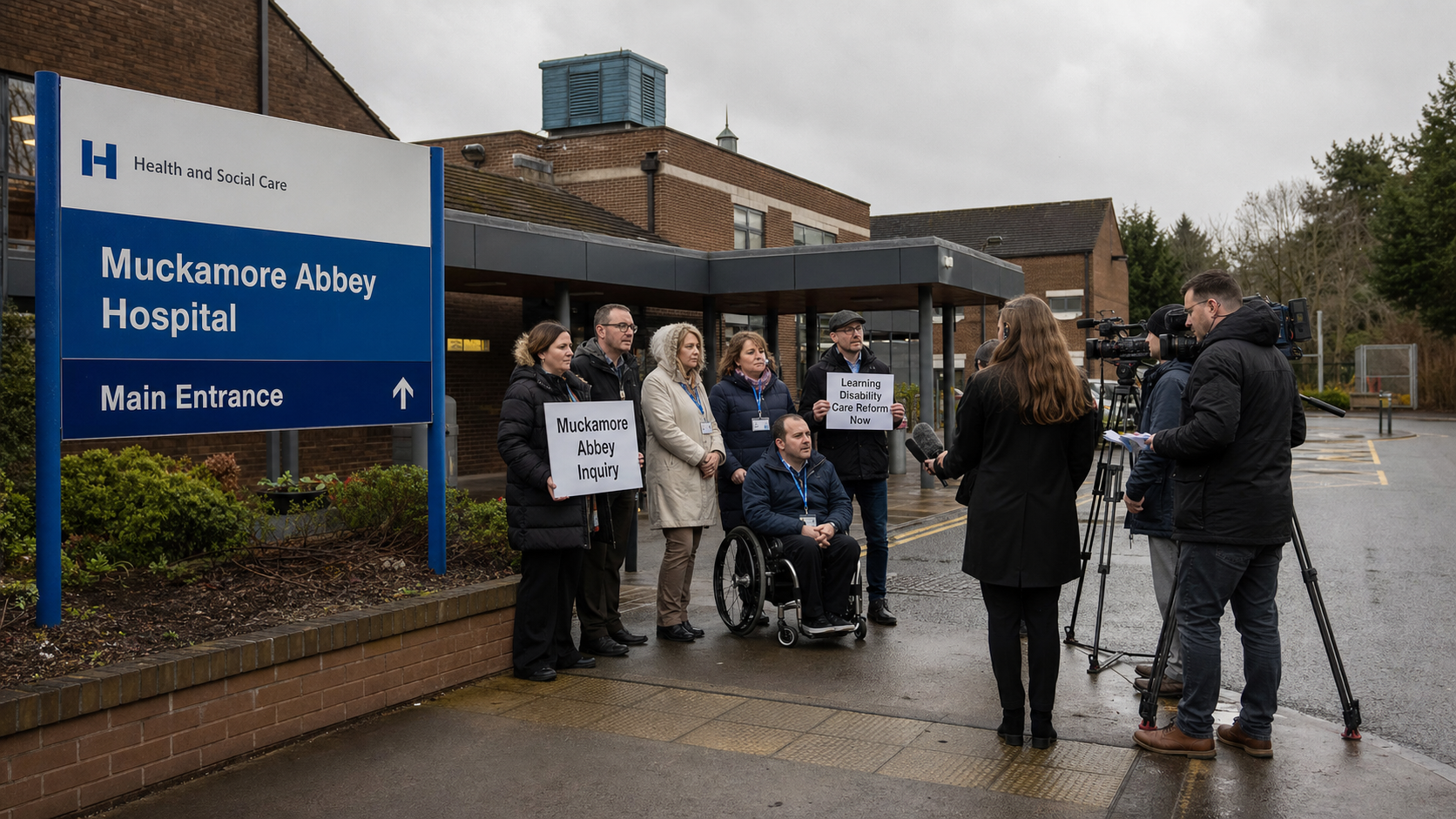
Muckamore Abbey Inquiry: 106 Recommendations Demand Root-and-Branch Reform of NI Learning Disability Care
The final report of the Muckamore Abbey Hospital Inquiry, published on 18 June, has set out 106 recommendations for the wholesale reform of how Northern Ireland cares for people with learning disabilities — a damning document that lays bare years of systemic abuse and neglect at the facility and demands a fundamental rethinking of the region's approach to its most vulnerable citizens.
Background
Muckamore Abbey Hospital, located near Antrim town, was for decades the largest long-stay hospital for people with learning disabilities in Northern Ireland. At its peak, it housed hundreds of patients, many of whom had been admitted as children and remained there for the rest of their lives — a model of institutional care that was already being questioned across the United Kingdom and Ireland by the time the hospital's most serious failings began to come to light.
The inquiry was established following the emergence of evidence of widespread abuse of patients by staff, including physical assaults that were captured on CCTV footage. The footage, reviewed by the Belfast Health and Social Care Trust in 2017, showed staff members striking, dragging, and otherwise mistreating patients who were entirely dependent on their care. The scale of what was uncovered — involving dozens of staff members over an extended period — made it clear that this was not a matter of isolated incidents but of a systemic culture of abuse that had been allowed to develop and persist within the institution.
The inquiry, chaired by Tom Kark KC, heard evidence over several years from patients, families, staff, managers, and health service officials. Its final report represents the most comprehensive examination of institutional care failings in Northern Ireland's history.
Key Developments
The 106 recommendations span every aspect of the care system, from the immediate management of Muckamore Abbey itself to the broader framework of how Northern Ireland commissions, monitors, and regulates services for people with learning disabilities. Among the key recommendations are calls for a fundamental shift away from institutional care towards community-based support, stronger independent oversight of all inpatient facilities, mandatory training requirements for staff working with people with learning disabilities, and a new statutory duty of candour requiring health trusts to be transparent with families when things go wrong.
The report is also expected to lead to criminal proceedings against a number of former staff members, with the PSNI having conducted a parallel investigation into the abuse. Families of patients who were abused at Muckamore Abbey have welcomed the report's publication, though many have expressed frustration at the length of time it has taken to reach this point and at the absence, so far, of meaningful accountability for those in senior management positions who oversaw the institution during the period of abuse.
Why It Matters
The Muckamore Abbey inquiry is the most significant examination of institutional care failings in Northern Ireland since the inquiry into historical abuse in children's homes. Its findings are a reminder that the abuse of vulnerable people in institutional settings is not a historical problem confined to the mid-twentieth century — it was happening in a Northern Ireland hospital within the past decade, under the watch of a modern health service with modern oversight structures. That is a deeply uncomfortable truth for the health system and for the politicians who oversee it.
The 106 recommendations, if implemented in full, would represent a transformation of how Northern Ireland supports people with learning disabilities. The shift towards community-based care is not merely a philosophical preference — it is supported by decades of evidence showing that people with learning disabilities live better, healthier, and more fulfilling lives when they are supported to live in their own homes and communities rather than in large institutional settings. Northern Ireland has been slower than other parts of the United Kingdom and Ireland to make that transition, and the Muckamore inquiry has made the cost of that delay devastatingly clear.
Local Impact
For families in the Antrim and wider Mid and East Antrim area, the report's publication brings a measure of vindication after years of fighting to have the truth about Muckamore acknowledged. Many families spent years being told that their concerns about their relatives' care were unfounded, and the inquiry has confirmed what they always knew. The Belfast Health and Social Care Trust, which managed Muckamore Abbey, and the Northern Health and Social Care Trust, which covers the Antrim area, will both be required to respond formally to the recommendations. The Department of Health has committed to publishing an implementation plan within six months of the report's publication.
What's Next
Health Minister Mike Nesbitt has committed to a formal government response to the inquiry's 106 recommendations within six months. An implementation oversight body is expected to be established to monitor progress against the recommendations. Criminal proceedings arising from the PSNI investigation are expected to begin in 2027. Families of affected patients are being supported by advocacy organisations and legal representatives as they consider their options for civil redress. The inquiry's report will also inform a wider review of all inpatient facilities for people with learning disabilities across Northern Ireland.