Ireland's Citizenship Rules Face Biggest Overhaul in a Generation as Eight-Year Residency and Language Tests Advance
Minister for Justice Jim O'Callaghan is bringing proposals for the most substantial overhaul of Irish citizenship rules in a generation to Cabinet, including an increase in the standard residency requirement from five to eight years, mandatory language and civics testing for naturalisation applicants, and stricter financial self-sufficiency requirements. The reforms, contained in the Irish Nationality and Citizenship (Amendment) Bill 2026, represent a significant tightening of the conditions under which non-EU nationals can become Irish citizens, and have already generated significant debate about the balance between integration, fairness, and Ireland's international obligations.
Background
Ireland's citizenship by naturalisation system has been relatively straightforward by European standards. The standard requirement has been five years of reckonable residence in the state, with a continuous period of one year immediately preceding the application. The process has been administered by the Department of Justice, and the Minister has had broad discretionary powers to grant or refuse applications. The system has been criticised in recent years for its inconsistency and lack of transparency, but it has also been praised for its relative accessibility compared to the citizenship systems of many other EU member states.
The context for the proposed reforms is the broader debate about immigration and integration that has intensified in Ireland over the past several years. The arrival of large numbers of Ukrainian refugees under the Temporary Protection Directive, combined with a significant increase in asylum applications from other countries, has placed pressure on Ireland's accommodation and public services and has generated political debate about the pace and scale of immigration. The government has responded with a series of measures aimed at tightening the immigration system, and the citizenship reforms are the latest and most significant of those measures.
O'Callaghan has framed the reforms as an alignment of Ireland's citizenship system with the standards of other EU member states, many of which have longer residency requirements and more stringent integration conditions. Germany, for example, requires eight years of residence for naturalisation, while France requires five years but with more demanding language and integration requirements. The minister has argued that Ireland's current system is an outlier in the European context and that the reforms will bring it into line with international norms.
Key Developments
The proposed changes are extensive. The standard residency requirement will increase from five to eight years, calculated as two years of continuous residence immediately preceding the application plus six years of residence within the previous ten years. Time spent in Ireland under the EU's Temporary Protection Directive — primarily utilised by Ukrainian refugees — will not count toward these residency requirements, a provision that has been criticised by refugee advocacy groups as discriminatory.
Applicants will be required to pass a test demonstrating proficiency in English, Irish, or Irish Sign Language, and a new civics examination will test knowledge of Irish society, government, and the Constitution. The Minister will have the authority to waive these testing requirements for vulnerable applicants. Financial self-sufficiency requirements will also be tightened, with applicants required to demonstrate that they are not an "unreasonable burden on the State" — a threshold that will be determined using Central Statistics Office data.
The proposals also include a new provision allowing the Minister to revoke naturalised citizenship on grounds of national security and public order, with a streamlined process to expedite such revocations. This element of the reforms has attracted particular scrutiny from legal experts, who have raised concerns about due process and the potential for the power to be used in ways that are disproportionate or discriminatory. The changes do not apply to those seeking citizenship through Irish ancestry or descent.
Why It Matters
The citizenship reforms are among the most significant changes to Irish immigration law in decades, and they will have a direct impact on tens of thousands of people who are currently living and working in Ireland and who aspire to become Irish citizens. The increase in the residency requirement from five to eight years is particularly significant: it means that people who arrived in Ireland in 2021 and who would have been eligible to apply for citizenship in 2026 under the current rules will now have to wait until 2029. For people who have built their lives in Ireland — who have jobs, families, and community ties — this is a substantial delay with real consequences.
The language testing requirement has been broadly welcomed as a reasonable integration measure, though questions have been raised about the standard that will be required and the support that will be available to help people meet it. The civics examination is more controversial: critics have argued that it is a form of cultural gatekeeping that imposes a particular vision of Irish identity on people who may have very different but equally valid relationships with the country. Supporters argue that a basic knowledge of Irish society and institutions is a reasonable expectation for someone seeking to become a citizen.
The exclusion of time spent under the Temporary Protection Directive from the residency calculation is the most contentious element of the reforms. Ukrainian refugees who have been living in Ireland for several years, contributing to the economy and integrating into their communities, will find that their time in the country does not count toward the citizenship requirement. This has been described by refugee advocacy groups as a form of discrimination that sends a damaging message about Ireland's commitment to the people it has welcomed.
Local Impact
The impact of the citizenship reforms will be felt across Ireland, but it will be particularly significant in the communities where immigrant populations are most concentrated. In Dublin, where the largest immigrant communities are located, organisations working with migrants and refugees have expressed concern about the impact of the longer residency requirement on people who have been waiting to apply for citizenship. In Cork, Galway, and Limerick, similar concerns have been raised by community organisations. The Irish Refugee Council has called on the government to reconsider the exclusion of Temporary Protection time from the residency calculation, arguing that it is both unfair and counterproductive to integration. The Immigrant Council of Ireland has indicated that it will seek a meeting with the Minister to discuss the proposals before they are finalised.
What's Next
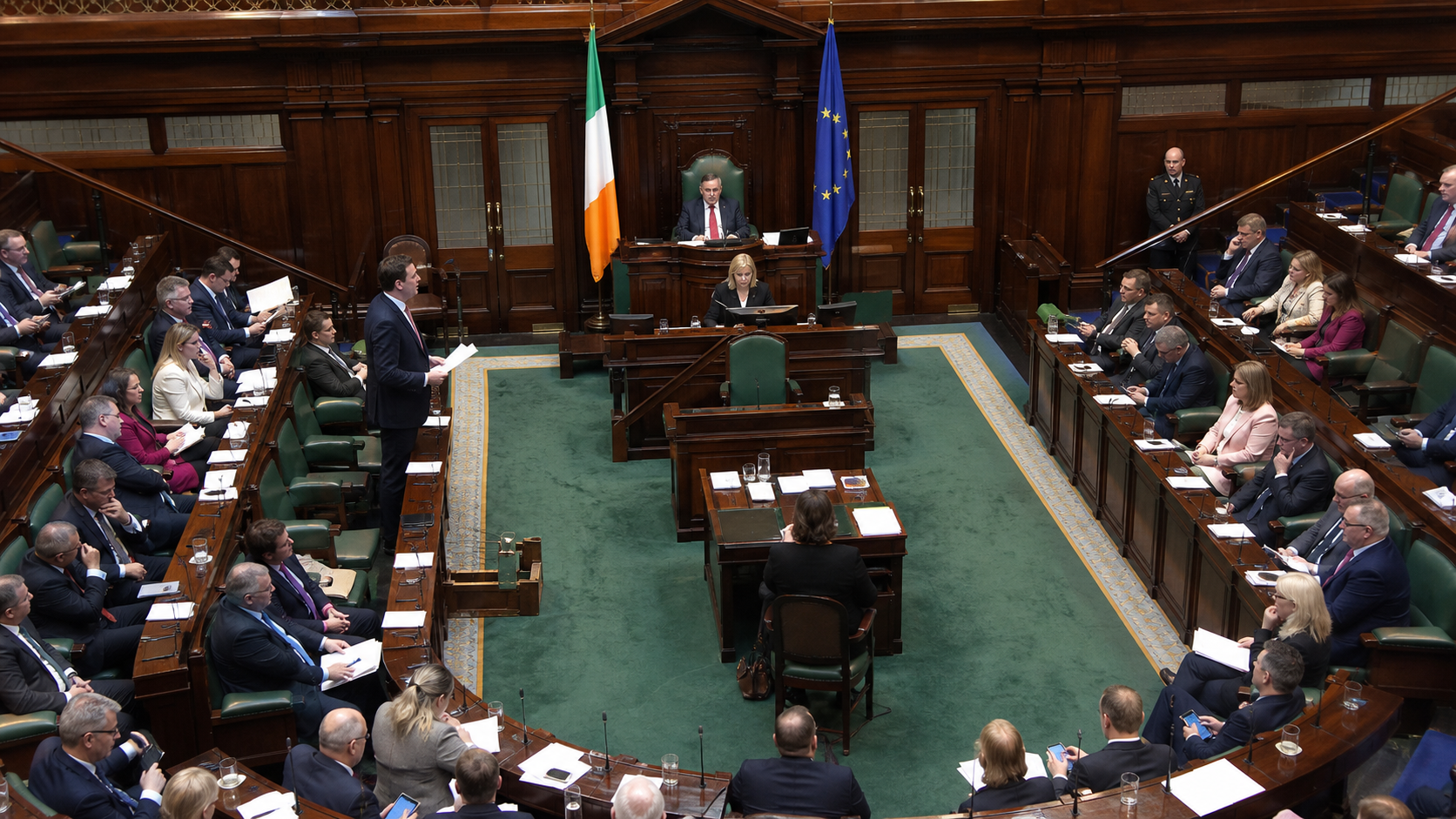
The proposals are expected to go to Cabinet for approval for priority drafting and referral to the Oireachtas justice committee for pre-legislative scrutiny. The committee process will provide an opportunity for advocacy groups, legal experts, and affected communities to make submissions on the proposals. The government has indicated that it intends to have the legislation enacted before the end of 2026. The Irish Human Rights and Equality Commission has indicated that it will examine the proposals carefully to assess their compatibility with Ireland's human rights obligations. A Dáil debate on the proposals is expected in the coming weeks.