New Irish Citizenship Rules Could Leave Long-Term Residents Waiting 22 Years to Naturalise
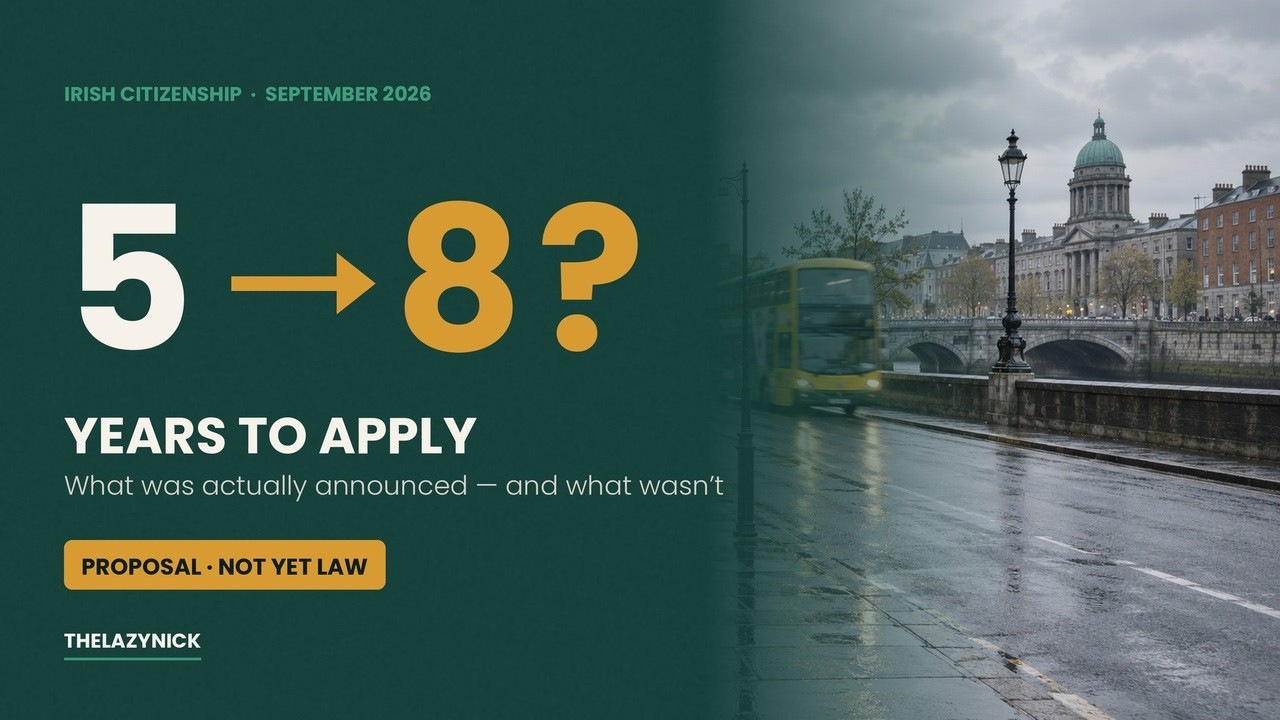
Proposed changes to Irish naturalisation law would increase the residency requirement from five years to eight and introduce mandatory language and civics tests, with critics warning that the combined effect of the new rules could leave some long-term residents — including people who arrived in Ireland as children — waiting more than two decades to become Irish citizens.
Background
Ireland's naturalisation process has historically been regarded as relatively accessible by European standards. The current requirement of five years' residency, combined with a straightforward application process and the absence of formal language or knowledge tests, has allowed hundreds of thousands of people from across the world to become Irish citizens over the past three decades. This openness has been a source of national pride for many Irish people, reflecting the country's own experience of emigration and its understanding of what it means to build a new life in a foreign country.
The proposed changes, contained in the Irish Nationality and Citizenship (Amendment) Bill 2026, represent the most significant reform of naturalisation law in a generation. The Government has framed the changes as an alignment with European norms — most EU member states require longer residency periods and formal integration tests — but critics have argued that the reforms are driven more by political pressure around immigration than by any genuine assessment of what integration requires.
The case of Julia, a woman who arrived in Ireland in 2008 and has built her life here over nearly two decades, has become emblematic of the concerns raised by the proposed changes. Under the new rules, she would not be eligible to apply for citizenship until 2030 — 22 years after Ireland became her home. Her situation is not unique: there are thousands of people across Ireland who arrived before the current five-year rule was established or who have spent time in Ireland under arrangements that would not count toward the new residency requirement.
Key Developments
The Cabinet approved the drafting of the legislation in September 2026, but the bill has not yet been published or passed by the Oireachtas. The key changes proposed include an increase in the residency requirement from five to eight years, with applicants required to have been resident continuously for two years immediately prior to their application and for six of the preceding ten years. Mandatory tests in English or Irish (or Irish Sign Language) and in Irish civics, society, and politics will be introduced.
The legislation will also bar individuals from citizenship if they have received certain social welfare payments — including long-term unemployment assistance or specific housing supports — within the two years prior to their application. Exceptions may be considered for short-term payments or specific benefits such as child or maternity benefit. Applicants must meet minimum income requirements and will be ineligible if they hold outstanding debts to the state, such as unpaid taxes or court fines.
Crucially, time spent in Ireland under the Temporary Protection Directive — such as that experienced by many Ukrainian refugees — will not count toward the residency requirements for citizenship. This provision has been criticised by refugee and migrant rights organisations, who argue that it creates a two-tier system that penalises people who came to Ireland fleeing conflict and persecution.
Why It Matters
The proposed changes arrive at a moment of heightened political sensitivity around immigration in Ireland. The Government has faced sustained pressure from opposition parties and from sections of the media to tighten immigration controls, and the citizenship reforms are widely seen as a response to that pressure. Critics argue that the changes conflate immigration control with integration policy, and that making citizenship harder to obtain does not make integration more effective — it simply delays the point at which people can fully participate in Irish civic life.
The welfare restriction is particularly controversial. Barring people who have received social welfare payments from citizenship effectively penalises those who have experienced periods of unemployment or housing difficulty — experiences that are common among working people in Ireland regardless of their nationality. The provision could disproportionately affect women who have taken time out of the workforce for caring responsibilities and people who have experienced illness or disability.
Local Impact
The impact of the proposed changes will be felt most acutely in the communities where Ireland's immigrant population is most concentrated — Dublin's inner city and suburbs, Cork city, Galway, and the commuter belt towns of Kildare, Meath, and Wicklow. In these areas, there are significant communities of people from Brazil, India, the Philippines, Nigeria, Romania, and other countries who have built their lives in Ireland over many years and who regard Irish citizenship as the natural culmination of their integration. For their children — many of whom were born in Ireland or arrived as young children — the prospect of waiting until their late twenties or early thirties to become citizens of the only country they have ever known is a source of profound anxiety.
What's Next
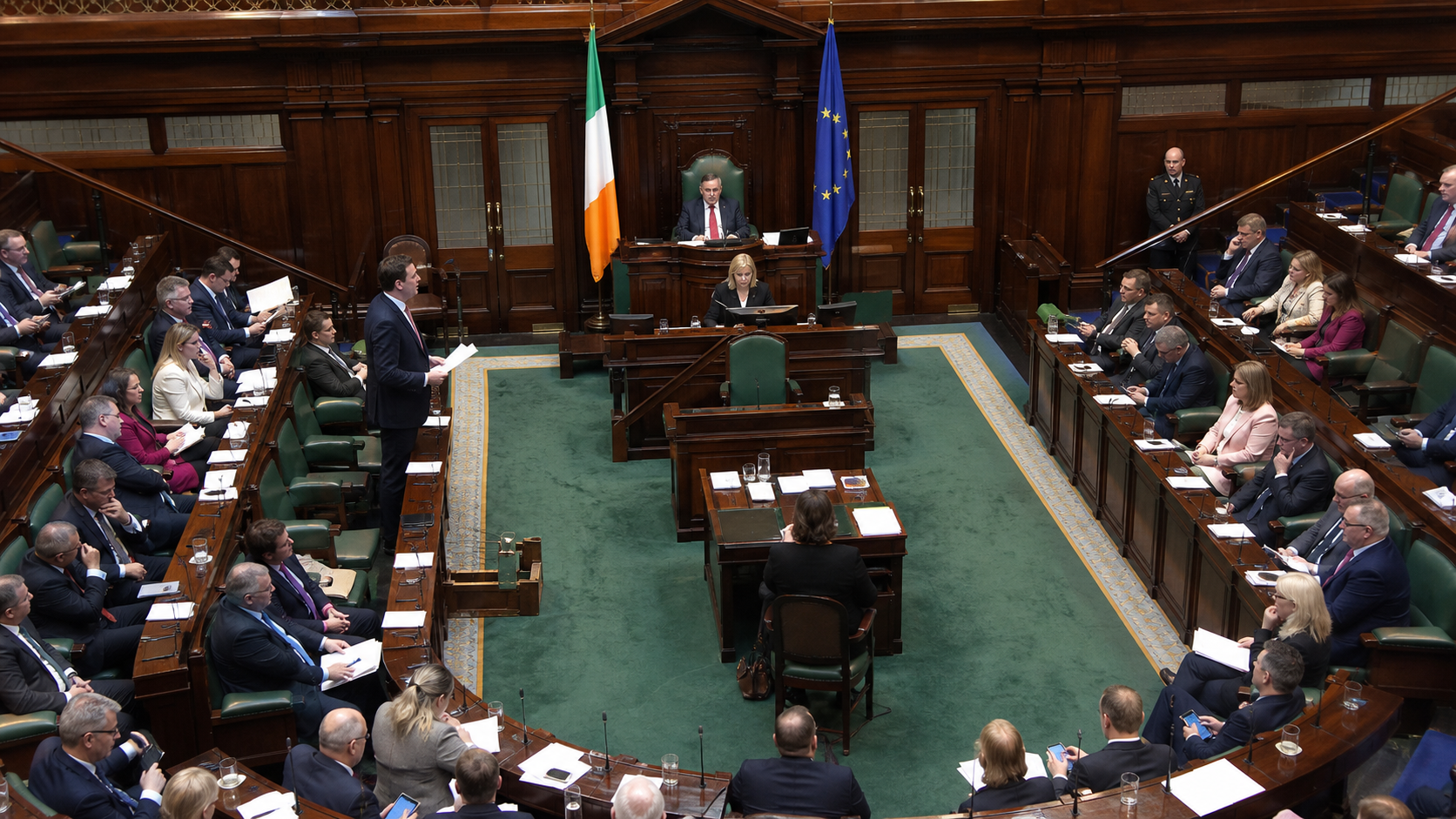
The Irish Nationality and Citizenship (Amendment) Bill 2026 is expected to be published before the end of the year, with Oireachtas debate likely to begin in early 2027. Migrant rights organisations have indicated that they will mount a significant campaign against the most restrictive provisions of the legislation, and legal challenges to specific elements of the bill are being considered. The Irish Human Rights and Equality Commission has been asked to provide an assessment of the legislation's compatibility with Ireland's human rights obligations, and its report is expected to be published alongside the bill.