MoD Reaches 'Significant' Settlement with Family of Royal Navy Veteran Thomas Burns Shot Dead by British Army in Belfast in 1972
The Ministry of Defence has reached a 'significant' financial settlement with the family of Thomas Burns, a father of four and Royal Navy veteran who was shot dead by the British Army as he left a social club in north Belfast in the early hours of 13 July 1972 — a killing that an Attorney General acknowledged in 2019 was unjustified, but for which no inquest has yet been completed after the Legacy Act terminated proceedings before evidence could be heard.
Background
Thomas Burns served in the Royal Navy for more than eight years, with postings to Malta and Singapore, before returning to Belfast and settling in the north of the city. On the night of 12–13 July 1972, he attended the Glenpark Social Club in north Belfast. As he left the premises in the early hours of the morning, he was shot dead by British Army soldiers. He was unarmed and, as was subsequently established, entirely innocent of any involvement in paramilitary activity.
An initial inquest in 1973 returned a verdict of misadventure — a finding that the Burns family always disputed and that was formally acknowledged as incorrect in June 2019, when the then-Attorney General for Northern Ireland, John Larkin KC, confirmed that Thomas Burns was an innocent, unarmed civilian who had been killed without justification. The Attorney General's acknowledgement was a significant moment for the family, who had spent nearly five decades seeking official recognition of the truth about Thomas's death.
In 2023, a fresh inquest was directed by Attorney General Dame Brenda King, offering the prospect of a full judicial examination of the circumstances of the killing. However, the process was cut short by the Legacy Act introduced by the previous Conservative government, which terminated all legacy inquests that had not yet reached the stage of hearing evidence. The Burns family's inquest was among those halted by the legislation, leaving them without the full public accounting they had sought.
Key Developments
The Ministry of Defence confirmed in early September 2026 that it had reached a financial settlement with the Burns family in respect of the civil claim arising from Thomas's death. The MoD described the settlement as "significant" and stated that it was "glad to have been able to do so given Mr Burns' past service in the armed forces" — an acknowledgement that carries particular weight given that Thomas Burns had himself served the Crown before being killed by soldiers acting in the Crown's name.
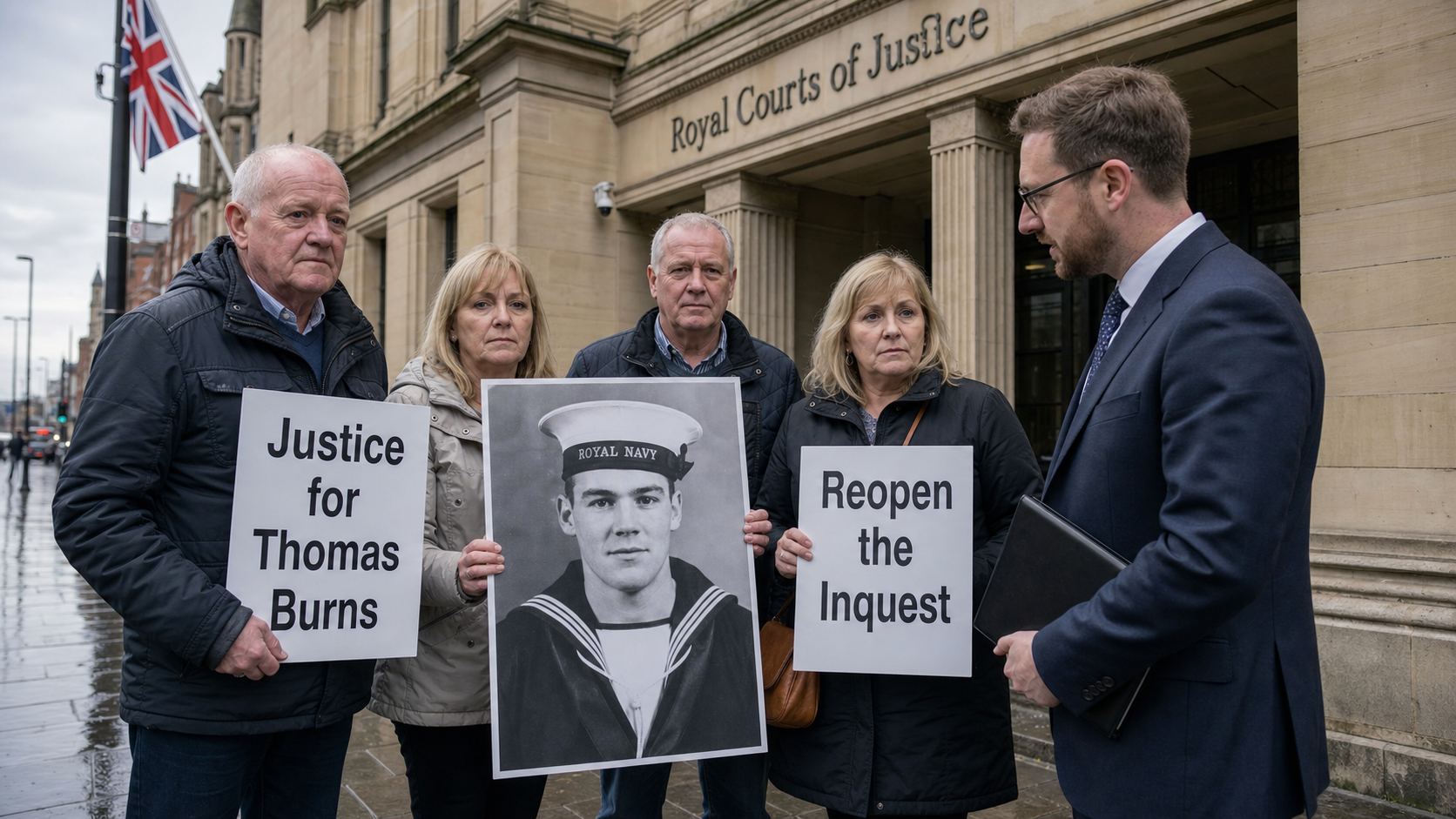
The family's solicitor, Patricia Coyle, confirmed the settlement but emphasised that it represents only one mechanism for correcting the public record. The family has made clear that a financial settlement, however significant, does not substitute for the full public inquest they were promised and that was subsequently denied them by the Legacy Act. In August 2026, the family wrote to the British Prime Minister and the Secretary of State for Northern Ireland requesting a meeting to advocate for the reopening of the inquest. Their legal representatives have also written to the Solicitor General for England and Wales formally requesting that the legacy inquest proceed.
The organisation Relatives for Justice, which supports families of those killed during the Troubles, has expressed support for the Burns family and praised their "extraordinary determination" over more than fifty years of campaigning for truth and accountability.
Why It Matters
The Thomas Burns case illustrates the particular cruelty of the Legacy Act for families who had been promised inquests and then had that promise withdrawn. The Act was introduced by the previous Conservative government ostensibly to draw a line under Troubles-era cases, but its practical effect has been to deny justice to families like the Burns family who had already waited decades for a proper examination of the circumstances of their loved ones' deaths.
The current Labour government has indicated a willingness to review aspects of the Legacy Act, and the Burns family's campaign — along with those of many other families in similar situations — is part of a broader pressure on the government to restore the inquest process. The fact that the MoD has settled the civil claim while the inquest remains outstanding creates an anomalous situation in which the state has acknowledged financial liability without providing the full public accounting that an inquest would deliver.
For context, the Legacy Act has been challenged in the courts by a number of families and by the Irish government, which argued that it was incompatible with the European Convention on Human Rights. The legal challenges are ongoing, and their outcome will have significant implications for the hundreds of families across Northern Ireland who are in similar positions to the Burns family.
Local Impact
In north Belfast, where Thomas Burns lived and died, the settlement has been received with a mixture of relief and frustration — relief that the family's civil claim has been resolved, but frustration that the full truth of what happened on that July night in 1972 has still not been established in a public forum. The north Belfast community has a long and painful relationship with legacy issues, and the Burns case is one of many that remain unresolved in the area.
The Relatives for Justice office in Belfast has been supporting the Burns family throughout their campaign and will continue to do so as they pursue the reopening of the inquest. The organisation has noted that the family's persistence over more than fifty years is an example of the determination that characterises many families who have refused to accept that the truth about their loved ones' deaths will never be fully established.
What's Next
The Burns family is awaiting a response to their request for a meeting with the Prime Minister and the Secretary of State for Northern Ireland. Their legal representatives are pursuing the formal request for the inquest to be reopened. The outcome of the ongoing legal challenges to the Legacy Act will be a critical factor in determining whether the inquest can proceed. The family has indicated they will continue their campaign for as long as necessary to secure the full public accounting they believe Thomas Burns deserves.