Michelle O'Neill Signs Cardiff Independence Memorandum as DUP Accuses First Minister of 'Weaponising' Her Role
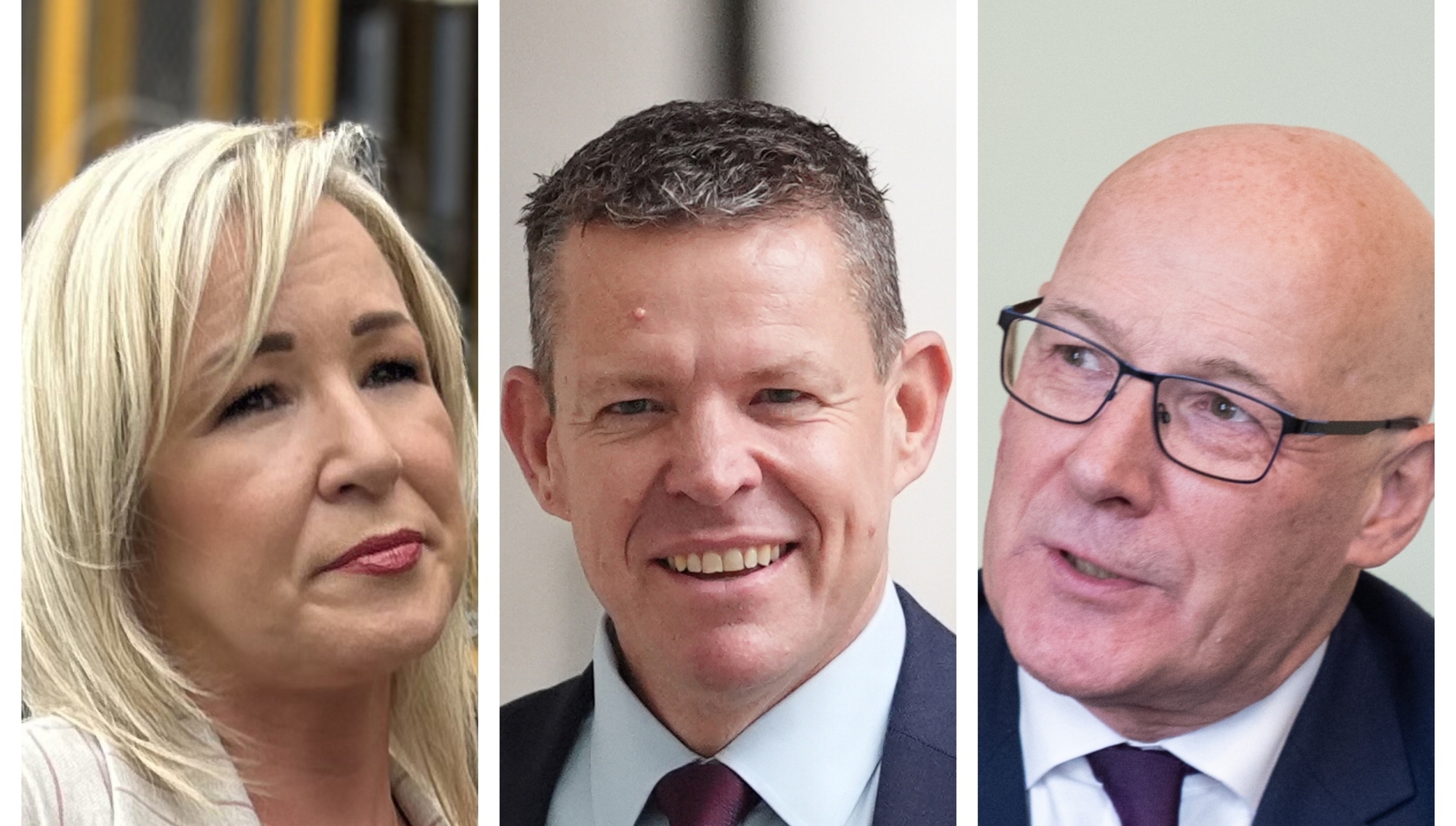
First Minister Michelle O'Neill has signed a memorandum of understanding in Cardiff alongside Scottish First Minister John Swinney and Welsh First Minister Rhun ap Iorwerth, committing to a shared pursuit of democratic routes to self-determination — a move that has triggered a constitutional row at Stormont, with Deputy First Minister Emma Little-Pengelly accusing O'Neill of acting without authorisation and attempting to weaponise the First Minister title for partisan ends.
Background
The Cardiff summit brought together the leaders of three devolved UK nations in their capacity as party representatives rather than as official heads of their respective governments — a distinction that O'Neill's office was careful to emphasise but which her unionist critics dismissed as a fig leaf. Sinn Féin vice president Mary Lou McDonald also attended the event, underscoring its explicitly political rather than governmental character.
The memorandum itself is a statement of shared intent rather than a binding agreement, committing the signatories to pursuing democratic routes to self-determination and to applying collective pressure on the UK government, led by Prime Minister Andy Burnham, to facilitate referendums in each jurisdiction. For Scotland, that means a second independence referendum; for Wales, a first; and for Northern Ireland, a border poll on Irish unity.
The backdrop to the summit is significant. Trump's remarks during his visit to Ireland — in which he expressed support for a united Ireland — have energised nationalist and republican politics on both sides of the border, while Burnham's suggestion in late August that a border poll was "off the table" drew sharp criticism from nationalist parties and prompted the Taoiseach to call for greater clarity on the conditions under which a referendum would be triggered.
Key Developments
Little-Pengelly's response was immediate and unequivocal. The DUP Deputy First Minister stated that O'Neill had not sought permission or agreement to travel to Cardiff or to sign any documents in the capacity of First Minister, and accused her of attempting to use the title to advance a partisan agenda without the consent of the joint office. "The First Minister and Deputy First Minister lead the Northern Ireland Executive together," Little-Pengelly said. "This is a joint office. Acting unilaterally on matters of constitutional significance is not acceptable."
Ulster Unionist leader John Stewart echoed the criticism, arguing that O'Neill had no mandate to speak on behalf of Northern Ireland regarding constitutional change. The Alliance Party, which holds the balance of power at Stormont, called for calm and urged both sides to focus on the Executive's agreed programme for government rather than constitutional questions that remain, in their view, premature.
O'Neill defended her attendance, arguing that she had participated as a Sinn Féin leader rather than as First Minister and that the right of the people of Northern Ireland to determine their constitutional future through democratic means was enshrined in the Good Friday Agreement. "I make no apology for advocating for Irish unity," she said. "That is what I was elected to do."
Why It Matters
The Cardiff summit and the row it has generated illuminate a fundamental tension at the heart of the power-sharing arrangements established by the Good Friday Agreement. The joint office of First Minister and Deputy First Minister was designed to require cross-community cooperation on matters of governance, but it does not — and cannot — prevent the individuals who hold those offices from pursuing their parties' constitutional objectives outside the formal structures of the Executive.
The question of whether O'Neill crossed a line by attending the Cardiff summit in her capacity as First Minister — even nominally — is one that legal experts are divided on. What is clear is that the episode has reignited tensions at Stormont at a moment when the Executive is already under pressure over the budget, and that it has given unionist parties a rallying point at a time when they are seeking to consolidate their base ahead of the 2027 Assembly election.
For Sinn Féin, the summit is a statement of intent: that the party intends to use every available platform to advance the case for Irish unity, and that the First Minister's office — however carefully the party frames its use — is part of that platform.
Local Impact
The political fallout from the Cardiff summit is likely to complicate Executive business in the weeks ahead. Stormont's Programme for Government committee is due to meet later this month to review progress on key commitments, including the waiting list reduction plan and the schools capital investment programme, and the atmosphere of mutual suspicion generated by the Cardiff row will not make those discussions easier.
In communities across Northern Ireland — in the Bogside in Derry, in the Shankill in Belfast, in the market towns of Fermanagh and Tyrone — the constitutional question remains live and contested. The Cardiff memorandum will be read very differently depending on which side of that divide one stands, but its significance as a marker of where nationalist and republican politics are heading in 2026 is difficult to dispute.
What's Next
The Stormont Executive is expected to meet in the coming days, with the Cardiff row likely to dominate the early exchanges. The DUP has indicated it may seek a formal ruling from the Executive's legal advisers on whether O'Neill's attendance at the Cardiff summit constituted a breach of the ministerial code. Sinn Féin has signalled it will contest any such ruling. The Assembly's Committee on the Executive Office is also expected to take evidence on the matter in October.