Measles Vaccine Uptake Remains Below WHO Target Despite HSE Catch-Up Campaign as Experts Warn of Misinformation Risk
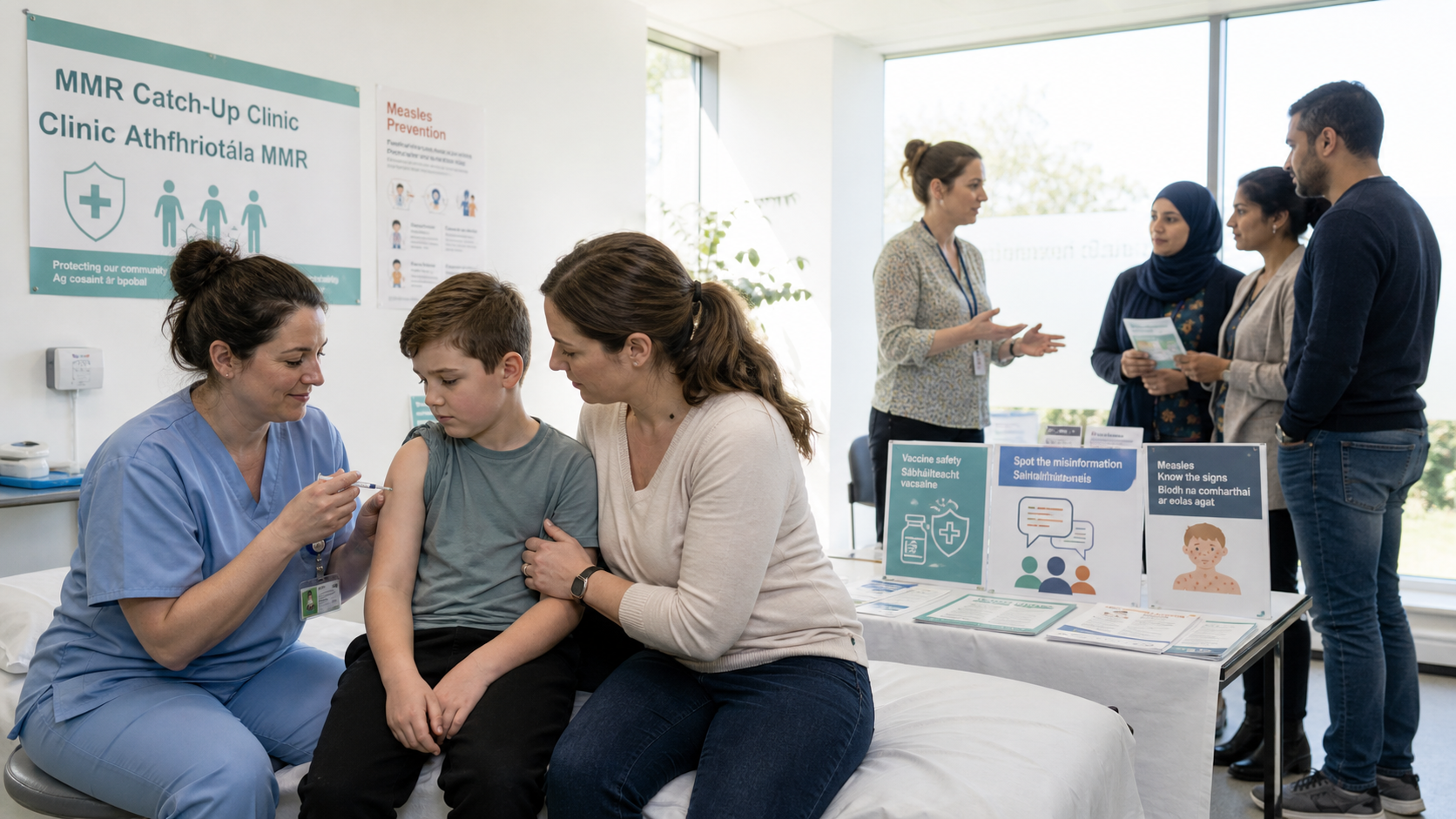
Measles vaccination uptake in Ireland continues to fall short of the World Health Organisation's 95% threshold for herd immunity, despite an extensive HSE catch-up campaign that administered more than 11,500 MMR vaccine doses between February and September 2024. Data from the second quarter of 2025 showed national MMR1 uptake at 24 months standing at 87.6%, and health officials have warned that misinformation on social media, staffing limitations, and the absence of a national immunisation information system are combining to prevent the improvements needed to protect the population from future outbreaks.
Background
Ireland achieved measles elimination status in 2017, a milestone that reflected decades of sustained vaccination effort and represented a significant public health achievement. Elimination status requires maintaining vaccination coverage above 95% consistently, and Ireland's performance in the years immediately following 2017 was broadly sufficient to sustain that status. However, the combination of the Covid-19 pandemic — which disrupted routine vaccination schedules and eroded trust in public health institutions in some communities — and the growing influence of anti-vaccination misinformation on social media platforms has contributed to a gradual decline in coverage that has left the country vulnerable to outbreaks.
The consequences of that vulnerability became apparent between January 2024 and December 2025, when Ireland recorded 258 notified cases of measles across 40 outbreaks. The disease disproportionately affected infants and preschool children, leading to 52 hospitalizations and one death. The scale of the outbreak prompted the establishment of a national incident management team in 2024 and the launch of the catch-up vaccination campaign that ran through the year.
Measles is one of the most contagious infectious diseases known to medicine. A single infected individual can transmit the virus to between 12 and 18 unvaccinated people in a susceptible population, making the 95% coverage threshold not a target but a minimum requirement for preventing sustained community transmission. At 87.6%, Ireland's current coverage leaves a significant proportion of the population — particularly young children who have not yet completed their vaccination schedule — exposed to a disease that can cause serious complications including pneumonia, encephalitis, and death.
Key Developments
The Irish Times reported on Friday that the Health Protection Surveillance Centre has confirmed that uptake remains below expectations despite the catch-up campaign and the communication effort that accompanied it. The HPSC identified several specific barriers to improving coverage. Systemic issues include ongoing limitations in public health staffing, particularly for out-of-hours services, and the notable absence of a national immunisation information system — a gap that makes it difficult to identify and follow up with children who have missed scheduled vaccinations. The lack of an integrated outbreak management system further complicates the response when cases do occur.
Societal factors are equally significant. Experts have attributed the decline in childhood vaccination rates to what they describe as "manifold and complex" reasons, including the impact of misinformation on social media, a diminished perception of the risks associated with infectious diseases among parents who have never seen a measles outbreak, and challenges regarding trust in health systems that were damaged by the experience of the pandemic. The operational challenges of the catch-up campaign — including difficulties in complex contact tracing and inconsistent access to preventive treatment pathways for vulnerable contacts — also limited its effectiveness.
Five new lactation consultant positions, which were expected to support maternal and infant health including vaccination uptake, remain unfilled due to HSE budget constraints — a detail that illustrates the broader resource pressures facing the health service and their downstream impact on preventive health programmes.
Why It Matters
The failure to maintain measles vaccination coverage above the WHO threshold is not a minor administrative shortcoming — it is a genuine public health risk with potentially serious consequences. The 2024-2025 outbreak, which resulted in one death and 52 hospitalisations, demonstrated that measles remains a dangerous disease when it circulates in an under-vaccinated population. The risk of a larger outbreak increases with every percentage point that coverage falls below 95%, and the combination of declining uptake and the continued circulation of misinformation creates conditions in which a significant outbreak is a realistic possibility rather than a remote concern.
The misinformation dimension of the problem is particularly challenging because it requires a response that goes beyond the traditional public health toolkit of vaccination campaigns and GP outreach. Social media platforms have proven resistant to efforts to limit the spread of anti-vaccination content, and the communities most susceptible to misinformation are often those that are hardest to reach through conventional health communication channels. Ireland's experience is not unique — similar patterns have been observed across Europe and North America — but the absence of a national immunisation information system makes the Irish response less targeted and less effective than it could be.
Local Impact
The impact of declining vaccination coverage is not evenly distributed across Ireland. Urban areas with high population density and significant international mobility — Dublin, Cork, and Galway in particular — face the greatest risk of rapid measles transmission if the virus is introduced by a traveller from a country where the disease is circulating. Within those cities, communities with lower vaccination rates — which tend to correlate with socioeconomic disadvantage and, in some cases, with specific cultural or religious attitudes toward vaccination — are at greatest risk. HSE community health organisations across the country have been working to identify and address pockets of low coverage, but the absence of a national immunisation information system makes this work more difficult and less systematic than it should be.
What's Next
The HSE has indicated that it will continue its efforts to improve vaccination coverage, with a particular focus on reaching children who missed scheduled vaccinations during the pandemic years. The Department of Health is expected to address the absence of a national immunisation information system as part of its broader digital health strategy, though no specific timeline has been announced. The HPSC will continue to monitor measles cases and vaccination coverage data, and will publish updated figures in the coming months. Health officials have urged parents to check their children's vaccination records and to contact their GP if any doses have been missed.