Lough Neagh Eel Fishers Secure £700,000 Transition Package as Yellow Eel Fishery Closes
The Department of Agriculture, Environment and Rural Affairs has launched a £700,000 Lough Neagh Eel Fishery Transition Scheme providing three years of financial support to permit holders and specialist hauliers following the closure of the yellow and brown eel fishery, in a measure designed to protect livelihoods while critically endangered European eel stocks recover from a collapse that has seen populations fall by up to 95% since the 1980s.
Background
Lough Neagh has been at the centre of Ireland's eel fishing industry for centuries. The lough, the largest freshwater lake in the British Isles, once supported one of the most productive eel fisheries in Europe, with the distinctive flat-bottomed boats of the Lough Neagh fishermen a familiar sight on the water from spring through to autumn. The fishery supported dozens of families across the communities that ring the lough — from Antrim town in the north to Lurgan and Portadown in the south, from Toomebridge in the west to Ballyronan in the east.
The European eel (Anguilla anguilla) is one of the most remarkable creatures in the natural world, undertaking a migration of thousands of miles from the Sargasso Sea in the western Atlantic to the rivers and lakes of Europe, where it spends the majority of its life before returning to spawn and die. But the species is in crisis. Populations have declined by between 90% and 95% since the 1980s, driven by a combination of habitat loss, barriers to migration, pollution, climate change, and overfishing. The International Council for the Exploration of the Sea recommended zero catches of European eel across all habitats for 2026, a recommendation that DAERA has implemented through the closure of the yellow and brown eel fishery.
The closure represents the end of an era for a fishing community that has maintained its traditions and skills across generations. The Lough Neagh Fishermen's Co-operative, which has marketed the lough's eel catch for decades, faces an uncertain future, and the specialist knowledge required to fish the lough effectively — knowledge of the water, the seasons, the behaviour of the eels — is at risk of being lost if the fishing community disperses.
Key Developments
DAERA Minister Andrew Muir announced the Lough Neagh Eel Fishery Transition Scheme on 25 September, describing it as a transition and sustainability measure rather than a decommissioning scheme. The distinction is important: the scheme is designed to keep the fishing community intact and their skills preserved, in the expectation that eel stocks will eventually recover sufficiently to allow a sustainable fishery to resume.
Up to 81 permit holders and five specialist eel hauliers are eligible for the scheme, which will reimburse 50% of lost income based on commercial activity during 2022, 2023, or 2024 — the three years immediately preceding the closure. The three-year duration of the scheme reflects the scientific uncertainty about the timeline for eel stock recovery, with DAERA indicating that the situation will be reviewed at the end of the period.
The silver eel fishery — which targets eels at the point of their downstream migration to the sea — remains open under strict conditions, including a 25-tonne catch limit and a maximum landing size of 90 centimetres. This limited fishery provides some continued income for permit holders while the yellow eel population recovers.
Why It Matters
The Lough Neagh eel fishery is not simply an economic activity — it is a cultural institution that has shaped the identity of the communities around the lough for generations. The skills involved in eel fishing, from the construction and maintenance of the distinctive Lough Neagh boats to the knowledge of the lough's complex ecology, represent a form of intangible heritage that cannot easily be reconstructed once lost. The transition scheme's explicit aim of preserving these skills and keeping the fishing community together is therefore as much a cultural intervention as an economic one.
The closure also raises broader questions about the management of Lough Neagh, which has faced severe environmental pressures in recent years. The lough has been affected by toxic blue-green algae blooms driven by agricultural run-off, and the eel fishery closure is one of several measures being implemented to reduce pressure on the lough's ecosystem. The £700,000 scheme is a relatively modest investment compared to the scale of the environmental challenge facing the lough, and conservation groups have called for a more comprehensive restoration programme.
Local Impact
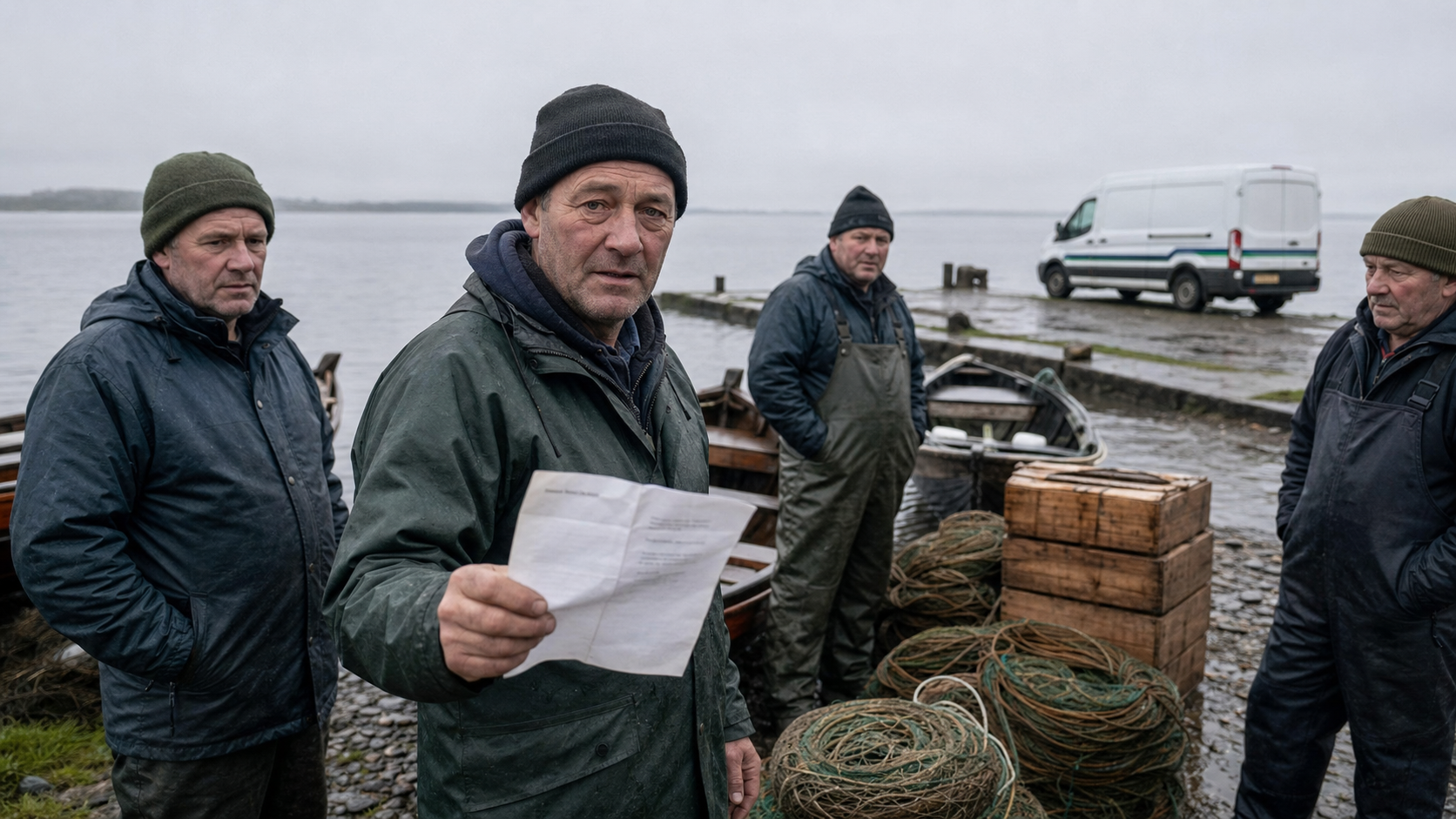
For the fishing families of Toomebridge, Ballyronan, Antrim, and the other communities around Lough Neagh, the transition scheme provides a degree of financial security during what is an extremely difficult period. The 50% income replacement will not fully compensate for the loss of the fishery, but it will allow families to maintain their homes and meet their basic costs while they consider their options. Several permit holders have indicated that they intend to use the transition period to explore diversification into other forms of fishing or aquaculture, while others are considering whether to remain in the industry at all.
What's Next
Applications for the transition scheme opened in late September 2026, with DAERA indicating that payments will begin before the end of the year. The department has committed to a formal review of the scheme's effectiveness at the end of its first year, with the possibility of adjustments if the financial support proves insufficient to retain the fishing community. ICES will publish updated stock assessments for the European eel in early 2027, which will inform decisions about whether any relaxation of the catch restrictions is scientifically justified.