London Vigil for Cambridge Professor Jason Arday Draws Thousands as Irish Community Joins Solidarity Stand Against Racism
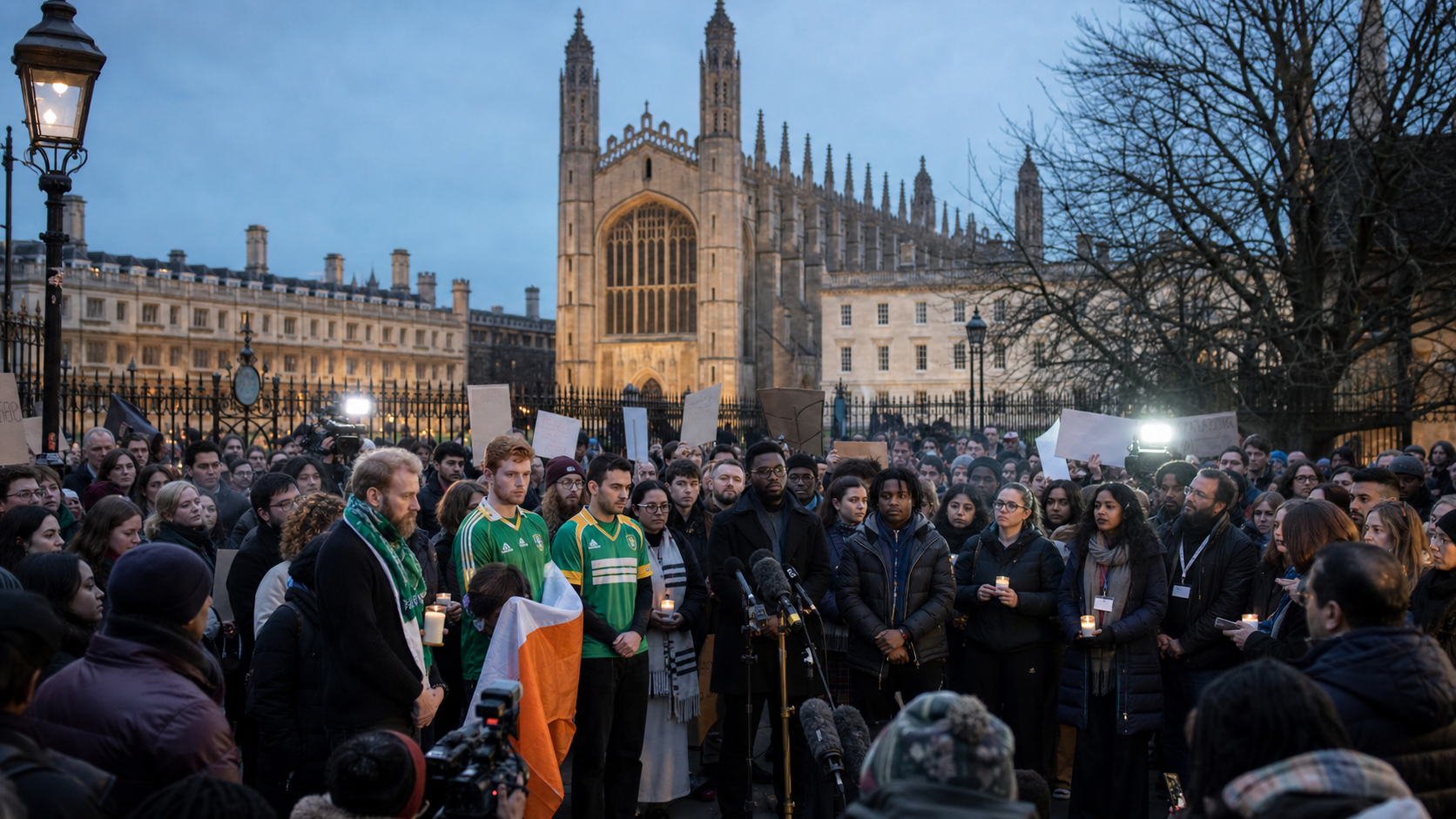
Thousands of people attended a vigil in London for Cambridge University academic Professor Jason Arday after he was subjected to a sustained and vicious racist online campaign, with the Irish community in Britain among those expressing solidarity with a scholar whose experience has prompted a national conversation about racism in British academia and public life.
Background
Professor Jason Arday is one of Britain's most prominent Black academics, a sociologist at Cambridge University whose work focuses on race, education, and inequality. His appointment to Cambridge — one of the world's most prestigious universities — was widely celebrated as a significant milestone in the diversification of British higher education, an institution that has historically been overwhelmingly white and socially exclusive.
The racist campaign against Arday, which erupted on social media in August 2026, targeted his academic credentials, his appointment, and his personal character in terms that were widely condemned as racist and defamatory. The campaign drew on a broader pattern of online harassment that has been directed at Black academics and public figures in Britain in recent years, a pattern that has been linked to the rise of far-right online communities and the amplification of racist content by social media algorithms.
The Irish community in Britain has a long and complex history with racism. Irish people were themselves the targets of significant discrimination in Britain for much of the 20th century, and many Irish community organisations have been active in anti-racism work, drawing on that historical experience to build solidarity with other communities facing discrimination. The response to the Arday case has reflected that tradition of solidarity.
Key Developments
The vigil, held in London, drew thousands of supporters from across the city and beyond, including academics, students, community activists, and members of the public who wanted to express their opposition to the racist campaign. Cambridge Chancellor Lord Chris Smith, speaking at the vigil, condemned what he described as a "racist feeding frenzy" and a "public execution" of a scholar whose only offence was to be Black and successful in a prestigious institution.
The Irish community in Britain, represented by a range of organisations including the Irish in Britain umbrella body and local Irish community groups in London, issued statements of solidarity with Arday and called for stronger action by social media platforms to prevent the amplification of racist content. Several prominent Irish figures in British public life also spoke out, drawing explicit connections between the historical experience of Irish people in Britain and the contemporary experience of Black academics like Arday.
Cambridge University has issued a strong statement of support for Arday, confirming that he retains the full confidence of the university and that it will take all necessary steps to support him and to address the harassment he has faced. The university has also indicated that it is reviewing its policies on supporting staff who are subjected to online harassment.
Why It Matters
The Arday case matters because it exposes the persistence of racism in British institutions and public life, and because it demonstrates the power of online platforms to amplify and coordinate racist harassment in ways that can have devastating consequences for individuals. The fact that a distinguished academic at one of the world's leading universities can be subjected to a sustained racist campaign — and that the campaign can gain significant traction — is a sobering reminder of how far Britain still has to travel in addressing racism.
For the Irish community in Britain, the case also has a specific resonance. The experience of Irish people in Britain — the "No Irish, No Blacks, No Dogs" signs that were a feature of British life within living memory — creates a particular sensitivity to the experience of other communities facing discrimination. The solidarity expressed by Irish community organisations reflects a recognition that the struggle against racism is not confined to any single community.
The case has also prompted a broader conversation about the diversity of British academia and the barriers that continue to prevent Black and minority ethnic scholars from reaching the highest levels of the academy. Arday's appointment to Cambridge was celebrated precisely because it was so rare, and the racist response to that appointment underscores the depth of the resistance that exists to genuine diversity in elite institutions.
Local Impact
In London, where the Irish community is one of the largest and most established diaspora communities in the world, the response to the Arday case has been one of genuine solidarity. Irish community centres, cultural organisations, and social clubs have all expressed support, and several have hosted events to discuss the case and its implications. The Federation of Irish Societies, which represents Irish community organisations across Britain, has called for stronger action by the Government and by social media platforms to address online racist harassment.
The case has also resonated with Irish students and academics in British universities, many of whom have their own experiences of discrimination and who recognise in Arday's situation echoes of challenges they have faced in navigating British academic culture.
What's Next
Cambridge University is expected to publish a detailed response to the harassment campaign in the coming weeks, including an account of the steps it is taking to support Arday and to prevent similar incidents in the future. The Government has been called upon to strengthen legislation on online racist harassment, and the issue is expected to be raised in Parliament in the autumn. Social media platforms have been asked to explain what steps they are taking to prevent the amplification of racist content, and several have indicated they are reviewing their policies in light of the Arday case.