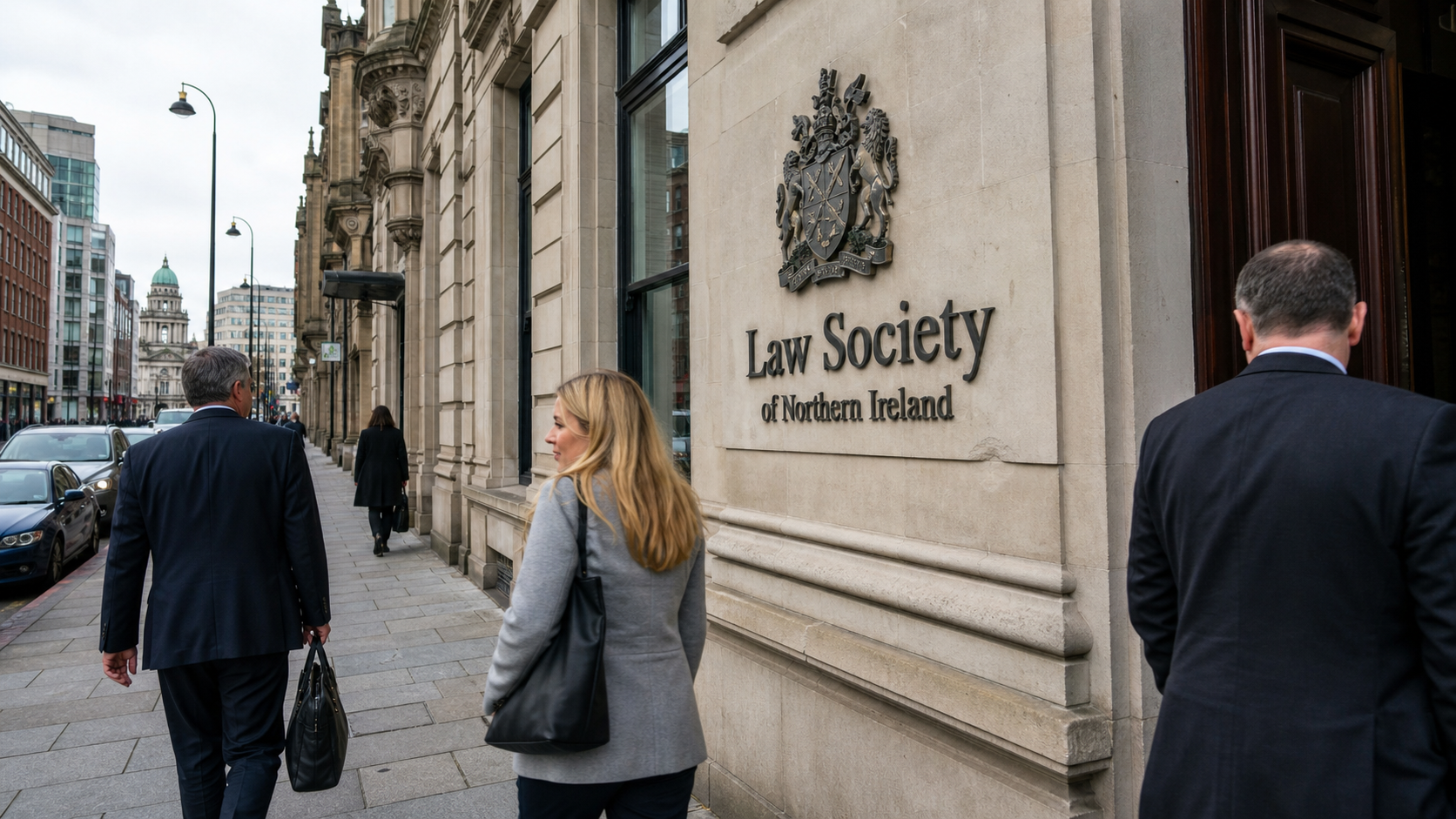
Law Society NI Chief Found Guilty of Gross Misconduct Over Character Reference for Convicted Paedophile Cousin
David Lavery, the chief executive of the Law Society of Northern Ireland, has been found guilty of gross misconduct by an independent disciplinary panel following his decision to provide a character reference for his cousin William Lloyd-Lavery, a former schoolteacher convicted of six counts of indecent assault against four former pupils — a finding that has intensified calls for his resignation from within the legal profession and raised serious questions about governance standards at one of Northern Ireland's most prominent professional bodies.
Background
The controversy surrounding David Lavery's position at the Law Society of Northern Ireland has been building since earlier this year, when it emerged that he had provided a character reference for his cousin William Lloyd-Lavery in connection with criminal proceedings relating to historical sexual offences. Lloyd-Lavery, a former schoolteacher, was convicted of six counts of indecent assault against four former pupils, offences committed in the 1970s. He was sentenced to two years in prison in April 2026.
The provision of a character reference for a convicted sex offender by the chief executive of a major legal professional body was immediately controversial. Northern Ireland's top judge had recently remarked that it is "unwise" for legal professionals to provide character references in such contexts — a comment that, while not directed specifically at Lavery, was widely understood to reflect the judiciary's view of the appropriate boundaries for those in positions of legal authority.
The fallout was swift. In August 2026, Secretary of State Sir Chris Bryant removed Lavery from his position as a commissioner for the Northern Ireland Human Rights Commission, following an independent review that found his actions were "capable of bringing the commission into disrepute" and represented a "severe failure of judgement regarding public office responsibilities." The Law Society subsequently initiated its own internal investigation, utilising a senior retired High Court judge to establish the facts before referring the matter to an independent disciplinary panel.
Key Developments
The independent disciplinary panel has now found Lavery guilty of gross misconduct, concluding that there was an evidential basis to suggest he had breached both contractual and common law duties. However, the panel determined that the appropriate sanction was one "short of dismissal" — a decision that has been met with considerable scepticism by members of the Law Society and by commentators who argue that gross misconduct by the chief executive of a professional body should carry more serious consequences.
Lavery has chosen not to appeal the panel's decision. He has publicly apologised for his actions, characterising the provision of the character reference as a "serious error in judgement" and expressing regret for the distress caused to the victims of his cousin's offences. Law Society president Mark Borland has stated that while Lavery retains his support, he acknowledges that the society "got it wrong" in how it managed the situation.
The handling of the matter has generated significant internal tension within the Law Society. Approximately 50 members called for a Special General Meeting to discuss the situation, with many seeking a motion of no confidence and Lavery's resignation. The organisation ultimately decided to adjourn the SGM to a later date. Philip Armstrong, a senior member of the Law Society Council, resigned from his position in protest at the organisation's handling of the affair.
Why It Matters
The Lavery case raises fundamental questions about accountability and governance within professional bodies in Northern Ireland. The Law Society is the regulatory and representative body for solicitors in Northern Ireland — an institution whose credibility depends on its ability to uphold the highest standards of professional conduct. When its own chief executive is found guilty of gross misconduct and retains his position, the message sent to the public, to the legal profession, and to the victims of the offences in question is a troubling one. The decision to sanction rather than dismiss also invites comparison with how the Law Society would be expected to treat a solicitor found guilty of comparable conduct. Professional bodies that apply different standards to their own leadership than to their members risk a fundamental loss of credibility. The fact that approximately 50 members felt strongly enough to call for a Special General Meeting suggests that this concern is widely shared within the profession itself.
Local Impact
The case has been closely followed by the legal community across Northern Ireland, from solicitors' firms in Belfast's city centre to practices in Derry, Newry, and Armagh. For many practitioners, the Law Society's handling of the matter has been a source of embarrassment and frustration. The organisation's reputation as a credible regulator and advocate for the profession depends on its ability to demonstrate that it holds its own leadership to the same standards it expects of its members. The resignation of Philip Armstrong from the Law Society Council is a significant indicator of the depth of feeling within the profession. The matter is also likely to attract scrutiny from the Department of Justice, which has oversight responsibilities in relation to the regulation of the legal profession in Northern Ireland.
What's Next
The adjourned Special General Meeting is expected to be rescheduled in the coming weeks, at which point members will have the opportunity to formally debate the situation and, if they choose, to pass a motion of no confidence in Lavery's continued leadership. The Law Society's Council will also need to address the governance questions raised by the affair, including whether its internal procedures for handling misconduct allegations against senior staff are adequate. The Department of Justice has indicated that it is monitoring the situation closely.