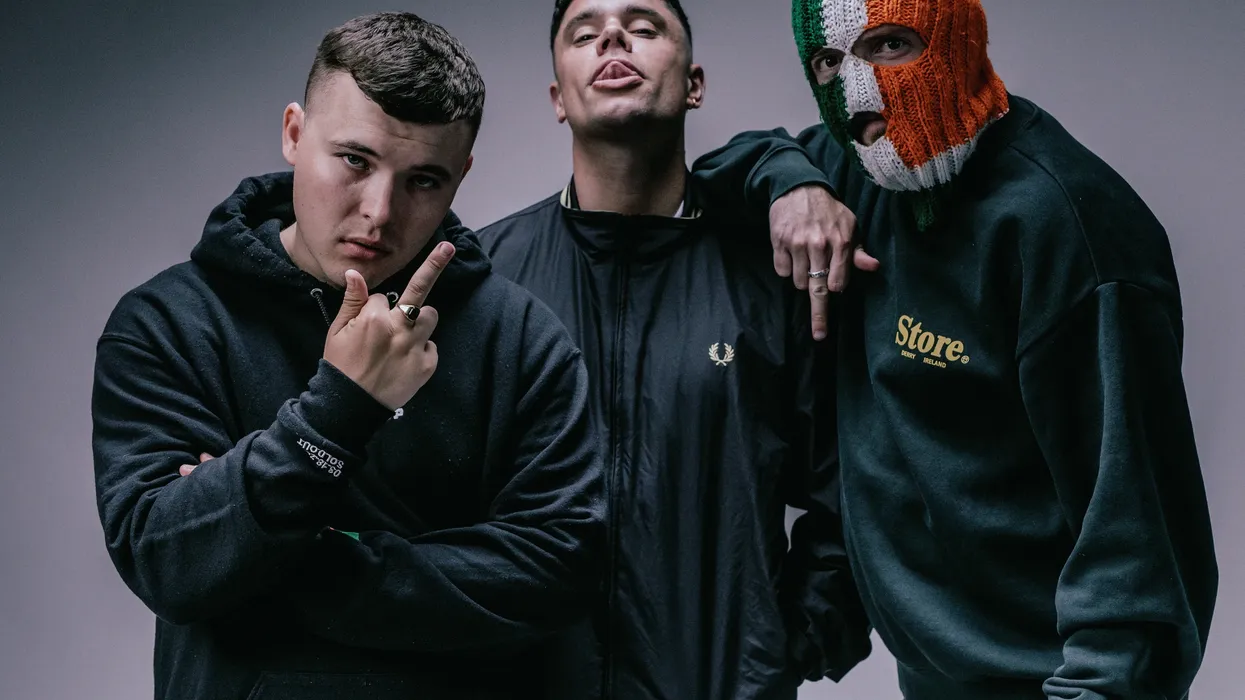
Kneecap's Defamation Case Against Canadian MP Stalls as Courts in Dublin and Ontario Adjourn on Procedural Grounds
Belfast rap trio Kneecap's defamation lawsuit against Canadian Liberal parliamentary secretary Vince Gasparro has hit procedural delays in both the Ontario Superior Court of Justice and the Dublin courts, with administrative errors and translation issues preventing the case from advancing. The lawsuit, which relates to a September 2025 video in which Gasparro claimed the group advocated for "political violence" and "glorified terrorist organisations," has been described by the band's legal team as a matter of fundamental importance to their reputation and their ability to continue their careers.
Background
Kneecap — the Belfast-based Irish language rap trio comprising Mo Chara, Móglaí Bap, and DJ Próvaí — have been one of the most talked-about acts in Irish music over the past several years, combining politically charged lyrics in Irish and English with a distinctive visual aesthetic and a willingness to engage with controversial subjects. Their music, which addresses themes of Irish identity, the legacy of the Troubles, and contemporary social issues, has attracted both devoted fans and fierce critics, and the group has become a lightning rod for debates about free speech, cultural identity, and the boundaries of artistic expression.
The dispute with Vince Gasparro arose in September 2025, when the Canadian Liberal parliamentary secretary posted a video on social media in which he claimed to be acting on behalf of the Government of Canada when he announced that the group had been deemed ineligible to enter the country. In the video, Gasparro alleged that the trio advocated for "political violence" and "glorified terrorist organisations" — allegations that Kneecap's legal team has described as "wholly inaccurate and defamatory" and that they say have caused substantial reputational harm to the group.
Documents tabled in the Canadian House of Commons subsequently revealed that neither the Prime Minister's Office nor the Canada Border Services Agency were consulted prior to Gasparro's public announcement. Federal records clarified that the cancellation of an electronic travel authorisation for one band member, Liam Óg Ó hAnnaidh, occurred in August 2025 due to incomplete information on an application, and that this did not constitute a permanent ban. The discrepancy between Gasparro's claims and the official record has been central to Kneecap's legal strategy.
Key Developments
The defamation lawsuit has encountered procedural difficulties in both jurisdictions where it has been filed. In the Ontario Superior Court of Justice, the initial attempt to serve and register the claim failed to meet specific provincial procedural requirements, and legal counsel is currently working to correct these administrative defects to allow the case to proceed to a hearing. In Dublin, Ms Justice Kathleen Noctor refused the group leave to serve legal papers outside the jurisdiction, citing a lack of proper translation for the plenary summons. The court indicated that the application may be refiled once the documentation is correctly formatted and translated.
The procedural delays are frustrating for the band and their legal team, but they are not unusual in complex cross-jurisdictional defamation cases. The legal team, led by Darragh Mackin of the Belfast-based firm Phoenix Law, has indicated that it is working to resolve the procedural issues as quickly as possible and that it remains confident in the merits of the case. Mackin has described the allegations made by Gasparro as "wholly inaccurate and defamatory" and has stated that the band is seeking a formal correction and clarification regarding the allegations made in the video.
The case has attracted significant attention in Ireland, Canada, and internationally, reflecting the broader debate about the treatment of Irish artists and the limits of political speech. Kneecap's profile has grown significantly in recent years, with the group's music reaching audiences far beyond Ireland and their political commentary attracting both admiration and controversy. The defamation case is the latest chapter in a story that has made the group one of the most discussed acts in contemporary Irish culture.
Why It Matters
The Kneecap defamation case raises important questions about the responsibilities of politicians when making public statements about artists and cultural figures. Gasparro's video, which was presented as an official government announcement but which was made without the knowledge or approval of the relevant government agencies, caused significant reputational damage to the group and affected their ability to tour and perform in Canada. The case is a reminder that politicians who make false or misleading statements about private individuals — even in the context of political debate — can face legal consequences for those statements.
The case also has implications for the broader debate about the treatment of Irish artists who engage with political subjects. Kneecap's music is explicitly political, addressing themes of Irish identity, the legacy of the Troubles, and contemporary social issues. The group has been the subject of controversy in both Ireland and internationally, with some critics arguing that their lyrics cross the line from political commentary into the glorification of violence. The defamation case provides an opportunity for the courts to examine those allegations in a legal context and to determine whether they are supported by the evidence.
For the Irish music industry, the case is a significant moment. Kneecap are one of the most successful Irish acts of recent years, and their ability to tour and perform internationally is central to their commercial success. The reputational damage caused by Gasparro's video — and the ongoing uncertainty created by the legal proceedings — has had a real impact on the group's career, and the outcome of the case will have implications for other Irish artists who engage with political subjects.
Local Impact
In Belfast, where Kneecap are based and where they have their most devoted following, the defamation case has generated significant interest and support. The group's music is deeply rooted in the culture and politics of Belfast and the north of Ireland, and their fans regard the defamation case as an attack not just on the band but on the broader tradition of political art and music that they represent. The Irish language community, which has been a strong supporter of Kneecap's work, has also expressed solidarity with the group. In the Republic, the case has been followed closely by the music industry and by cultural commentators, who regard it as an important test of the rights of Irish artists to engage with political subjects without facing false and damaging allegations from foreign politicians.
What's Next
Kneecap's legal team is working to resolve the procedural issues in both the Ontario Superior Court and the Dublin courts, with a view to advancing the case to a substantive hearing as quickly as possible. The timeline for the case is uncertain, given the complexity of the cross-jurisdictional proceedings and the procedural delays that have already occurred. The band has indicated that it will continue to pursue the case regardless of the procedural difficulties, and that it is committed to obtaining a formal correction and clarification from Gasparro. A further hearing in the Dublin courts is expected in the coming weeks, and the Ontario proceedings are expected to resume once the administrative defects have been corrected.