Jon McConnell Turns Down Love Island for Commonwealth Gold — and Delivers on His Promise
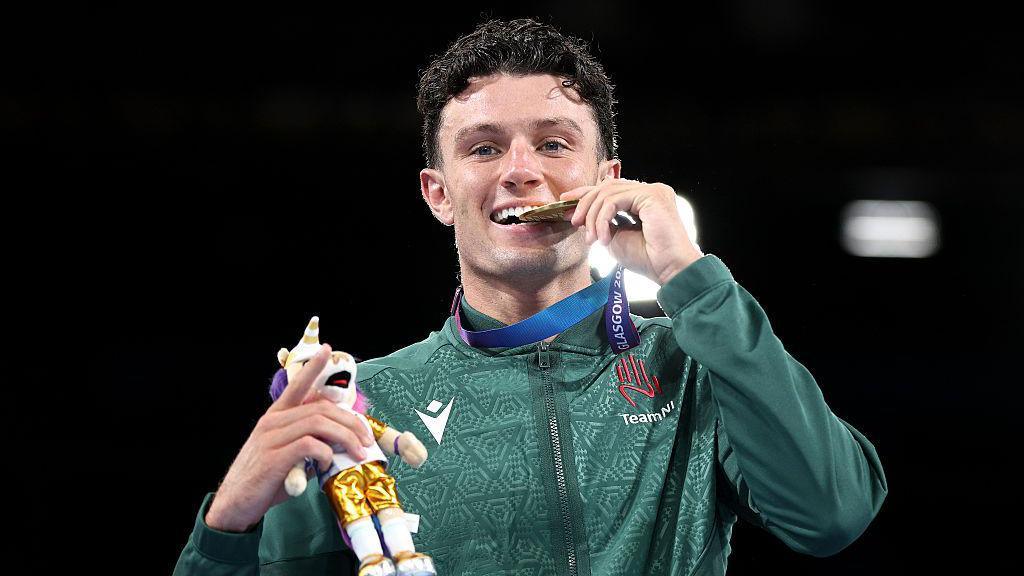
Belfast boxer Jon McConnell has claimed Commonwealth Games gold in the men's light-middleweight division at the 2026 Glasgow Games, defeating Wales' Orlando Holley-Sotomi on a split decision at the SEC Centre — vindicating, in the most emphatic terms possible, his decision to turn down a place on the Love Island television programme in order to pursue his sporting dream.
Background
McConnell, who is 23 years old and trains out of the Holy Trinity Boxing Club in west Belfast, had been approached by producers of the ITV reality series earlier this year. The offer, which would have guaranteed him a significant public profile and the kind of media exposure that has launched careers for other athletes, was declined without hesitation. McConnell told those close to him that he had a date circled on his calendar — August 1, 2026 — and that nothing was going to get in the way of what he intended to do on that day.
That date was the men's light-middleweight boxing final at the 2026 Commonwealth Games. McConnell had been building towards this moment for the better part of three years, working through the amateur ranks with a quiet determination that belied his youth. His coaches at Holy Trinity had long identified him as a talent capable of competing at the highest level, and the Commonwealth Games represented the clearest opportunity to prove it on an international stage.
Northern Ireland boxing has a proud tradition at the Commonwealth Games, with figures such as Carl Frampton and Paddy Barnes having used the competition as a springboard to professional success. McConnell was acutely aware of that lineage and spoke openly in the weeks before the Games about the responsibility he felt to honour it.
Key Developments
The final itself was a tense, competitive affair. McConnell came into the bout as a slight favourite, but Holley-Sotomi proved a difficult opponent, landing heavy left hands in the opening round that forced the Belfast man to reassess his approach. Rather than panic, McConnell adjusted his footwork and began to use his jab more effectively, gradually taking control of the contest through the middle rounds.
By the final round, McConnell was the more composed fighter, and the judges reflected that in their scorecards. Two of the three officials scored the bout 30-26 in his favour, with the third scoring it 29-27 for Holley-Sotomi. The split decision was enough to confirm McConnell as Commonwealth champion, and the roar from the Northern Ireland supporters inside the SEC Centre was audible long after the final bell.
It was the second gold medal for Team Northern Ireland at the 2026 Games, following Kate O'Connor's remarkable heptathlon victory earlier in the week. McConnell's win was the only gold secured by the NI boxing team, which nonetheless contributed six medals to the overall tally of 16 — the second-highest haul in Northern Ireland's Commonwealth Games history.
Why It Matters
McConnell's story resonates beyond the sporting achievement itself. In an era when the line between athlete and celebrity has become increasingly blurred, his decision to prioritise craft over profile is a reminder that the two are not always compatible. The Love Island offer was not a trivial one — previous contestants have leveraged their appearances into substantial commercial careers — and declining it required a clarity of purpose that is rare at any age, let alone at 23.
There is also a broader significance for Northern Ireland boxing. The sport has faced funding pressures in recent years, with the Ulster branch of the Irish Athletic Boxing Association navigating a difficult financial landscape. High-profile performances at major Games events are among the most effective tools available for attracting sponsorship and sustaining grassroots programmes. McConnell's gold, coming alongside O'Connor's heptathlon triumph, provides a compelling argument for continued investment in NI sport at the elite level.
Unlike the Republic's boxing programme, which has benefited from sustained Lottery funding and a strong Olympic pipeline, Northern Ireland's amateur boxing infrastructure relies heavily on voluntary effort and community support. McConnell's success is as much a tribute to that community as it is to his own talent.
Local Impact
The Holy Trinity Boxing Club in west Belfast, where McConnell has trained since his early teens, was the scene of jubilant celebrations on Friday evening as the result came through. The club, which has produced a string of competitive amateur boxers over the decades, will benefit directly from the increased attention that a Commonwealth gold medal brings. Coaches there have already spoken of a surge in enquiries from young people wanting to take up the sport.
In the Falls Road area more broadly, McConnell's victory was greeted with the kind of communal pride that elite sporting success tends to generate in tight-knit urban communities. Local politicians from across the political spectrum were quick to offer congratulations, with Belfast City Council expected to formally recognise his achievement in the coming weeks. For a city that has invested heavily in its sporting infrastructure over the past decade, McConnell's gold is precisely the kind of return that justifies that investment.
What's Next
McConnell has indicated that he intends to turn professional in the coming months, with several promoters already understood to be in contact with his management team. The Commonwealth gold will significantly strengthen his hand in those negotiations, and there is considerable interest in whether he might follow the path of Carl Frampton towards a world title challenge within the next three to four years. His first professional bout is expected to be announced before the end of 2026, with a Belfast venue the most likely setting for his debut.