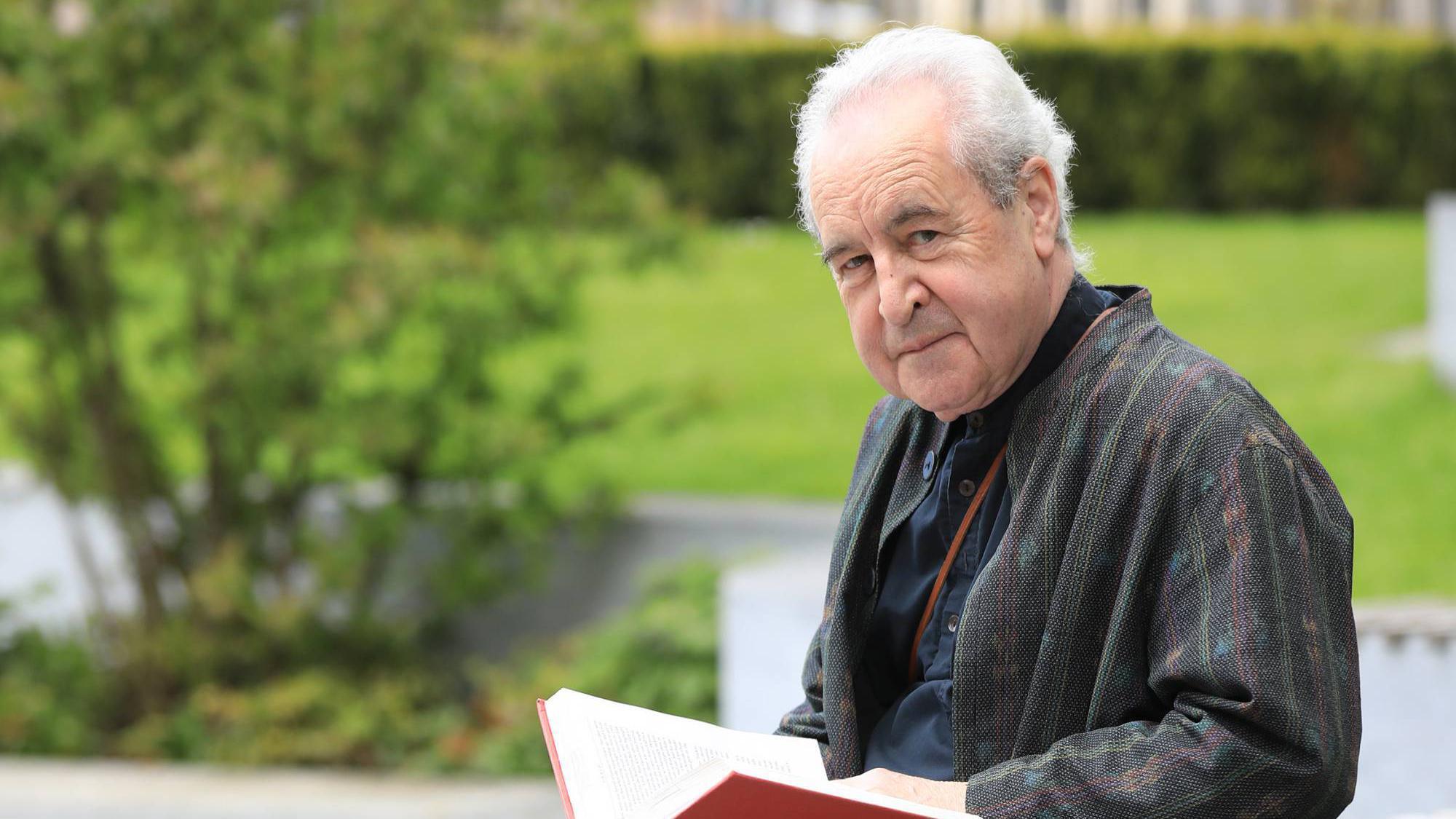
John Banville Withdraws from Spanish Festival in Protest at Disinvitation of Author Over Israel Views
Booker Prize-winning Irish novelist John Banville has withdrawn from the International Festival of Art, Literature, and Cultural Humanities in Granada, Spain, in protest at the festival's decision to disinvite Argentinian author Ariana Harwicz following pressure from pro-Palestinian student groups who objected to her opposition to the cultural boycott of Israel. Banville, who was scheduled to appear at the festival's closing ceremony, declined to elaborate on his decision, saying only: "My cancellation was my statement."
Background
John Banville, born in Wexford in 1945, is one of the most celebrated Irish novelists of his generation. His 2005 novel The Sea won the Booker Prize, and his body of work — which includes the Cleave trilogy, the Benjamin Black crime novels, and numerous other works — has established him as a major figure in world literature. He is known for his precise, luminous prose and for his willingness to engage with difficult moral and philosophical questions.
Ariana Harwicz is a Jewish-Argentinian novelist whose work has been widely praised in Europe and Latin America. She has been a vocal opponent of cultural boycotts of Israel, arguing that the isolation of Israeli artists and intellectuals is counterproductive and that cultural exchange is a more effective tool for promoting peace and understanding. Her position has made her a controversial figure in some literary circles, particularly since the escalation of the conflict in Gaza.
The International Festival of Art, Literature, and Cultural Humanities — known as Cultur-Alh — is held annually at the University of Granada and brings together writers, artists, and intellectuals from across the world. The second edition of the festival, which ran from 21 to 27 September 2026, had attracted a strong international lineup, with Banville as one of its headline acts.
Key Developments
The festival's organisers rescinded Harwicz's invitation after receiving requests from the University Network for Palestine of Granada and other participants to exclude her. The festival director, Ana Gallego Cuiñas, stated that the decision was made in alignment with the university's "institutional commitments to Palestine and human rights" and that potential protests would have made it "highly unlikely" to have a productive discussion about Harwicz's work.
Harwicz characterised the festival's decision as yielding to "militants" and "terror," and her exclusion triggered significant backlash from the international cultural community. A petition defending Harwicz and criticising the festival for replacing "free confrontation of ideas with ideological selection" was signed by more than 350 cultural and political figures, including former French Prime Minister Manuel Valls and philosopher Fernando Savater. The University of Granada issued a statement clarifying that it was not involved in the decision and did not endorse it.
Banville's withdrawal from the festival's closing ceremony was announced without elaboration. His statement — "My cancellation was my statement" — was widely interpreted as a defence of the principle of free expression and a rejection of the idea that authors should be excluded from cultural events on the basis of their political views.
Why It Matters
The Banville-Harwicz affair matters because it sits at the intersection of several of the most contested questions in contemporary cultural life: the relationship between art and politics, the limits of free expression, and the appropriate response of cultural institutions to political pressure. The decision to disinvite Harwicz — a novelist, not a politician — on the basis of her views about a cultural boycott raises serious questions about the role of universities and literary festivals as spaces for the free exchange of ideas.
Banville's response is significant because it comes from one of Ireland's most respected literary figures, and because it is consistent with a long tradition of Irish writers defending the principle of free expression even when they disagree with the views being expressed. The Irish literary tradition — from Beckett to Heaney to Banville himself — has always been characterised by a commitment to the autonomy of the artistic imagination from political constraint.
Local Impact
In Ireland, the affair has prompted a lively debate about the relationship between culture and politics, and about the responsibilities of Irish cultural institutions in the current international climate. The Dublin Theatre Festival, which is currently under way, has faced similar questions about its programming choices, and several Irish literary festivals have been asked to clarify their positions on cultural boycotts. The Irish Writers' Union has issued a statement defending the principle of free expression and calling on cultural institutions to resist pressure to exclude artists on the basis of their political views.
What's Next
The Cultur-Alh festival concluded on 27 September without Banville's participation. The festival's organisers have indicated that they will review their decision-making processes in the light of the controversy, but have not indicated that they intend to apologise to Harwicz or to reverse the decision to disinvite her. Banville is expected to return to his writing schedule in the coming weeks, with a new novel reportedly in progress. The broader debate about cultural boycotts and free expression in the literary world is unlikely to be resolved quickly, and the Harwicz affair will continue to be cited as a significant case study in the months ahead.