Irish Rail to Seek Damages from Spanish IT Firm After €50 Million Writedown on Failed Train Control Project
Irish Rail has confirmed that it is pursuing legal action against Spanish technology group Indra following a €50 million writedown in its 2025 accounts on a Traffic Management System project that was supposed to serve as the "brain" of Ireland's national rail network but has instead become one of the most expensive and embarrassing public-sector IT failures in the state's recent history.
Background
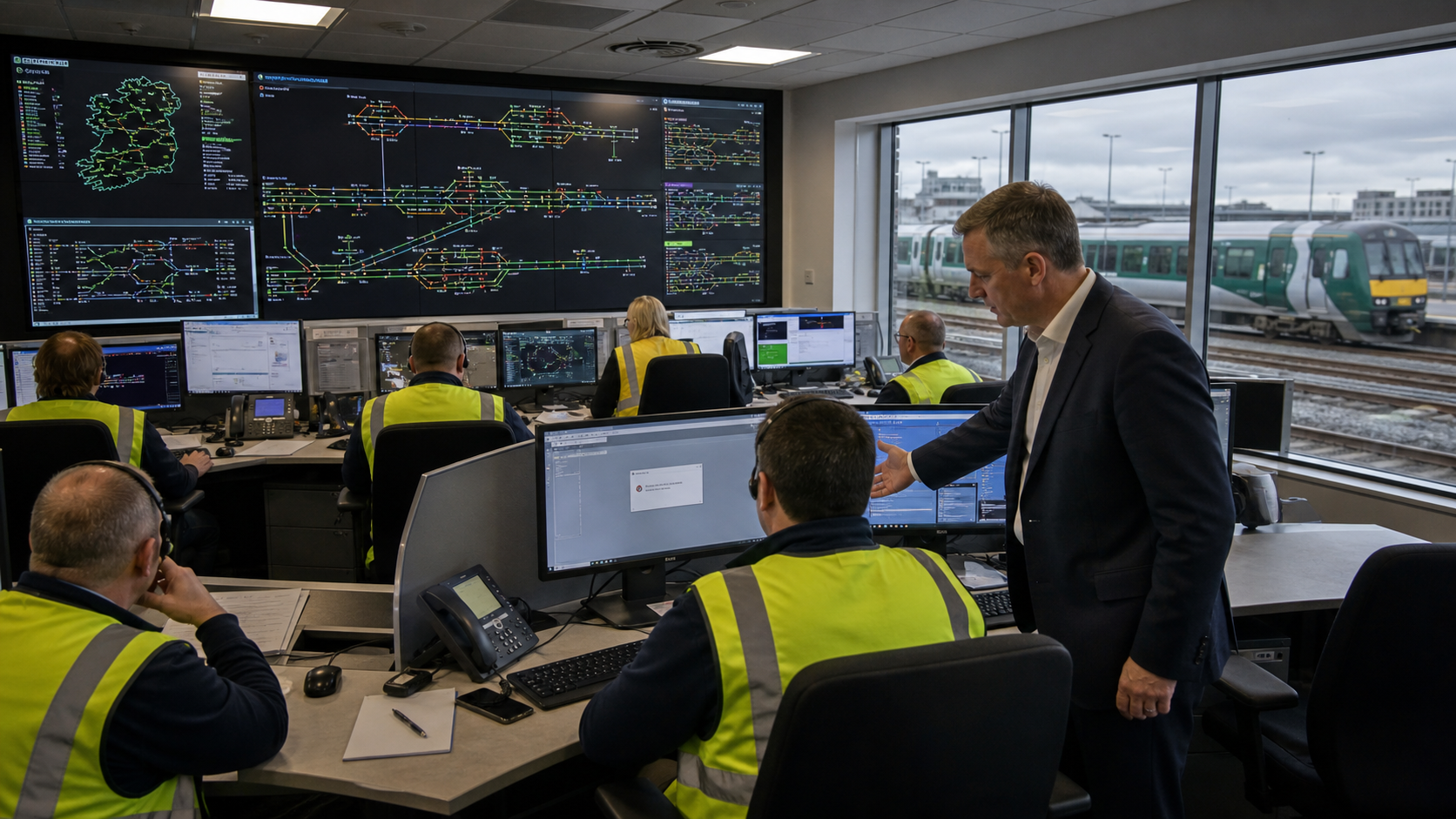
The Traffic Management System was conceived as a transformative project for Irish Rail, designed to automate and modernise the control of train movements across the entire national network from a new National Train Control Centre at Dublin's Heuston Station. When the contract was awarded to Indra in 2020, the project was budgeted at under €20 million and was expected to be delivered by 2024. It was, in the language of the procurement documents, the "brain" that would allow Irish Rail to manage its network with the kind of precision and efficiency that modern rail operations require.
What followed was a textbook case of public-sector IT project failure. Costs escalated, deadlines were missed, and the software product that Indra delivered consistently failed to meet the technical specifications required for deployment on a live rail network. By early 2026, Irish Rail's leadership had reached a formal position of no confidence in Indra's ability to deliver a functional product, a conclusion that was confirmed when a redeveloped version of the software released for testing in April 2026 was found to contain "many of the same systemic issues" as its predecessors.
The Public Accounts Committee has been scathing in its assessment of the project, with members describing it as a "national scandal" and a "Groundhog Day" for Irish public-sector IT — a reference to the long history of expensive technology projects that have failed to deliver on their promises. Concerns have also been raised about Indra's other public-sector contracts in Ireland, including a separate €35 million next-generation ticketing system for the National Transport Authority.
Key Developments
Irish Rail confirmed this week that it has formally terminated its contract with Indra and is now reviewing its legal options, including the pursuit of damages. The company has written down the full €50 million value of the project in its 2025 accounts, a decision that reflects its assessment that the software developed by Indra has no recoverable value. The writedown will have a significant impact on Irish Rail's financial position and may affect its capacity to invest in other capital projects in the short term.
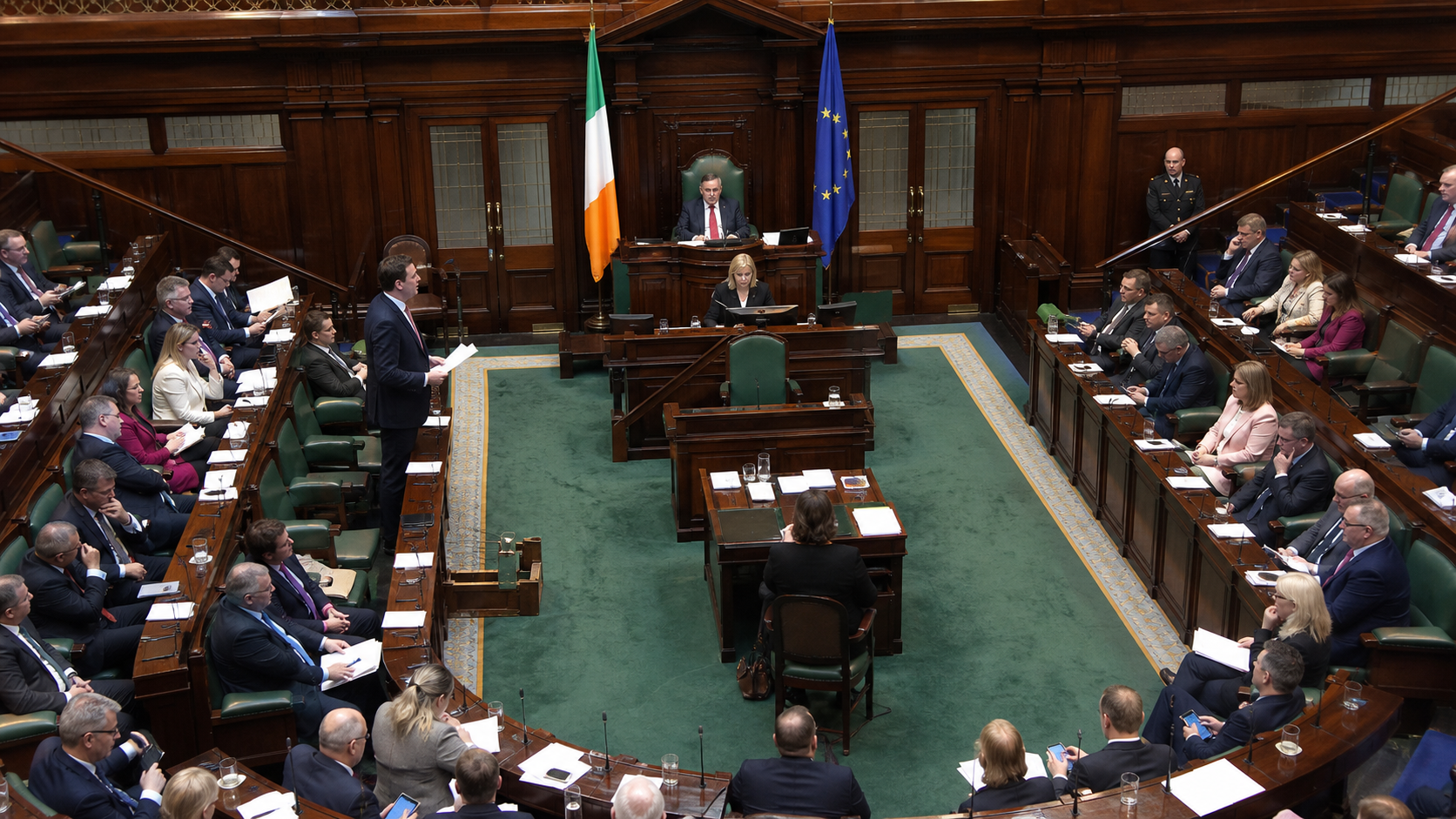
The Department of Transport, the National Transport Authority, and Irish Rail have all been summoned to appear before the Public Accounts Committee to explain how the project was allowed to reach this point. Questions have been raised about the governance structures that were in place to monitor the project's progress, the adequacy of the contractual protections that Irish Rail had in place, and the decision-making process that led to the contract being awarded to Indra in the first place. Irish Rail's chief executive is expected to appear before the committee in October.
Why It Matters
The Irish Rail IT failure is significant not just because of the scale of the financial loss — €50 million is a substantial sum for a semi-state company — but because of what it reveals about the governance of major public-sector technology projects in Ireland. This is not the first time that a large Irish public-sector IT project has failed spectacularly: the history of Irish public administration includes a long list of technology projects that have run over budget, missed deadlines, and failed to deliver the promised benefits. The pattern suggests systemic weaknesses in how such projects are specified, procured, and managed, weaknesses that no single project failure is likely to address. The fact that Indra holds other significant public-sector contracts in Ireland — including the NTA ticketing project — raises urgent questions about whether those contracts are being managed with the rigour that the Irish Rail experience suggests is necessary.
Local Impact
The failure of the Traffic Management System has practical consequences for rail passengers across Ireland. The system was intended to enable more efficient management of train movements, reducing delays and improving punctuality on the network. Without it, Irish Rail continues to rely on older, less efficient control systems that limit its ability to respond dynamically to disruptions. Commuters on the Dublin commuter network — the DART, the Maynooth line, the Kildare line — are the most directly affected, as these are the routes where the benefits of a modern traffic management system would have been most immediately felt. Irish Rail has indicated that it is now assessing alternative suppliers for the project, but a new system is unlikely to be operational before 2029 at the earliest.
What's Next
Irish Rail's legal team is expected to file a formal claim against Indra before the end of 2026. The Public Accounts Committee will hold hearings on the project in October, with the Department of Transport, the NTA, and Irish Rail all expected to give evidence. The NTA has been asked to provide an update on the status of Indra's ticketing system contract at the same hearings. Irish Rail is expected to issue a tender for a replacement Traffic Management System before the end of the year, with a new contract expected to be awarded in the first half of 2027.