Irish Housing Crisis Remains 'Hard Slog' as Government Misses Targets
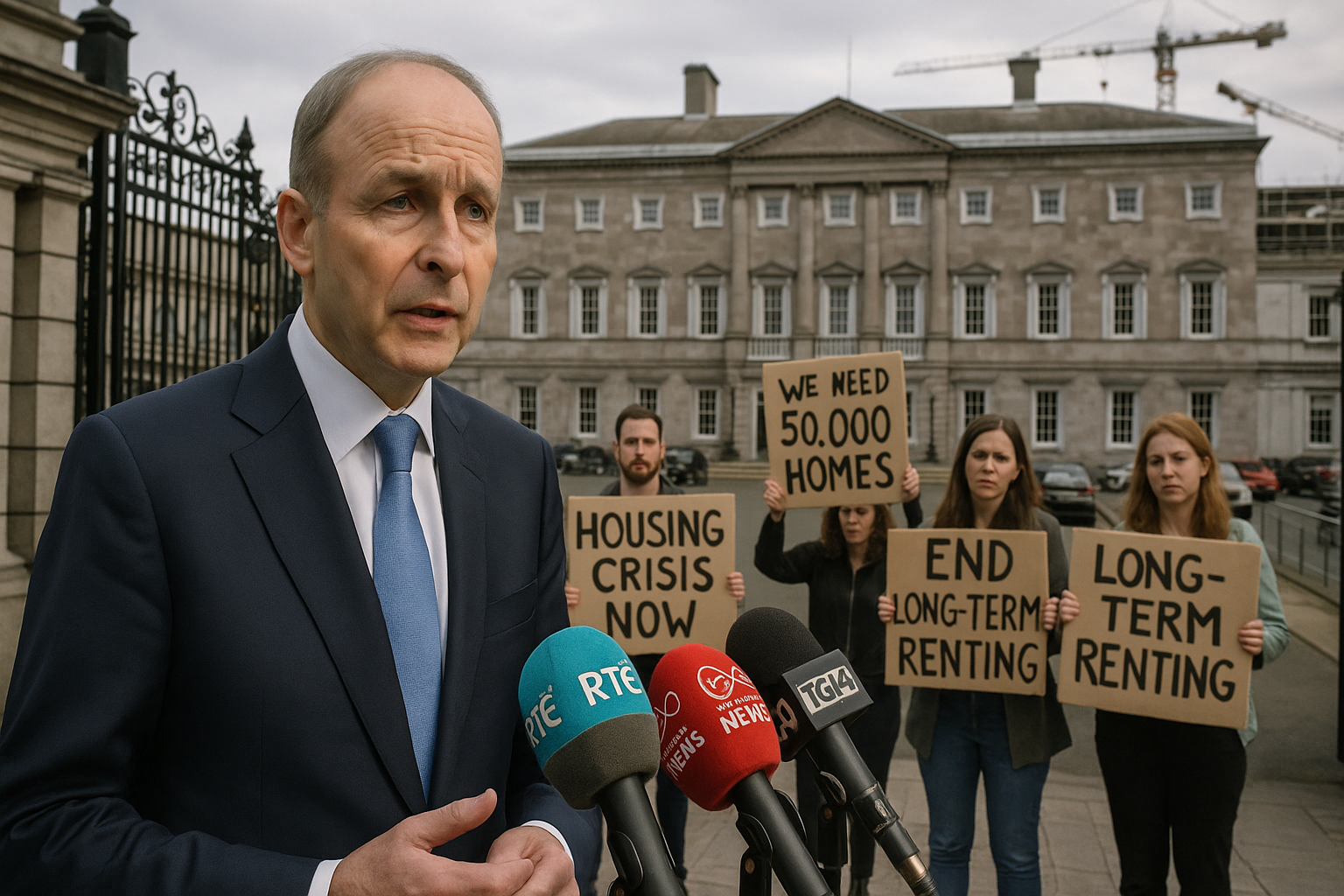
Taoiseach Micheál Martin has acknowledged that delivering adequate housing supply in Ireland remains a hard slog, as the government continues to fall short of its ambitious target of 50,000 new homes per year despite a significant increase in completions in 2025 — a shortfall that is fuelling political pressure from opposition parties and raising serious questions about the coalition's ability to deliver on its central domestic promise.
Housing remains the most dominant issue in Irish politics, with affordability and supply continuing to dominate the national agenda as the government pushes forward with a series of policy measures aimed at accelerating construction and making home ownership more accessible for a generation that has largely been priced out of the market.
Background
The Irish government's housing strategy — now operating under the "Delivering Homes, Supporting Communities 2025-2030" plan — has set a central target of delivering 300,000 new homes by the end of 2030. The National Development Plan has allocated nearly €36 billion for the Department of Housing between 2026 and 2030, with Budget 2026 alone committing over €9 billion to housing measures. The scale of the investment reflects the severity of the crisis, which has seen rents and house prices reach record levels in recent years, pushing homeownership out of reach for many working families.
The government's strategy has evolved significantly, shifting from annual targets to a longer-term framework. Key policy measures include a reduction in the VAT rate on completed apartments from 13.5% to 9%, enhanced corporation tax deductions for developers building ten or more apartments, and significant infrastructure investment in water, electricity, and road networks to support new developments.
Key Developments
Housing completions saw a significant 20.4% increase in 2025, reaching 36,284 units — the highest figure since 2011 — but the Taoiseach has conceded this figure is not enough to meet the long-term goal of 300,000 new homes by the end of 2030. Concerns have also emerged about a notable drop in housing starts in 2025 and a decline in planning approvals, which could threaten future supply pipelines even as current completions improve.
The Health Service Executive (HSE) has faced criticism over its handling of nearly 200 vacant properties that could be converted into homes, with some properties having sat empty for over a decade. Labour leader Ivana Bacik accused the HSE of having a cavalier approach to the crisis, while the Taoiseach responded that the HSE had been instructed to dispose of surplus properties, with the Land Development Agency given first option to acquire them for housing. Progress, however, has been slow.
Why It Matters
The housing crisis is widely seen as the defining political challenge for the current coalition government. Failure to deliver meaningful progress on supply and affordability risks significant electoral consequences, with Sinn Féin continuing to press the government on the issue from opposition. The party's "A Home of Your Own" plan proposes to deliver 300,000 new homes over five years, with 125,000 of these being public and affordable homes — a direct challenge to the government's approach.
The crisis is not merely a political problem but a social one. A generation of young Irish people has been effectively priced out of homeownership, with rents in Dublin and other major cities at record levels. The government's ability to demonstrate tangible progress in the coming months will be crucial to its political credibility.
Local Impact
The housing crisis is not confined to the Republic. Northern Ireland is experiencing its own severe housing pressures, with the number of new homes being built actually lower than a decade ago — just 6,624 housing starts in 2025, down from 7,457 in 2016. Average rents in Belfast have surged, reaching £1,130 per month by early 2026, a 5.8% annual increase. Almost 50,000 households remain on the social housing waiting list in Northern Ireland, a figure that underscores the scale of the challenge facing the Stormont Executive. Sinn Féin's housing minister at Stormont has advanced plans to reform the Northern Ireland Housing Executive, allowing it to borrow money to build new social housing for the first time in decades.
What's Next
The government's performance on housing will be a crucial test of its stability in 2026. Further policy measures are expected as ministers seek to demonstrate progress ahead of the next electoral cycle. The full details of the government's housing strategy are reported by The Irish Times, with Northern Ireland's housing challenges covered in detail by The Irish News.