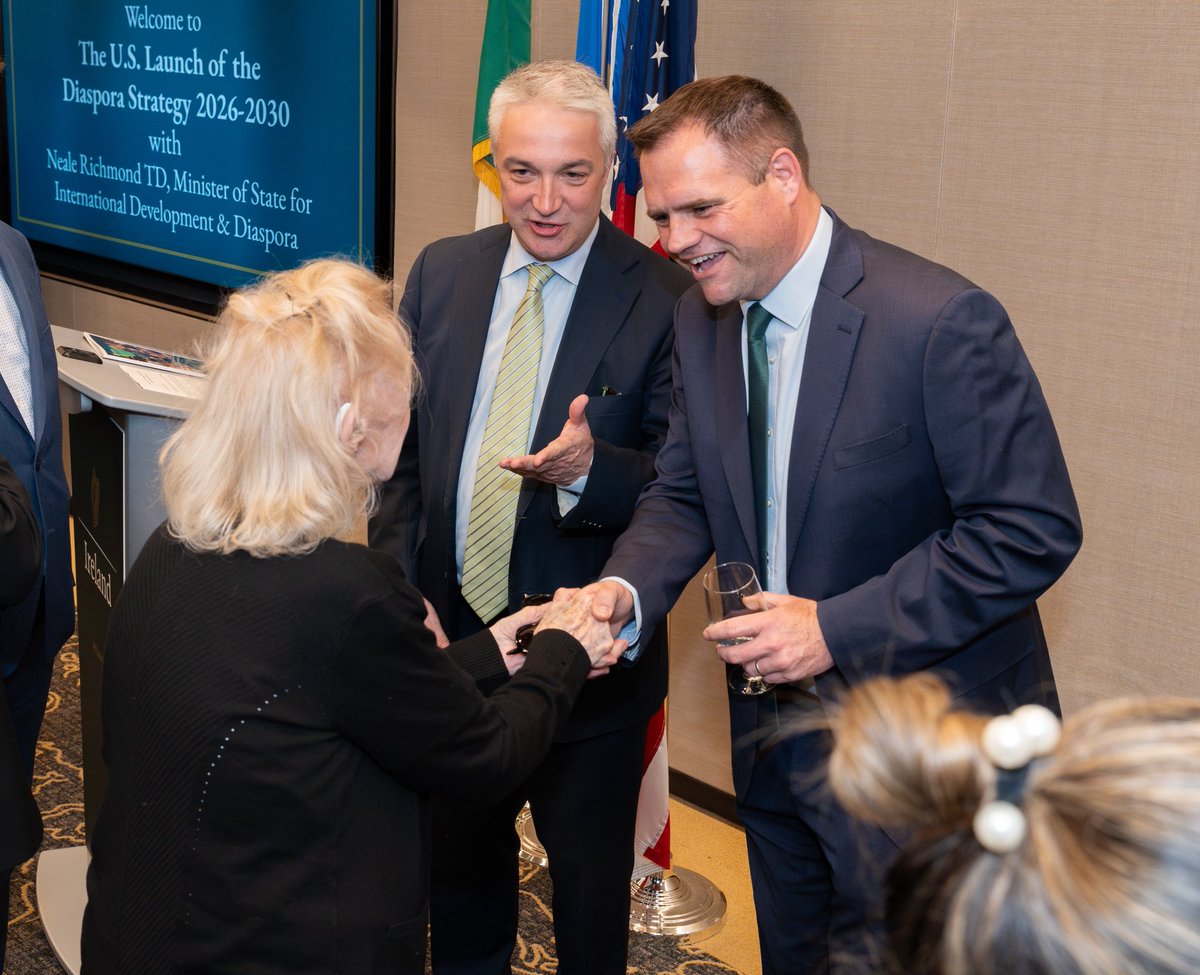
Irish Government Launches Diaspora Strategy 2026-2030 with 23 Commitments to Support 80 Million Global Irish
The Irish government has officially launched its Diaspora Strategy 2026-2030, a comprehensive plan containing 23 core commitments designed to deepen engagement with the 80-million-strong global Irish community — with Minister of State for the Diaspora Neale Richmond emphasising the government's "duty of care" to new emigrants and formally embracing an "affinity diaspora" of people connected to Ireland through work, study, or cultural ties rather than ancestry alone.
Background
Ireland's relationship with its diaspora is one of the defining features of the country's national identity. The Great Famine of the 1840s and the waves of emigration that followed it created an Irish diaspora that now numbers an estimated 80 million people worldwide — a figure that dwarfs the population of the island of Ireland itself. This diaspora has been a source of cultural richness, political influence, and economic connection for Ireland, and successive governments have recognised the importance of maintaining and developing the relationship between the state and its citizens and descendants abroad.
The Emigrant Support Programme, which provides funding to organisations supporting Irish emigrants in countries around the world, has been a cornerstone of the government's diaspora engagement for over two decades. The programme funds a wide range of organisations, from the London Irish Centre in Camden to community groups in Boston, Sydney, and Buenos Aires, providing practical support to Irish emigrants who may be experiencing poverty, isolation, or other difficulties.
The new Diaspora Strategy 2026-2030 builds on this foundation but goes significantly further, reflecting a more ambitious and comprehensive vision of what the relationship between Ireland and its global community should look like. The strategy was developed through extensive global consultations, with the process deliberately beginning in Nairobi, Kenya — a signal of the government's intention to engage with the diaspora beyond the traditional strongholds of the United States and United Kingdom and to reflect the more globalised footprint of the modern Irish abroad.
Key Developments
The strategy's 23 core commitments cover a wide range of areas, from practical support for new emigrants to cultural engagement, political participation, and the facilitation of return migration. Among the most significant commitments is the formal embrace of an "affinity diaspora" — individuals who feel a strong connection to Ireland through work, study, or cultural ties, but who have no Irish ancestry. This is a significant conceptual shift, moving the definition of "Irish" beyond the purely genealogical to encompass a broader community of people who have been shaped by their connection to Ireland.
Minister Richmond has emphasised the government's "duty of care" to new emigrants, noting that "new Irish emigrants can become isolated quite quickly" and that the state has a responsibility to ensure that people who leave Ireland have access to support networks and practical assistance in their new countries. The strategy commits to improving the information and support available to people before they emigrate, as well as to strengthening the networks of Irish community organisations abroad that provide practical help to those who arrive without established connections.
The strategy also addresses the administrative hurdles faced by the approximately 30,000 people who return to Ireland each year. These include issues such as driving licence recognition, social welfare access, and the re-establishment of credit histories — practical barriers that can make the transition back to Irish life more difficult than it needs to be. The government has committed to working with relevant agencies to streamline these processes and to make the return experience more welcoming and less bureaucratic.
Why It Matters
The Diaspora Strategy 2026-2030 matters because it represents a more sophisticated and ambitious engagement with the Irish diaspora than any previous government initiative. The formal embrace of the affinity diaspora is particularly significant — it acknowledges that Irishness is not simply a matter of blood or ancestry but a living, evolving identity that can be acquired through experience and connection. This is a more inclusive and forward-looking vision of what it means to be Irish, and it has the potential to strengthen Ireland's relationships with communities around the world that have a genuine connection to the country but may not have felt fully included in previous diaspora initiatives.
The strategy also matters because of the practical commitments it contains. The Emigrant Support Programme has been a valuable resource for Irish emigrants in difficulty, but the new strategy goes further, committing to proactive support for new emigrants before they encounter difficulties, and to addressing the systemic barriers that make return migration more difficult than it should be. These are concrete, measurable commitments that will be subject to public scrutiny and accountability.
Local Impact
The strategy's impact will be felt most directly by the Irish communities abroad that it is designed to support. In London, the London Irish Centre — which received €6.75 million in Irish government funding for its redevelopment — will be a key delivery partner for the strategy's commitments in Britain. In the United States, where the Irish-American community remains one of the most politically influential diaspora communities in the world, the strategy's commitments around political engagement and cultural connection will be welcomed by organisations that have long advocated for a more active Irish government presence. In Australia, which has now overtaken the United States as the leading destination for Irish emigrants, the strategy's commitment to strengthening support networks in new destinations will be particularly relevant, given the rapid growth of the Irish community there in recent years.
What's Next
The Diaspora Strategy 2026-2030 will be implemented through a combination of direct government action and funding to partner organisations. An implementation plan, setting out the specific actions and timelines for each of the 23 commitments, will be published before the end of the year. The Department of Foreign Affairs will establish a monitoring and evaluation framework to track progress against the commitments, with annual reports to be published publicly. Minister Richmond has indicated that he will convene a global diaspora forum in 2027, bringing together representatives of Irish communities from around the world to review progress and identify further priorities for engagement.