Ireland Takes the Helm of the EU
Ireland has assumed the Presidency of the Council of the European Union, taking on one of the most significant diplomatic responsibilities in the country's history as a member of the bloc. The Irish Presidency, which runs from July 1 to December 31, 2026, will see Ireland chair meetings of EU ministers and working groups across all policy areas, playing a crucial role in shaping the EU's legislative agenda and in brokering agreements between member states.
The opening ceremony of the Irish Presidency took place at Dublin Castle on July 1, with the Taoiseach and senior government ministers outlining Ireland's priorities for the six-month term. The ceremony was attended by senior EU officials, including the President of the European Commission and the President of the European Parliament, reflecting the importance of the occasion and the high expectations that have been placed on Ireland's presidency.
Ireland's Priorities
Ireland has outlined a range of priorities for its EU Presidency, reflecting both the country's national interests and its broader vision for the future of the European Union. Key priorities include the completion of the EU's multi-annual financial framework, the advancement of the EU's climate and energy agenda, the strengthening of the EU's response to the situation in the Middle East, and the promotion of a more competitive and innovative European economy.
The Irish Presidency has also indicated that it will use its position to push for a stronger EU response to the situation in Gaza and the occupied Palestinian territories, building on Ireland's longstanding commitment to Palestinian rights and its recent legislative efforts in this area. This ambition has been welcomed by human rights organisations and by other EU member states that share Ireland's concerns about the humanitarian situation in the region.
The Diaspora Dimension
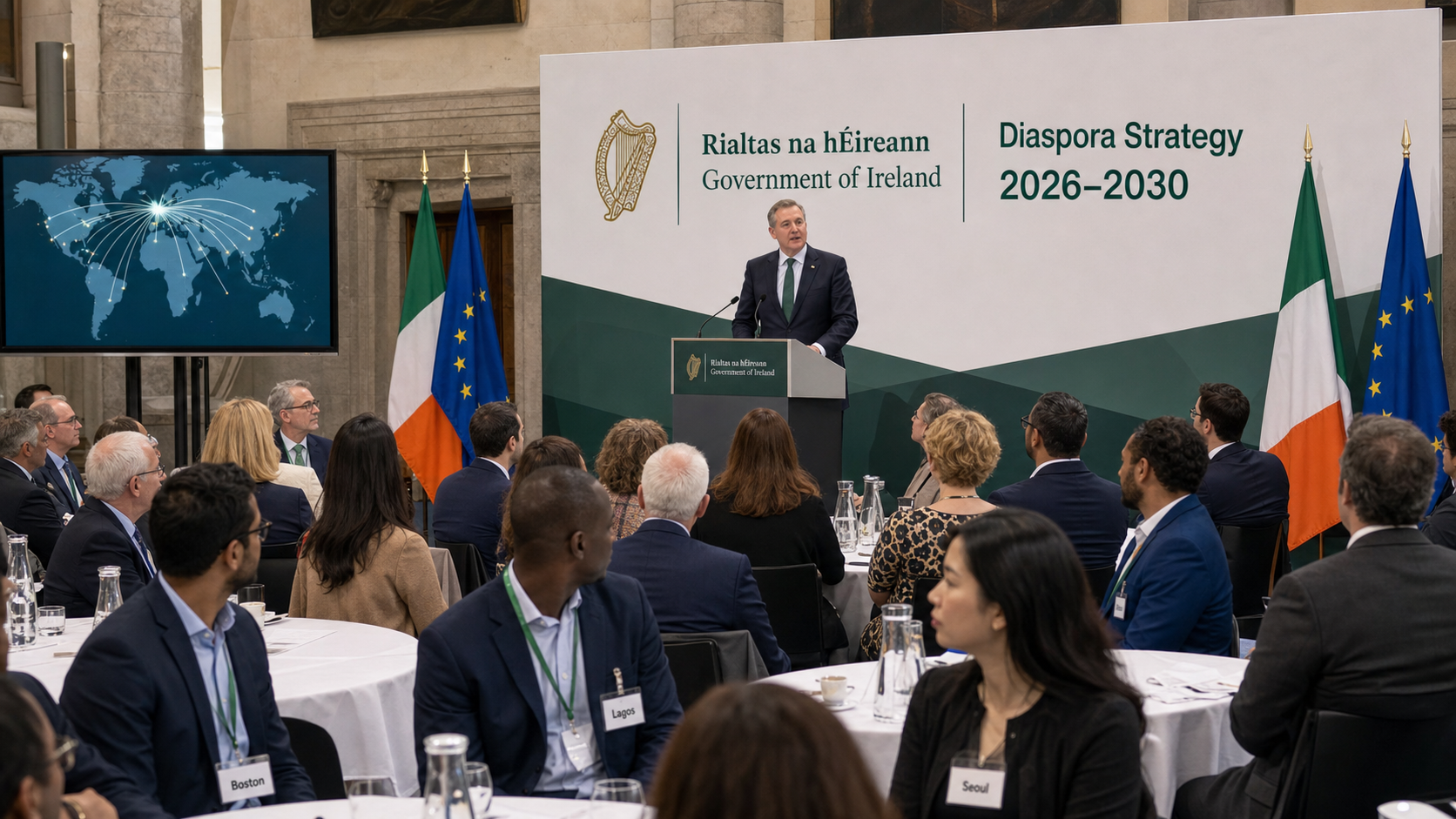
The Irish Presidency has a particular significance for the Irish diaspora, which is spread across Europe and beyond. Ireland's role as president of the EU Council provides an opportunity to showcase Irish culture, values, and achievements on the European stage, and the government has developed a programme of cultural and public diplomacy events to accompany the presidency.
Irish embassies and cultural institutions across Europe are hosting events to mark the presidency, including exhibitions, concerts, and public lectures that highlight Ireland's contribution to European culture and civilisation. These events are designed to strengthen Ireland's relationships with its European partners and to promote a positive image of Ireland as an engaged and constructive member of the EU.
The Challenges Ahead
The Irish Presidency faces a range of significant challenges, including the need to broker agreement on the EU's multi-annual financial framework, which involves complex negotiations between member states with very different interests and priorities. The geopolitical situation, including the ongoing conflicts in Ukraine and the Middle East, will also demand significant attention and diplomatic skill from the Irish presidency team.
Ireland has a strong track record in EU presidencies, having previously held the role in 1975, 1979, 1984, 1990, 1996, 2004, and 2013. Each of these presidencies has been marked by significant achievements, and there is confidence within the government and the diplomatic service that Ireland can once again deliver a successful and impactful presidency. The coming six months will be a test of Ireland's diplomatic capacity and ambition, and the country is ready for the challenge.