The New Irish: How Ireland's Diaspora Strategy Is Shifting from Heritage Ties to a Broader Global Affinity Network
Ireland's relationship with its global diaspora is undergoing a fundamental and strategic transformation, with the government's Diaspora Strategy 2026-2030 moving beyond the traditional focus on Irish-American heritage ties to embrace a broader concept of 'affinity diaspora' — people with no ancestral links to Ireland but who have deep connections to the country through work, study, cultural engagement, or shared values — a shift driven in part by the declining political leverage of traditional Irish-America in the Trump era.
Background
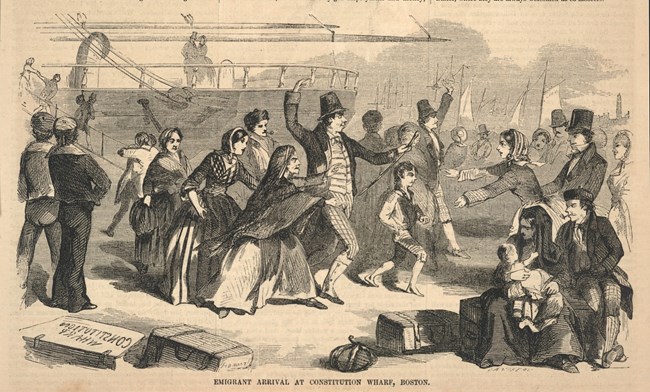
Ireland's relationship with its diaspora is one of the defining features of the country's international identity. The Great Famine of the 1840s and the waves of emigration that followed created an Irish diaspora of extraordinary scale and reach, with an estimated 70 million people worldwide claiming Irish ancestry. This diaspora has been a source of political, economic, and cultural support for Ireland throughout its history, from the fundraising that sustained the independence movement to the political lobbying that shaped US policy on Northern Ireland during the peace process.
The Irish-American community has been particularly significant in this regard. The concentration of Irish-American political figures in key positions in the US Congress and successive administrations gave Ireland a degree of access and influence in Washington that was disproportionate to its size. The annual St Patrick's Day visit to the White House — a tradition that dates back to the 1950s — became a symbol of this special relationship, and the role of Irish-American politicians in brokering the Good Friday Agreement is a matter of historical record.
However, the landscape has been changing. The traditional Irish-American political network — centred on the Democratic Party and the major cities of the north-east — has been weakening for years as the Irish-American community has become more assimilated and its political identity has diversified. The Trump administration's strained relationship with Ireland — driven by disputes over corporate tax policy and Ireland's stance on international issues — has accelerated this process, making the traditional channels of Irish-American political influence less reliable.
Key Developments
The government's Diaspora Strategy 2026-2030, published earlier this year, represents a significant departure from previous approaches. Rather than focusing primarily on people of Irish ancestry, the strategy explicitly embraces the concept of an 'affinity diaspora' — a global network of people who have a deep connection to Ireland regardless of their ancestry. This includes the hundreds of thousands of people from across the world who have lived and worked in Ireland, studied at Irish universities, or developed a strong cultural connection to the country through music, literature, sport, or other means.
The strategy identifies several key priorities for engagement with this broader diaspora, including the development of digital platforms that allow people to maintain their connection to Ireland from anywhere in the world, the expansion of cultural programming through Irish embassies and consulates, and the development of economic networks that connect Irish companies with diaspora members in key markets.
The shift is partly driven by a pragmatic assessment of where Ireland's interests lie in a changing geopolitical environment. As the political influence of traditional Irish-America has declined, the government has been looking for new ways to maintain Ireland's international profile and to build the networks of influence and goodwill that support its foreign policy and economic objectives.
Why It Matters
The transformation of Ireland's diaspora strategy matters because the diaspora has always been one of Ireland's most important strategic assets. The ability to mobilise a global network of people who feel a connection to Ireland — whether through ancestry, experience, or cultural affinity — is a form of soft power that small states rarely possess to the same degree. The question is whether the new, broader concept of diaspora can generate the same depth of commitment and political engagement as the traditional heritage-based model.
The answer is not obvious. Heritage ties — the sense of connection that comes from knowing that your grandparents or great-grandparents came from a particular place — generate a powerful emotional bond that is difficult to replicate through cultural programming or professional networks. The challenge for Irish diplomacy is to find ways of cultivating genuine affinity among people who have no ancestral connection to Ireland, while maintaining and deepening the relationships with the traditional diaspora that remain valuable.
Local Impact
The shift in diaspora strategy has practical implications for Irish embassies and consulates around the world, which are being asked to broaden their engagement beyond the traditional Irish community organisations and heritage societies. In cities like Boston, New York, Chicago, and Philadelphia — the heartlands of traditional Irish-America — this means developing new relationships with Irish-born professionals, international students who studied in Ireland, and cultural organisations that have a connection to Ireland without being exclusively Irish in character. The Department of Foreign Affairs has indicated that additional resources will be allocated to diaspora engagement as part of the implementation of the new strategy.
What's Next
The Diaspora Strategy 2026-2030 will be implemented over the coming years, with annual progress reports published by the Department of Foreign Affairs. The first major test of the new approach will be the St Patrick's Day season in 2027, when Irish embassies and consulates around the world will be expected to demonstrate the broader reach of their diaspora engagement. The government has also indicated that it will establish a new Diaspora Advisory Council, bringing together representatives of both the traditional and affinity diaspora communities, to provide ongoing input into the strategy's implementation.