Irish-Born UN Engineer's Family Wins $29m Boeing Verdict as Widow Chooses Accountability Over Settlement
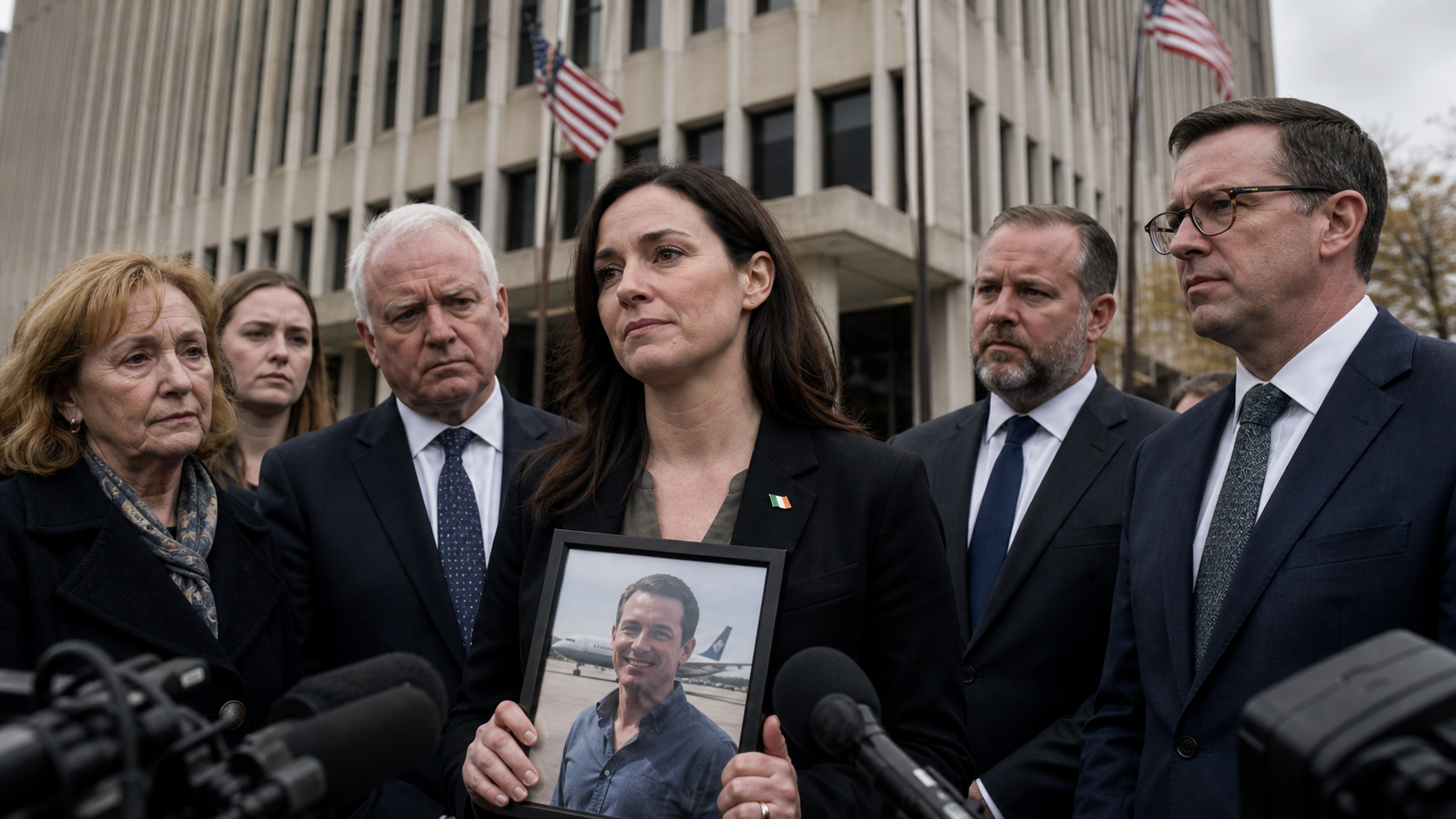
The family of Michael Ryan, an Irish-born United Nations engineer who was among the 157 people killed in the 2019 Ethiopian Airlines Boeing 737 MAX crash, has been awarded $29 million in damages by a Chicago jury after his widow Naoise Connolly Ryan made the deliberate decision to pursue a public trial rather than accept a private settlement — a choice she made to ensure that Boeing's responsibility for her husband's death was placed on the public record.
Background
Michael Ryan was 39 years old when he died in the Ethiopian Airlines crash on 10 March 2019, one of 157 people killed when the Boeing 737 MAX aircraft went down shortly after take-off from Addis Ababa. An engineer with the United Nations World Food Programme, Ryan had dedicated his professional life to humanitarian service, working in some of the world's most challenging environments — Liberia during the Ebola crisis, refugee camps serving the Rohingya community, and field operations in Afghanistan, Sri Lanka, Nepal, and Ethiopia. His death left his wife Naoise Connolly Ryan and their children without a husband and father, and it deprived the humanitarian community of an experienced and committed professional whose work had made a tangible difference to the lives of vulnerable people around the world.
The Boeing 737 MAX crashes of 2018 and 2019 — the Lion Air disaster in October 2018 and the Ethiopian Airlines crash in March 2019 — were caused by a faulty anti-stall system known as MCAS, which Boeing had failed to adequately test or disclose to pilots and regulators. The company subsequently acknowledged that its software was a contributing factor in both crashes and has paid billions of dollars in settlements, fines, and compensation. Boeing entered into a deferred prosecution agreement with the US Department of Justice, which was subsequently renegotiated following criticism that it was insufficiently punitive, and the company has faced sustained scrutiny of its safety culture and its relationship with the Federal Aviation Administration.
Naoise Connolly Ryan's decision to pursue a jury trial rather than accept a private settlement was a deliberate act of advocacy as much as a legal strategy. She has been one of the most prominent voices among the families of 737 MAX victims, testifying before the US Congress and speaking publicly about the need for systemic reform of aviation safety regulation. Her position has been consistent throughout: that private settlements, however financially significant, allow corporations to avoid public accountability for their actions, and that the families of those killed deserve a public verdict that places the facts on the record.
Key Developments
The Chicago jury delivered its verdict on 12 August 2026, awarding $29 million in damages to the Ryan family. The verdict follows a similar ruling in May 2026, in which a Chicago jury awarded $49.5 million to the family of Samya Stumo, another victim of the same Ethiopian Airlines flight. The Ryan case is considered one of the final remaining civil suits pending against Boeing regarding the 737 MAX crashes, and the verdict brings the total amount awarded by juries in the remaining contested cases to more than $78 million.
The trial, conducted in the federal court in Chicago, heard evidence about Boeing's development of the MCAS system, its failure to disclose the system's characteristics to pilots and regulators, and the consequences of those failures for the 157 people on board the Ethiopian Airlines flight. Boeing's legal team argued that the company had taken responsibility for the crashes and had implemented extensive safety reforms, but the jury concluded that the damages sought by the Ryan family were appropriate given the circumstances of Michael Ryan's death and the impact of his loss on his family.
Naoise Connolly Ryan's attorney, Steven Marks, described the verdict as a vindication of the decision to pursue a jury trial and as a message to Boeing and to the aviation industry more broadly that the families of those killed in the 737 MAX crashes would not accept private settlements as a substitute for public accountability. Connolly Ryan herself has not commented publicly on the verdict, but her advocacy throughout the legal process has been widely praised by other families of 737 MAX victims and by aviation safety campaigners.
Why It Matters
The Boeing 737 MAX cases have raised fundamental questions about corporate accountability, regulatory capture, and the adequacy of the legal system in addressing the consequences of corporate negligence on a catastrophic scale. For the Irish government and the Irish public, the Ryan case has a particular resonance — Michael Ryan was an Irish citizen who died while serving the international community in a humanitarian role, and the pursuit of accountability for his death has been a matter of national concern. The verdict also has implications for the broader debate about how aviation safety is regulated and how companies that prioritise commercial considerations over safety should be held to account. Naoise Connolly Ryan's decision to pursue a jury trial, and the verdict it produced, demonstrates that public accountability is achievable even when corporations have the resources to resist it.
Local Impact
Michael Ryan's family, based in Ireland, has followed the Chicago proceedings closely, and the verdict will bring some measure of closure to a process that has extended over seven years since the crash. The Irish government has expressed its support for the family throughout the legal proceedings, and the Department of Foreign Affairs has maintained contact with the Ryan family and with the legal team pursuing the case. For the Irish humanitarian community, which knew Michael Ryan through his work with the United Nations, the verdict is a reminder of the human cost of the 737 MAX crashes and of the importance of holding corporations accountable for the consequences of their decisions. The Irish diaspora community in the United States, which has followed the case closely, has also welcomed the verdict as a demonstration that the American legal system can deliver justice for Irish citizens affected by corporate negligence.
What's Next
Boeing is expected to appeal the $29 million verdict, as it has done with other jury awards in the 737 MAX cases. The appeals process could extend the litigation for several more years, though the company's legal team will be aware that continued litigation carries reputational as well as financial costs. The US Department of Justice's ongoing oversight of Boeing's compliance with the terms of its deferred prosecution agreement will also continue, with the company required to demonstrate that it has implemented the safety and compliance reforms required by the agreement. For Naoise Connolly Ryan and her family, the verdict represents the conclusion of the legal process, though the loss of Michael Ryan will remain with them for the rest of their lives. Her advocacy for aviation safety reform will continue regardless of the outcome of any appeal.