Irish Activist Jailed in Germany Prompts Calls for Dublin to Pressure Berlin Over Protest Rights
An Irish activist who has been jailed in Germany following a conviction related to an attack on a weapons company has prompted calls for the Irish government to raise the case with Berlin, with civil liberties organisations and political figures arguing that the prosecution represents a disproportionate response to legitimate protest activity and that the Irish state has an obligation to advocate for its citizens facing prosecution abroad.
Background
The case of the Irish activist jailed in Germany has emerged as a significant issue for Irish civil society and for the Irish government's relationship with Berlin. The activist, whose identity has been widely reported in Irish media, was convicted by a German court of offences related to an attack on a weapons manufacturing company — an act that the activist and their supporters characterise as a legitimate act of protest against the arms industry, and that the German authorities characterise as criminal damage.
The case sits at the intersection of several significant political debates: the limits of protest rights in democratic societies, the treatment of foreign nationals in European legal systems, the Irish government's obligations to its citizens abroad, and the broader question of how European states balance the right to protest with the protection of property and public order. These are not simple questions, and the case has generated a range of responses from across the Irish political spectrum.
Ireland has a long tradition of activism and protest, and the Irish public has historically been sympathetic to individuals who engage in direct action against what they perceive as injustice. The arms industry, in particular, has been a target of Irish protest activity for decades, reflecting the country's constitutional commitment to neutrality and its historical experience of conflict. The jailing of an Irish citizen in Germany for protest-related activity has therefore resonated with a significant section of Irish public opinion.
Key Developments
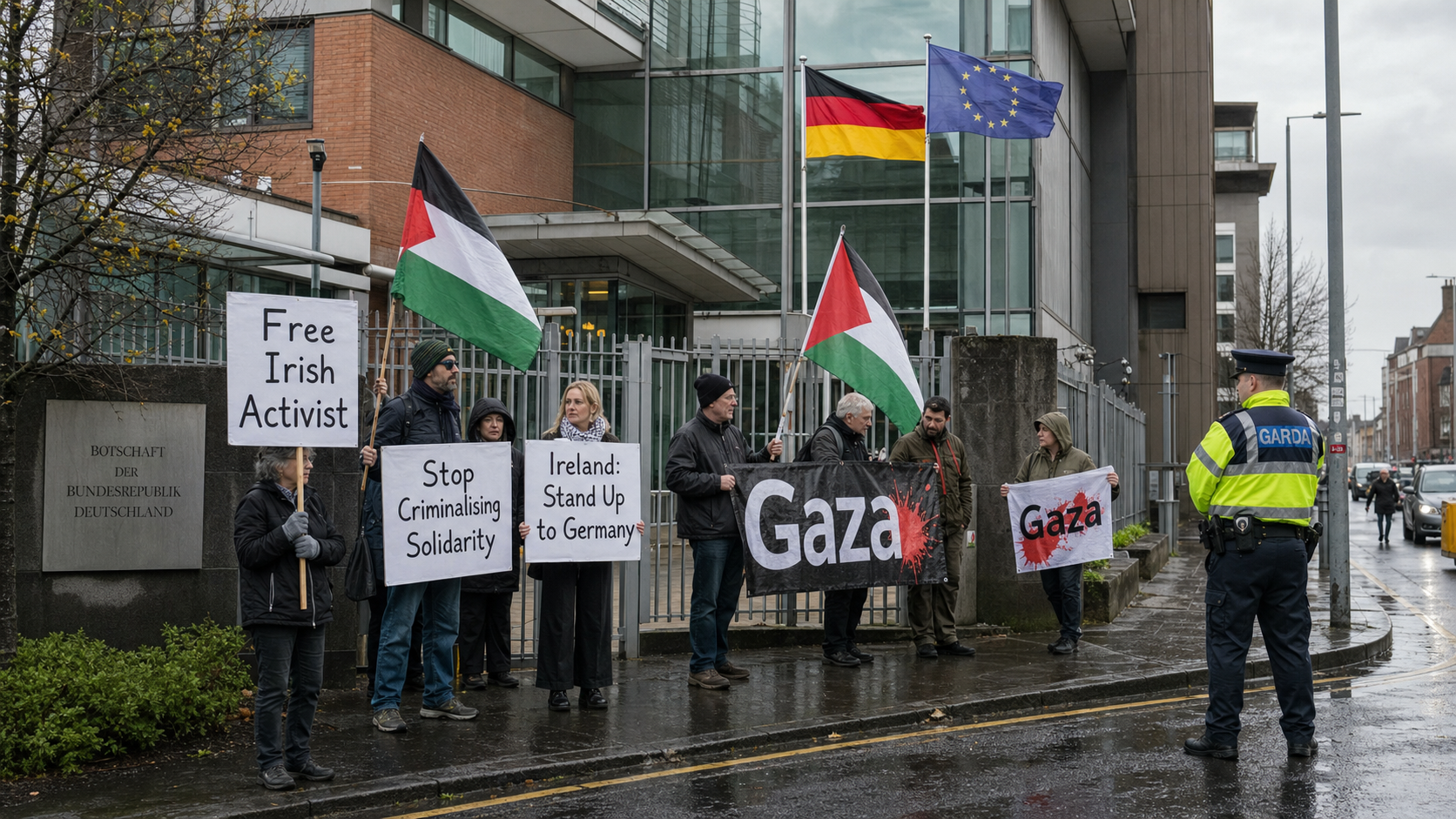
Civil liberties groups in Ireland have called on the government to raise the case with the German authorities, arguing that the sentence imposed on the activist is disproportionate and that the prosecution raises questions about the scope of protest rights under German law. The Irish Council for Civil Liberties has written to the Minister for Foreign Affairs requesting that the government make representations to Berlin on behalf of the activist.
The Department of Foreign Affairs has confirmed that it is providing consular assistance to the activist and is in contact with the German authorities. However, the government has been careful not to comment on the merits of the conviction, noting that it would be inappropriate to interfere in the judicial processes of a friendly state. This position has been criticised by some civil society groups, who argue that the government has an obligation to advocate more forcefully for its citizens when they face what they characterise as unjust prosecution abroad.
The case has also attracted attention in the European Parliament, where Irish MEPs have raised questions about the consistency of protest rights across EU member states and about the treatment of foreign nationals in the German legal system. The European Commission has been asked to examine whether the prosecution is consistent with the EU's Charter of Fundamental Rights, which guarantees the right to freedom of assembly and association.
Why It Matters
The case of the Irish activist in Germany matters for several reasons. It raises fundamental questions about the scope of protest rights in democratic societies — questions that are becoming increasingly urgent as governments across Europe introduce new restrictions on protest activity in response to climate activism, anti-war demonstrations, and other forms of direct action. The line between legitimate protest and criminal activity is not always clear, and the way in which that line is drawn has significant implications for the health of democratic culture.
The case also raises questions about the Irish government's obligations to its citizens abroad. Ireland has a large diaspora, and Irish citizens living and working in other countries are occasionally caught up in legal proceedings that raise questions about their rights and about the extent to which the Irish state can and should advocate on their behalf. The government's response to this case will be watched closely by Irish communities abroad as an indicator of how seriously Dublin takes its responsibilities to its citizens overseas.
Local Impact
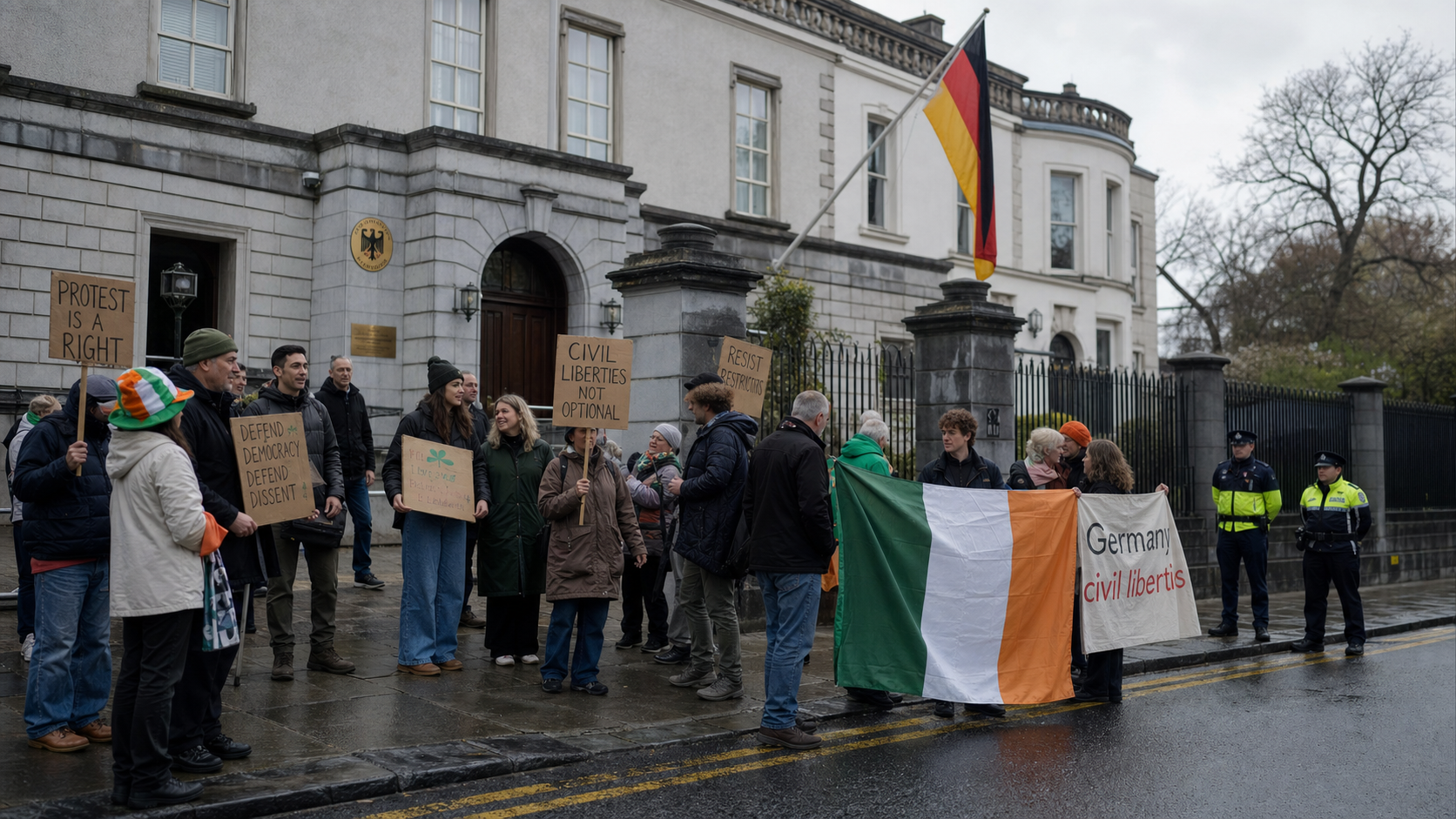
In Ireland, the case has generated significant debate in civil society and in the media. Protest groups and civil liberties organisations have organised solidarity events and have been collecting signatures for a petition calling on the government to intervene. The case has also been raised in the Dáil, with several TDs from Sinn Féin, the Social Democrats, and People Before Profit calling on the Minister for Foreign Affairs to take a more active role in advocating for the activist's release. The government's response has been measured, reflecting the diplomatic sensitivities involved in raising concerns about the judicial processes of a fellow EU member state.
What's Next
The Department of Foreign Affairs is expected to continue providing consular assistance to the activist and to maintain contact with the German authorities. Civil liberties groups have indicated they will continue to press the government for a more active response, and the issue is likely to be raised again in the Dáil when it returns from its summer recess in September. The European Parliament's civil liberties committee has indicated it will examine the case as part of a broader inquiry into protest rights across the EU. The activist's legal team is expected to appeal the conviction, and the outcome of that appeal will be closely watched by civil society organisations across Ireland and Europe.