Irish Activist Jailed in Germany Faces Five-Year Sentence as Dublin Faces Pressure to Intervene
An Irish activist faces up to five years in a German prison after being charged with attacking a weapons company in a protest action, with Irish politicians and human rights groups calling on the Dublin government to pressure Berlin over what they describe as disproportionate charges against a peaceful protester — a case that has drawn attention to the increasingly harsh treatment of anti-war activists in Germany as the country's defence industry expands.
Background
Germany's defence industry has expanded significantly in recent years, driven by the country's decision to dramatically increase its military spending following Russia's invasion of Ukraine. The expansion has been accompanied by a wave of protest activity from peace activists and anti-war groups who oppose the growth of weapons manufacturing and the export of arms to conflict zones.
The German legal system has taken an increasingly firm approach to protest actions that target defence industry facilities, with a number of activists facing serious criminal charges for actions that their supporters describe as legitimate civil disobedience. The charges against the Irish activist — which relate to an alleged attack on a weapons company facility — are among the most serious to be brought against a foreign national in connection with anti-war protest activity in Germany.
Ireland's traditional policy of military neutrality has made the country a significant source of anti-war activism, and Irish citizens have been involved in a range of protest actions across Europe in recent years. The case of the Irish activist in Germany has resonated strongly with the Irish peace movement and with politicians who see Ireland's neutrality as a core national value that should be defended and promoted internationally.
Key Developments
The Irish activist, whose identity has been reported in Irish media, was arrested in Germany following a protest action at a weapons company facility. The charges, which carry a maximum sentence of five years' imprisonment, have been described by the activist's legal team and supporters as disproportionate to the nature of the alleged offence. The case has attracted significant attention in Ireland, with a number of TDs and senators calling on the Government to raise the matter with the German authorities.
The Irish Examiner has published a cartoon commentary on the case, drawing attention to the contrast between the charges against the activist and the ongoing destruction in Gaza, which has been a central motivation for many anti-war protesters in Europe. The cartoon reflects a broader public sentiment in Ireland that the German legal system's treatment of anti-war activists is disproportionate and politically motivated.
The Department of Foreign Affairs has confirmed that it is aware of the case and is providing consular assistance to the Irish citizen involved. However, the Government has been cautious about making public representations to the German authorities, mindful of the diplomatic sensitivities involved in commenting on the legal proceedings of a friendly EU partner state.
Why It Matters
The case raises important questions about the right to protest and the limits of civil disobedience in democratic societies. The expansion of Germany's defence industry, and the legal framework that has been used to prosecute those who protest against it, reflects a broader tension in European democracies between the imperatives of national security and the rights of citizens to express dissent through direct action.
For Ireland, the case has a particular resonance given the country's constitutional commitment to military neutrality and its long tradition of peace activism. The prospect of an Irish citizen facing five years in a German prison for an anti-war protest action is deeply uncomfortable for many Irish people, and the pressure on the Government to intervene reflects the strength of public feeling on the issue.
The case also highlights the vulnerability of Irish citizens who engage in protest activity abroad. While Ireland's consular service provides assistance to citizens in difficulty overseas, the Government's ability to influence the legal proceedings of other EU member states is limited, and the activist's fate will ultimately be determined by the German courts.
Local Impact
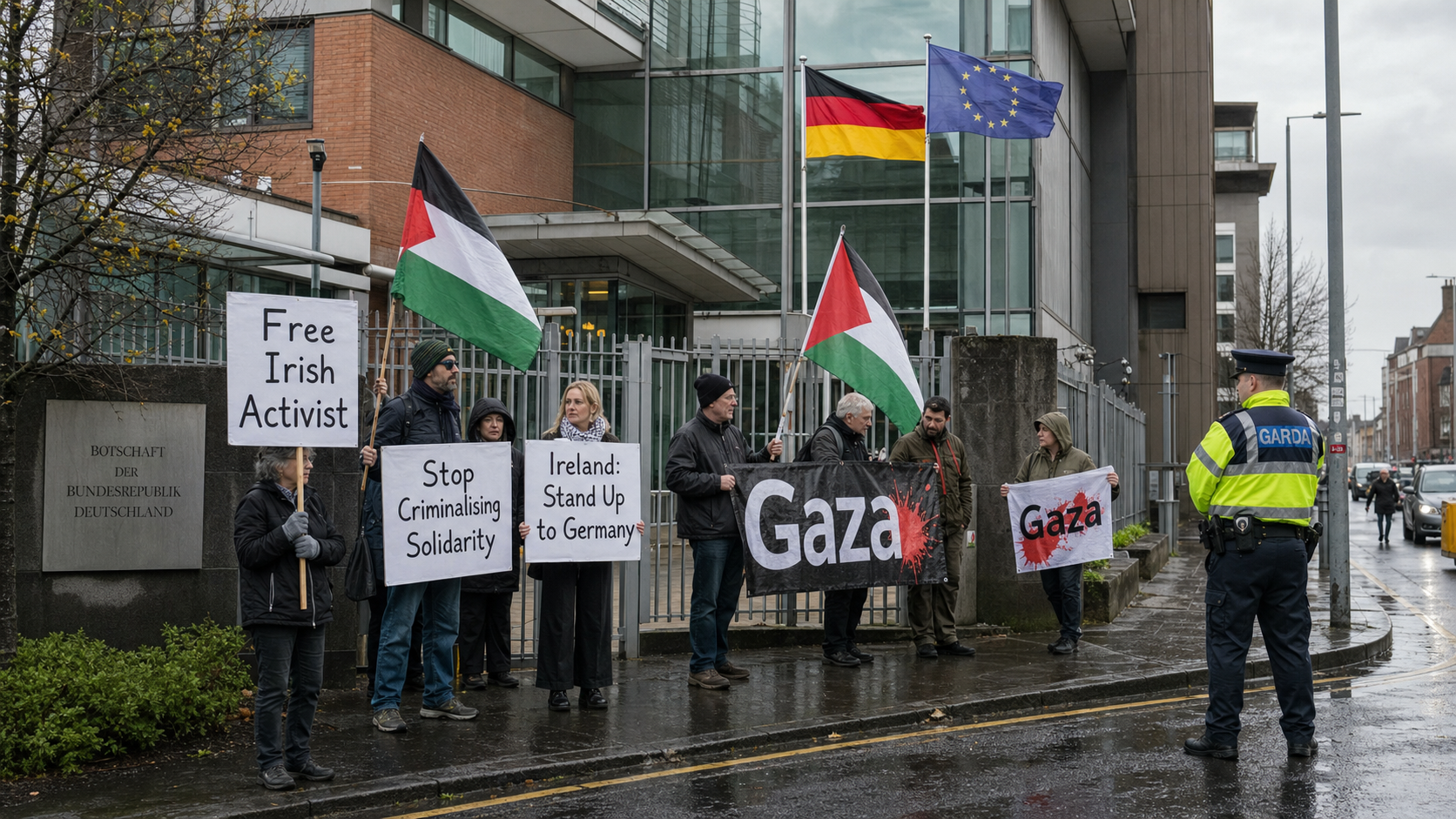
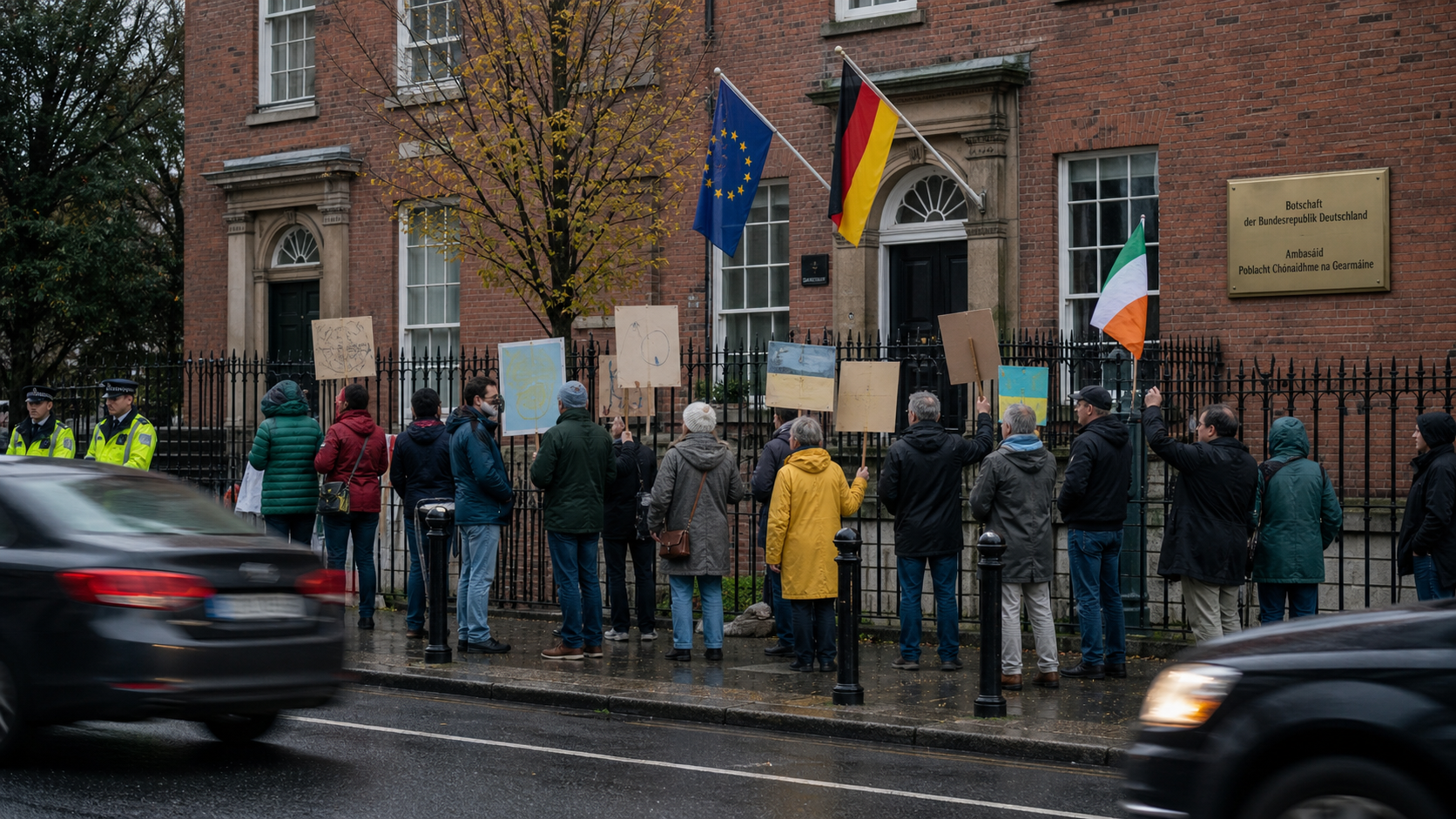
In Ireland, the case has galvanised the peace movement and prompted a wave of solidarity actions. Protest groups have organised demonstrations outside the German Embassy in Dublin, and a petition calling on the Government to intervene has attracted tens of thousands of signatures. Several TDs have raised the case in the Dáil, and the issue is expected to be debated in the Oireachtas in the autumn.
The activist's family and friends in Ireland have been vocal in their support, and a fundraising campaign to cover legal costs has raised significant sums. The case has also attracted attention from international human rights organisations, several of which have written to the German authorities expressing concern about the proportionality of the charges.
What's Next
The case is expected to come to trial in Germany in the coming months. The activist's legal team is preparing a defence that will challenge both the factual basis of the charges and the proportionality of the prosecution. The Irish Government is expected to continue providing consular assistance while monitoring the case closely. If the activist is convicted and sentenced to a custodial term, the pressure on the Government to make formal representations to the German authorities is likely to intensify significantly.