Ireland's Swimming Stars Gear Up for Commonwealth Games as Wiffen's Golden Form Sets the Tone for Glasgow
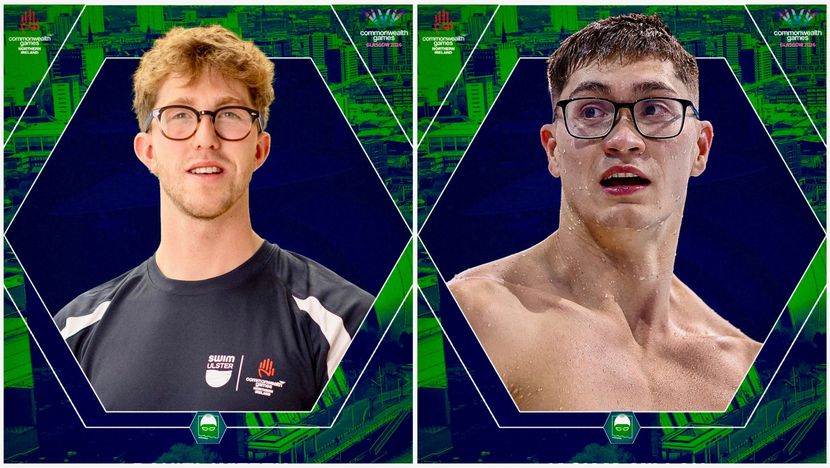
Ireland's swimming community is preparing for the 2026 Commonwealth Games in Glasgow with a squad energised by Daniel Wiffen's gold medal performance at the Irish Open, as the sport's inclusion in the scaled-back 10-sport Games programme ensures that Irish swimmers will have a major international platform from July 23 to August 2, with Wiffen — the Olympic champion and world record holder in the 800m freestyle — among the medal favourites and a cohort of younger Irish swimmers targeting their first major international podium finishes.
Background
Irish swimming has undergone a remarkable transformation over the past decade. From a sport that was largely invisible on the international stage, it has emerged as one of Ireland's most successful Olympic disciplines, driven by a combination of improved coaching, better facilities, and the emergence of genuinely world-class talent. The catalyst for much of this transformation has been Daniel Wiffen, the Armagh-born swimmer who has become one of the most dominant distance freestyle swimmers in the world.
Wiffen's Olympic gold medal in the 800m freestyle at the Paris Games in 2024 was a watershed moment for Irish swimming — the first Olympic swimming gold medal in the country's history, and a performance that announced Ireland as a genuine force in the sport at the highest level. His subsequent world record in the event confirmed that the Olympic victory was not a fluke but the product of sustained excellence and a level of talent that places him among the elite of his generation.
The Commonwealth Games has a particular significance for Irish swimming. Unlike the Olympics, where Ireland competes as a single team, the Commonwealth Games allows Northern Ireland and the Republic to field separate teams — meaning that the island of Ireland's swimming talent is divided between two squads. This creates a unique dynamic, with swimmers from both sides of the border competing against each other as well as against the rest of the Commonwealth, and with the performances of both teams contributing to the overall picture of Irish swimming's health and ambition.
Key Developments
Wiffen's gold medal at the Irish Open — a domestic competition that serves as a key selection event for the Commonwealth Games — confirmed that he is in excellent form heading into Glasgow. His performance at the Irish Open was not simply a matter of winning; it was the manner of the victory, the times he posted, and the ease with which he controlled the race that impressed coaches and observers. For a swimmer of Wiffen's calibre, the Commonwealth Games represents an opportunity to add another major title to his collection and to continue the process of establishing himself as the dominant figure in distance freestyle swimming.
The Irish swimming squad for Glasgow includes a number of younger athletes who are making their first appearances at a major multi-sport Games. Several of these swimmers have been identified through the national talent development programme as having the potential to compete at the highest level, and the Commonwealth Games provides them with an invaluable opportunity to experience major competition in a supported environment.
The inclusion of swimming in the scaled-back Glasgow programme was not guaranteed — several sports were excluded from the 10-sport lineup, and there was uncertainty about the final programme until relatively late in the planning process. The confirmation that swimming would be included was welcomed by Swimming Ireland, which had been lobbying strongly for the sport's inclusion given its importance to the island's sporting identity and its recent international success.
The competition venue — the Tollcross International Swimming Centre in Glasgow — is one of the best swimming facilities in the United Kingdom, having hosted the 2014 Commonwealth Games and several major international competitions since. Irish swimmers are familiar with the venue from previous competitions, and the coaching staff have been able to plan their preparation with a clear understanding of the conditions they will face.
Why It Matters
The Commonwealth Games matters for Irish swimming for reasons that go beyond the medals themselves. The Games provide a platform for the sport to reach a wider audience — both in Ireland and internationally — and to demonstrate the progress that has been made over the past decade. For a sport that has historically struggled to attract media attention and public interest outside of Olympic years, the Commonwealth Games is an opportunity to build a broader following.
Wiffen's presence in the squad is a significant factor in this regard. His Olympic gold medal and world record have made him one of the most recognisable Irish athletes of his generation, and his participation in the Commonwealth Games will attract coverage and interest that benefits the entire Irish swimming programme. The younger swimmers in the squad will benefit from competing alongside him, both in terms of the competitive experience and the media attention that his presence generates.
The cross-border dimension of the Commonwealth Games is also significant for Irish swimming. The fact that Northern Ireland and the Republic field separate teams means that the Games provide a unique opportunity to celebrate the talent that exists across the island, and to demonstrate that Irish swimming's success is not confined to any one part of the country or any one community.
Local Impact
In Armagh, where Wiffen grew up and where his family remains based, the Commonwealth Games has generated significant local interest. The Armagh swimming community — which includes the club where Wiffen first learned to swim — has been following his career with enormous pride, and the Games provide another opportunity for the community to celebrate one of its own on the international stage.
In Belfast, the swimming clubs that have contributed athletes to the Northern Ireland Commonwealth Games squad have been preparing their athletes with a mixture of excitement and focused determination. Clubs including Bangor, Lisburn, and Larne have produced swimmers who are in contention for selection, and the prospect of competing at the Emirates Arena — a short journey from home — has added an extra dimension to their preparation.
Swimming Ireland has been working to use the Commonwealth Games as a platform for growing participation in the sport across the island. The organisation has developed a series of community engagement events linked to the Games, designed to inspire young people to take up swimming and to demonstrate that the sport offers a pathway to international competition for those with the talent and the dedication to pursue it.
What's Next
The swimming events at the Commonwealth Games will take place throughout the competition period, with the finals scheduled across the 11 days of the Games. Wiffen is expected to compete in the 400m, 800m, and 1500m freestyle events, with medal prospects in all three. The 800m, in which he is the Olympic champion and world record holder, will be the most anticipated event of his programme.
After Glasgow, Wiffen's attention will turn to the World Championships, which are scheduled for later in the year. The Commonwealth Games will provide valuable competitive experience and an opportunity to test his form against a strong international field, making it an important stepping stone in his preparation for the year's major championship.
For the younger Irish swimmers in the squad, the Commonwealth Games will be a formative experience that shapes their development as athletes. The coaching staff will be watching their performances closely, not just in terms of results but in terms of how they handle the pressure of major competition, how they respond to adversity, and how they interact with the team environment. These are the qualities that will determine whether they go on to fulfil their potential at the Olympic level.