Ireland's Overhauled Asylum System Goes Live as International Protection Act Aligns with EU Pact
Ireland's International Protection Act 2026, the most comprehensive overhaul of the state's asylum system in more than two decades, has formally commenced, introducing mandatory biometric screening for all applicants, accelerated processing timelines, and significantly stricter rules for family reunification as the country aligns its procedures with the European Union's new Migration and Asylum Pact.
Background
Ireland's asylum system has been under sustained pressure for several years, with the number of international protection applications rising sharply from fewer than 4,000 in 2019 to more than 28,000 in 2023. The surge in applications, driven by conflicts in Ukraine, Afghanistan, and across sub-Saharan Africa, overwhelmed a system that had been designed for a much lower volume of cases and exposed significant weaknesses in processing capacity, accommodation provision, and integration support.
The EU Migration and Asylum Pact, agreed by member states in 2024 after years of difficult negotiations, established a new common framework for managing asylum applications across the bloc. The pact introduced mandatory screening procedures, accelerated processing for certain categories of applicants, and a "solidarity mechanism" that allows member states to choose between accepting relocated asylum seekers from frontline states or making financial contributions to the system. Ireland opted for the financial contribution route, committing to payments estimated at over €9.2 million for 2027.
The International Protection Act 2026, which was passed by the Oireachtas in April and commenced on 12 June, translates the EU pact's requirements into Irish law. It represents a fundamental restructuring of the legal framework governing how Ireland processes asylum applications, with implications for tens of thousands of people who will interact with the system in the coming years.
Key Developments
The most immediately visible change introduced by the new Act is the mandatory screening process at the Citywest Reception Centre in west Dublin, which now serves as the primary point of entry into the international protection system. All applicants are required to undergo biometric data capture — including fingerprints and facial recognition — as part of the initial screening process. This data is shared with the EU's Eurodac database, which tracks asylum applications across member states and helps to identify individuals who have applied in multiple countries.
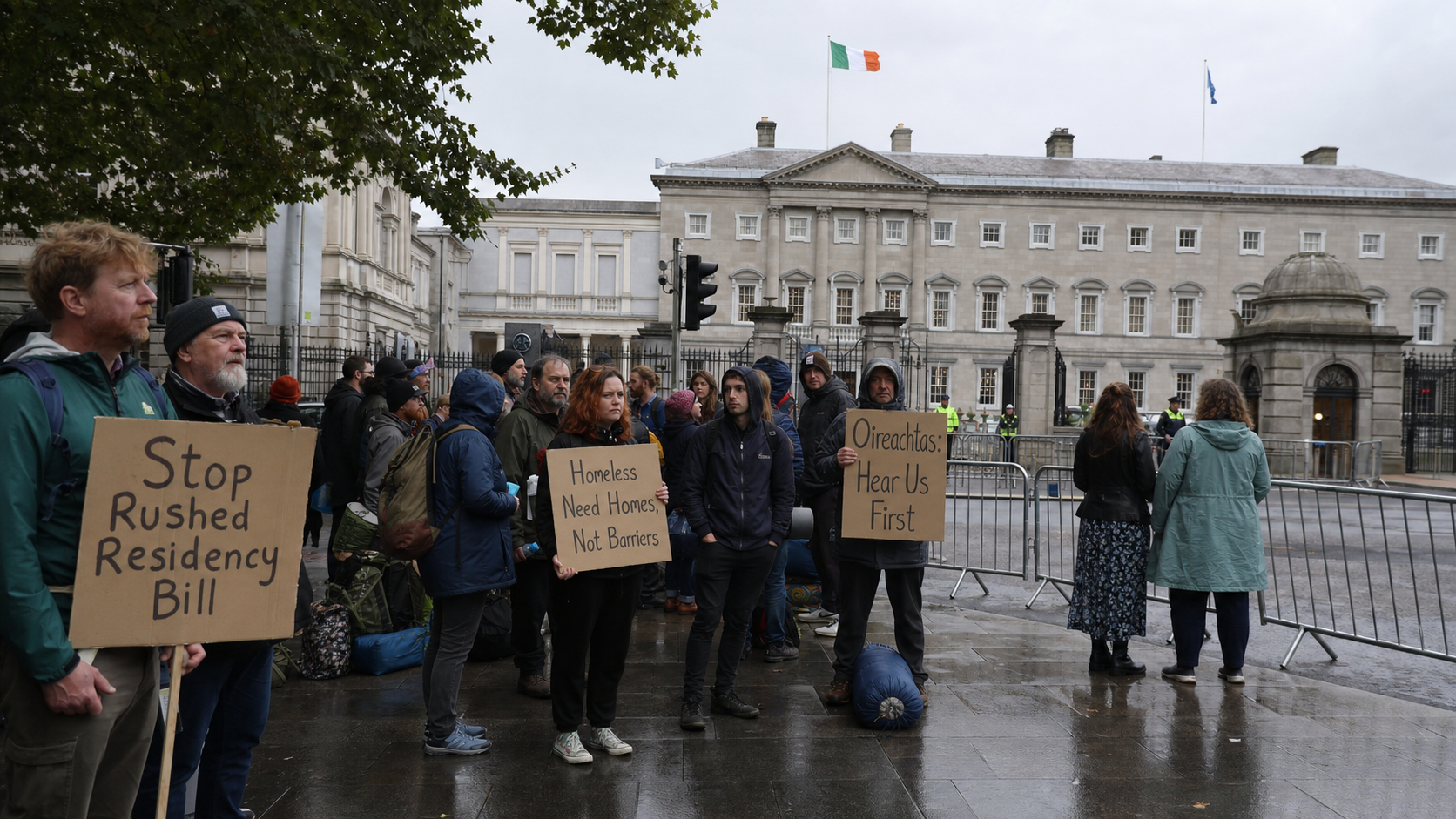
The Act also introduces a twelve-week "border procedure" for certain categories of applicants, including those from countries designated as safe countries of origin and those whose applications are considered manifestly unfounded. Under this procedure, applicants are processed on an accelerated timeline while remaining in designated reception facilities, with limited freedom of movement. Human rights organisations have raised concerns about the compatibility of this approach with Ireland's constitutional protections and with the European Convention on Human Rights.
Family reunification rules have been significantly tightened under the new legislation. Applicants who are granted refugee status or subsidiary protection must now wait two years before they can apply to bring family members to Ireland, and must demonstrate that they have sufficient financial resources to support their family without recourse to public funds. Previously, family reunification could be initiated much earlier in the process.
Why It Matters
The commencement of the International Protection Act marks a significant shift in Ireland's approach to asylum, moving from a system that was characterised by relatively open access and lengthy processing times to one that prioritises speed, control, and alignment with EU norms. The change reflects a broader political shift in Irish public opinion on immigration, which has become more sceptical in recent years following the accommodation crisis and the social tensions associated with the rapid increase in arrivals.
Unlike the UK, which left the EU's asylum framework following Brexit and has pursued its own — highly controversial — approach to deterrence, Ireland remains bound by EU law and must implement the pact's requirements. This constrains the options available to Irish policymakers but also provides a degree of legal certainty and international legitimacy that the UK's approach has lacked.
Local Impact
The practical impact of the new system will be felt most directly at the Citywest Reception Centre, which has been significantly expanded to accommodate the new screening requirements. The centre, located in the Citywest Business Campus in south-west Dublin, now has capacity for more than 1,500 people and operates a twenty-four-hour processing service. The International Protection Office, which is responsible for determining applications, has recruited an additional 200 staff to manage the increased workload associated with the accelerated processing timelines.
Legal aid organisations, including the Refugee Legal Service, have warned that the accelerated timelines will make it more difficult for applicants to access legal advice before their cases are determined, potentially increasing the risk of wrongful refusals. The Irish Refugee Council has called for additional resources for legal aid to ensure that the new system operates fairly.
What's Next
The first cohort of applicants processed under the new border procedure is expected to have their cases determined by September 2026. The Department of Justice has committed to publishing quarterly statistics on processing times and outcomes under the new system. A review of the Act's operation is scheduled for June 2027, one year after commencement. The Irish Human Rights and Equality Commission has indicated that it will monitor the system's compliance with constitutional and human rights standards throughout the first year of operation.