Homeless Charities Condemn 'Rushed' Housing Residency Bill as Oireachtas Pushes Legislation Through
A coalition of twelve of Ireland's most prominent homeless service providers has issued a stark warning about the Housing and Residential Tenancies (Miscellaneous Provisions) Bill 2026, describing the legislation as being rushed through the Oireachtas without adequate scrutiny and warning that its residency requirements could create severe barriers for some of the most vulnerable people in Irish society.
Background
Ireland's housing crisis has been the defining domestic policy challenge of the past decade, with homelessness figures reaching record levels and the social housing waiting list running to more than 60,000 households. The government's response has involved a combination of increased capital investment in social housing construction, reforms to the private rental market, and — more controversially — changes to the eligibility criteria for social housing support.
The Housing and Residential Tenancies (Miscellaneous Provisions) Bill 2026 falls into the third category. The legislation, which completed its Dáil third stage on 24 June, formally codifies requirements that social housing applicants must demonstrate both "lawful" and "habitual" residency in Ireland to qualify for support. The government has presented the bill as providing statutory clarity to rules that already exist in practice, arguing that it does not change the substantive eligibility criteria but simply puts them on a clearer legal footing.
Critics, however, argue that the codification of these requirements — and the speed with which the legislation is being progressed — represents a significant tightening of access to social housing support, with potentially serious consequences for groups who may struggle to demonstrate the required residency status.
Key Developments
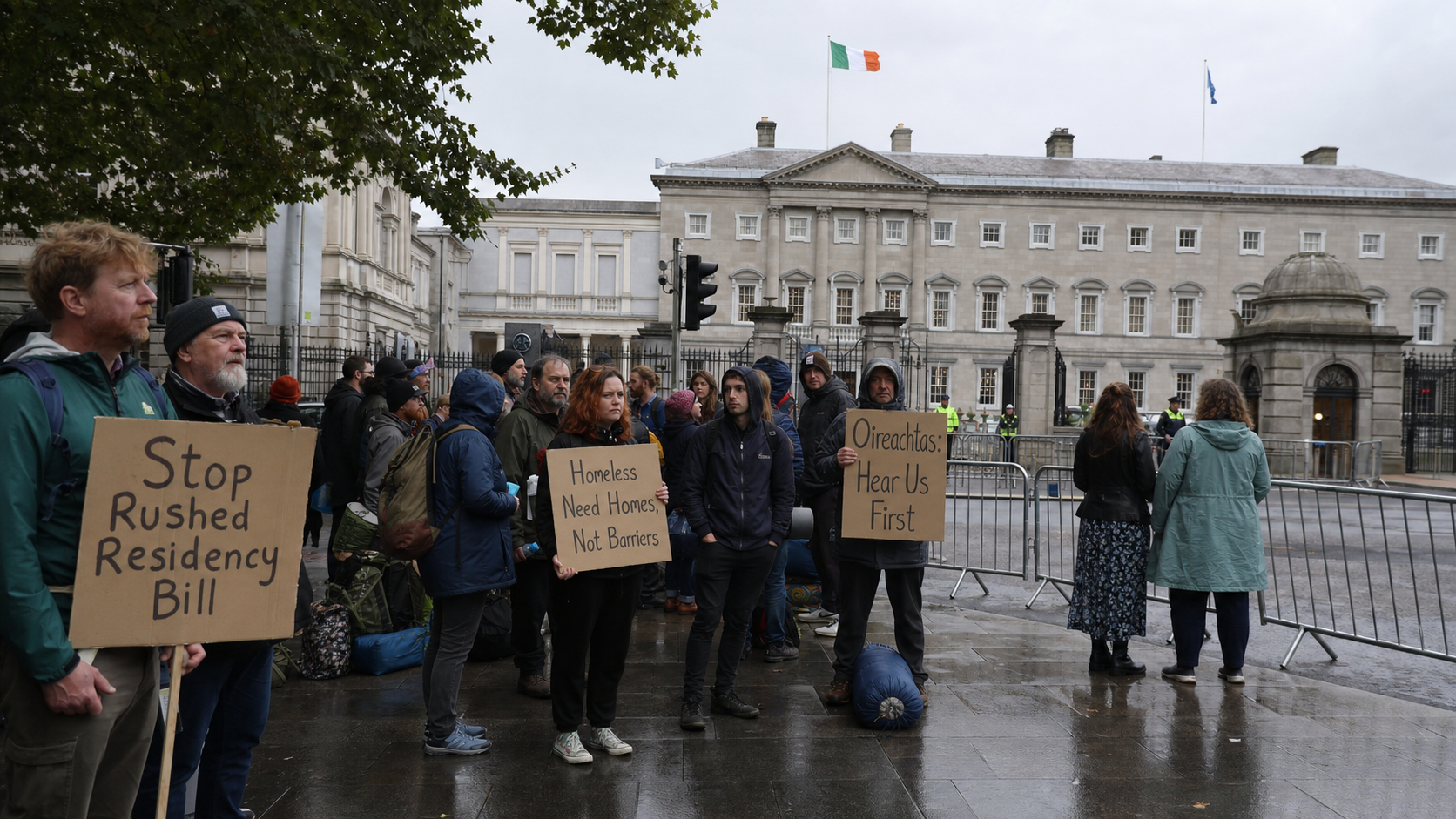
The coalition of twelve homeless service providers, which includes the Dublin Simon Community, the Peter McVerry Trust, Focus Ireland, and Threshold, issued a joint statement expressing "great disturbance" at the pace and content of the legislation. The organisations warned that the bill's residency requirements could create barriers for returning Irish citizens who have spent time abroad, for victims of domestic violence who may have moved between addresses, and for families already on social housing waiting lists whose circumstances have changed.
The coalition has called for the bill to be paused to allow for a full public consultation and for an independent equality impact assessment to be conducted before the legislation proceeds further. They have also called for explicit exemptions to be included in the bill for vulnerable groups, including domestic violence survivors, people leaving direct provision, and those with complex needs who may have difficulty demonstrating continuous habitual residency.
The government has defended the bill, with Housing Minister James Browne arguing that the legislation provides necessary clarity and that the existing administrative rules already contain appropriate protections for vulnerable groups. The Minister has indicated that he is open to considering amendments at the Seanad stage, which is expected to begin in July.
Why It Matters
The controversy over the Housing Bill reflects a broader tension in Irish housing policy between the government's desire to manage demand for social housing support and the imperative to protect the most vulnerable members of society. Ireland's social housing system is under enormous pressure, and there is a genuine policy challenge in ensuring that limited resources are directed to those with the greatest need. However, the manner in which eligibility criteria are defined and enforced can have profound consequences for individuals and families who fall outside the standard categories.
The speed with which the bill is being progressed — completing three Dáil stages in less than a month — has itself become a political issue, with opposition parties arguing that the government is using its Oireachtas majority to push through significant social policy changes without adequate debate. This is the third piece of housing legislation to be fast-tracked through the Oireachtas in the current Dáil term, a pattern that has drawn criticism from civil society organisations and from the Oireachtas committee system.
Local Impact
The practical impact of the bill will be felt most acutely in Dublin, where the social housing waiting list is longest and where the homeless population is most concentrated. Dublin City Council, which manages the largest social housing stock in the country, has confirmed that it is seeking legal advice on the implications of the new residency requirements for its existing waiting list. The council has indicated that it will not remove any existing applicants from the waiting list pending clarification of the bill's transitional provisions.
In Cork, Galway, and Limerick, local authorities have expressed similar concerns about the bill's implications for their waiting lists. The Galway Simon Community has warned that the legislation could affect a significant number of people currently in emergency accommodation in the city who may struggle to demonstrate the required residency status.
What's Next
The bill is expected to proceed to the Seanad in July 2026, where it will face further scrutiny. The government has indicated that it is open to amendments, and several Seanad groupings have already indicated that they will table changes to address the concerns raised by homeless charities. A final vote on the bill is expected before the Oireachtas summer recess. The homeless charities coalition has confirmed that it will continue to campaign for changes to the legislation and has requested an urgent meeting with the Housing Minister.