Ireland's Budget 2027 Preparations Begin as Government Faces Tight Fiscal Choices
The Irish Government is entering the formal preparation phase for Budget 2027, with the Summer Economic Statement expected to define the fiscal parameters for the year ahead in the coming days. Despite a projected surplus of over €9 billion for 2026, analysts warn that the majority of the €7.7 billion in additional voted spending projected for 2027 is already effectively committed to inflation, existing service levels, and capital expenditure, leaving very limited room for new policy initiatives.
Background
Ireland's public finances have been transformed over the past decade by a combination of strong economic growth, a booming corporation tax take driven by the presence of major multinational companies, and relatively disciplined expenditure management. The country that required an international bailout in 2010 now regularly records some of the largest budget surpluses in the European Union, with the National Reserve Fund — established to manage windfall corporation tax receipts — accumulating tens of billions of euro in assets.
This apparent fiscal strength, however, masks significant structural pressures. Ireland's population is growing rapidly, driven by both natural increase and net immigration, creating demand for housing, healthcare, education, and infrastructure that the state has struggled to meet. The housing crisis, which has been a defining political issue for a decade, shows no sign of resolution despite significant government investment. The health service, both the HSE in the Republic and the NHS equivalent in Northern Ireland, faces chronic underfunding relative to demand. And the infrastructure deficit — in transport, water, energy, and broadband — requires sustained capital investment over many years.
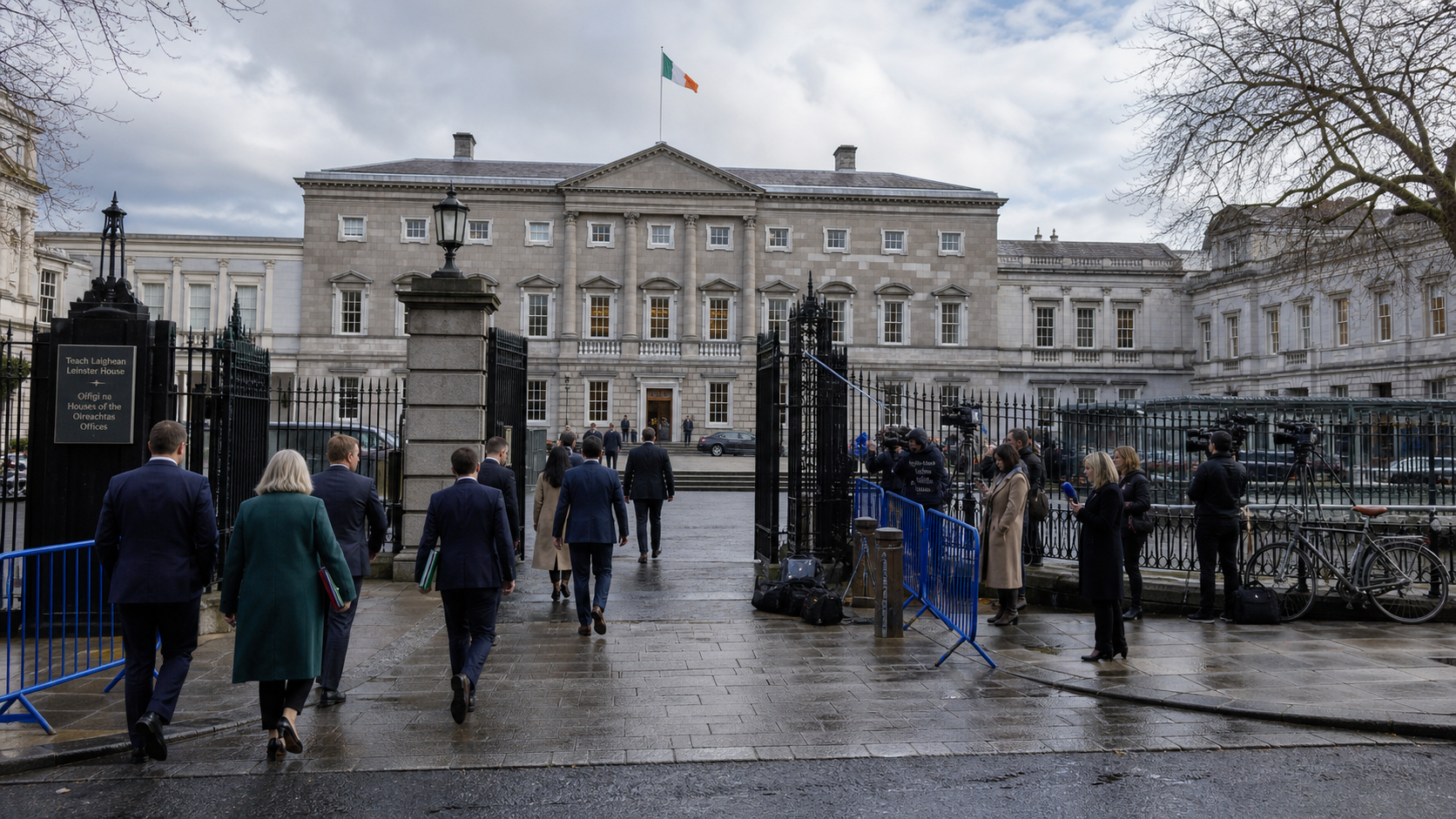
The Summer Economic Statement, which the government publishes each July to set the parameters for the October budget, will be the first formal signal of how the coalition intends to balance these competing pressures. The statement is expected to confirm the overall spending envelope for 2027 and to indicate the government's priorities for tax and expenditure measures.
Key Developments
Analysis published by The Journal's Gavan Reilly suggests that the apparent generosity of the €7.7 billion in additional voted spending for 2027 is largely illusory. Approximately €2.5 billion is required simply to address inflation and adjustments to pensions and welfare payments. A further €2 billion is needed to maintain existing levels of service for an ageing and growing population. Capital spending under the National Development Plan accounts for another €1.2 billion. When budget overruns from 2026 are factored in, the available funding for genuinely new measures may be as low as €0.8 billion before public sector pay deals are considered.
Income tax relief is expected to be a central focus of the budget, with ministers signalling an intent to increase the standard rate tax band — the point at which taxpayers enter the 40% rate — to mitigate the impact of inflation on wages. Each €1,000 increase in this band costs the exchequer approximately €230 million, meaning even modest relief will consume a significant portion of the available fiscal space.
Welfare advocates are pressing for increases above the baseline €10 per week that is widely anticipated, arguing that the cost of living crisis has disproportionately affected those on fixed incomes. A new support payment for people with disabilities, to assist with costs related to health, energy, and transport, is also under active consideration.
Why It Matters
Budget 2027 will be the first budget prepared under the full authority of the current coalition government, which took office following the November 2024 general election. The government's ability to deliver on its programme commitments — in housing, healthcare, and cost of living — will be tested by the fiscal constraints it faces. The political stakes are high: the opposition, led by Sinn Féin, has consistently argued that the government's fiscal management has prioritised corporate interests over ordinary workers and families, and will use the budget debate to press that case.
The corporation tax question looms over the entire exercise. Ireland's corporation tax receipts have been extraordinarily high in recent years, driven by the presence of major US technology and pharmaceutical companies. But these receipts are volatile and potentially vulnerable to changes in international tax rules, and the government has been warned repeatedly by the Irish Fiscal Advisory Council not to use windfall receipts to fund permanent spending commitments.
Local Impact
The budget's impact will be felt differently across Ireland's regions. In Dublin, where the cost of living is highest and the housing crisis most acute, income tax relief and housing measures will be the primary focus. In rural areas, where public transport is limited and car dependency is high, fuel and energy costs remain a significant concern. In Cork, Galway, and Limerick, where significant FDI investment has driven economic growth, the availability of housing and infrastructure to support continued expansion is a pressing issue. The HSE's regional health areas — which replaced the old hospital groups structure — will be watching closely for any additional capital funding for hospital infrastructure, particularly in the west and south-west where capacity constraints are most severe.
What's Next
The Summer Economic Statement is expected to be published this week, setting the parameters for the budget. Departmental spending bids will be submitted to the Department of Public Expenditure in August, with negotiations between ministers and the Department of Finance continuing through September. Budget Day is scheduled for October 14, 2026. The Dáil will return from its summer recess in mid-September to begin the pre-budget debate.