Aughinish Alumina Report Will Not Rule Out Russian Military Link as Ukraine Presses for Action
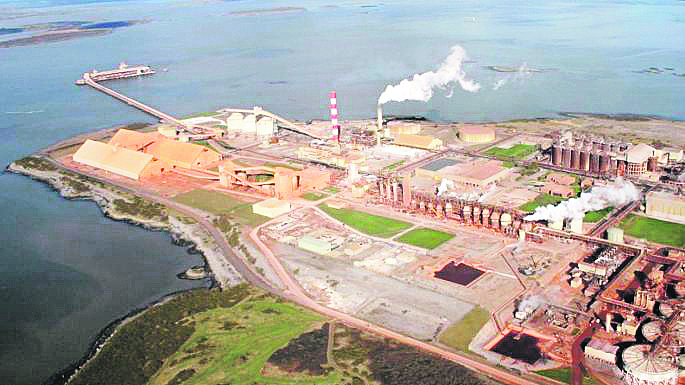
The Irish Government's investigation into Aughinish Alumina, the Rusal-owned refinery in Co Limerick that is the largest alumina plant in the European Union, is nearing completion and is expected to state that a link between its output and Russia's military supply chain cannot be ruled out, even if definitive proof remains elusive. Ukraine has formally urged the swift publication of the findings, while revised Central Statistics Office data shows Russia receives over 50% of the plant's production.
Background
Aughinish Alumina, located on the Shannon Estuary near Askeaton in Co Limerick, has been a significant industrial employer in the region for decades. The plant, which processes bauxite ore into alumina — a key intermediate product in the production of aluminium — employs approximately 450 people directly and supports an estimated 1,450 indirect jobs in the wider Limerick and Shannon region. Its ownership by Rusal, the Russian aluminium giant linked to sanctioned oligarch Oleg Deripaska, has made it a focal point of international scrutiny since Russia's full-scale invasion of Ukraine in February 2022.
Aluminium is a critical material in the production of military equipment, including aircraft, missiles, and armoured vehicles. The question of whether alumina produced at Aughinish is contributing to Russia's military supply chain — either directly or through the broader aluminium production process — has been raised repeatedly by Ukrainian officials and by members of the European Parliament. The Irish government has been under pressure to investigate and, if necessary, to support EU-level sanctions on alumina exports.
The investigation, led by the Department of Enterprise under Minister Peter Burke, has been gathering facts about the plant's operations and export destinations. The process has been complicated by the commercial sensitivity of the information involved and by the legal constraints on what the government can compel the company to disclose. Taoiseach Micheál Martin indicated in recent weeks that the fact-finding phase is complete and that the government is preparing to engage with the European Commission regarding the findings.
Key Developments
Revised figures from the Central Statistics Office reveal that Russia remains the largest recipient of Aughinish's output, receiving approximately 50.25% of the plant's production in the first quarter of 2026, with 39.22% going to the EU. These figures are significant: they confirm that the majority of the plant's output is flowing to Russia, where it enters the aluminium production process that supplies both civilian and military end-users.
The expected conclusion of the investigation — that a link to the Russian military supply chain cannot be ruled out, even if it cannot be definitively confirmed — reflects the evidentiary challenge facing the government. Proving that specific alumina from Aughinish ends up in specific military products requires a level of supply chain transparency that is not available to investigators working within the constraints of Irish and EU law.
Ukrainian President Volodymyr Zelenskyy has publicly urged the Irish government and the EU to take swift action against companies that continue to support the Russian war effort through economic activity. The Ukrainian government has formally requested the expedited publication of the investigation's findings, arguing that delay serves Russian interests.
Why It Matters
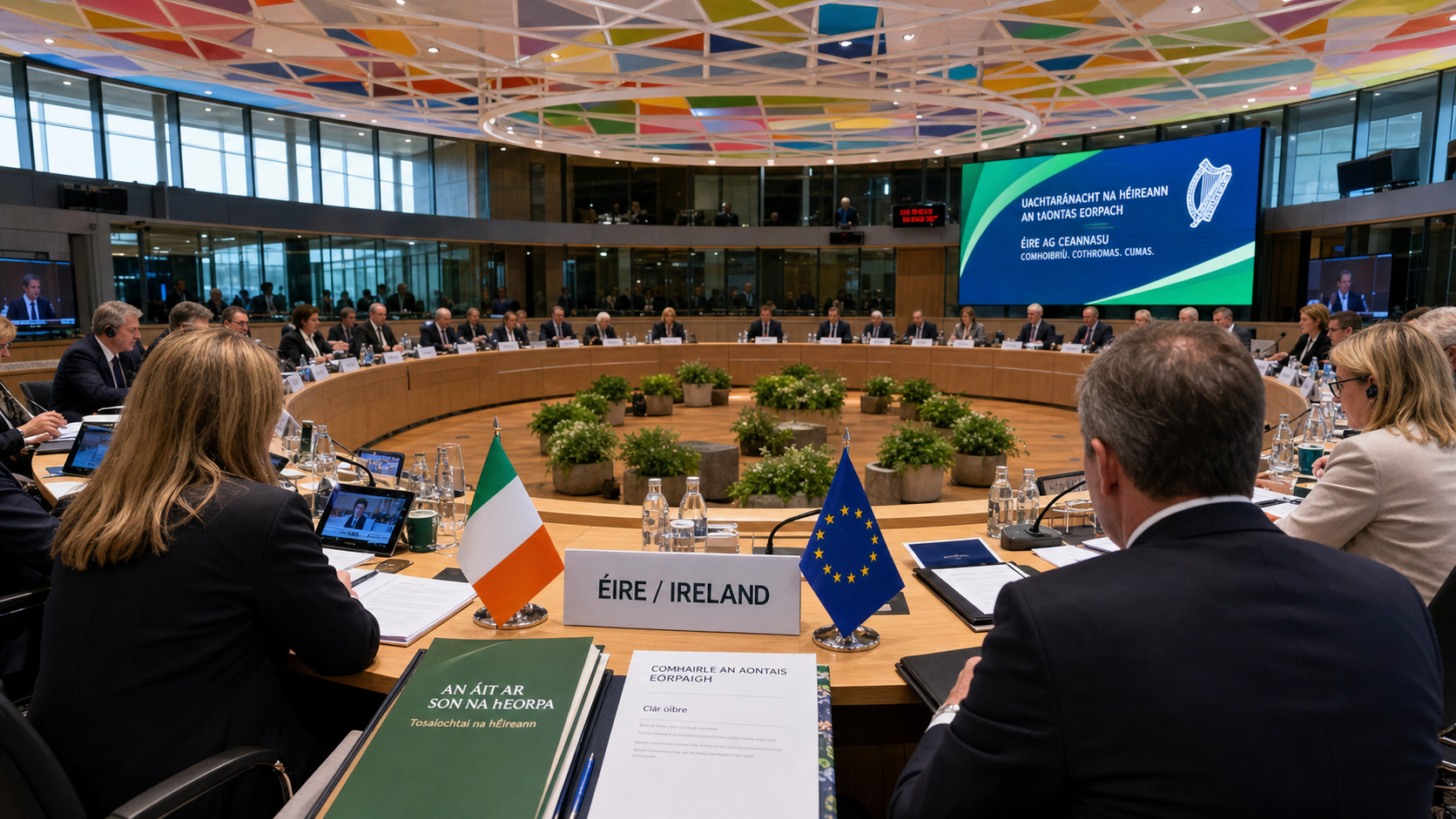
Ireland's handling of the Aughinish question has taken on additional significance during its rotating presidency of the Council of the EU, which began in July 2026. As the country chairing EU Council meetings and setting the agenda for European legislative business, Ireland's credibility on Ukraine-related issues is under particular scrutiny. A failure to act decisively on Aughinish — or to be seen to be protecting a Russian-owned industrial asset for economic reasons — would undermine Ireland's standing as a committed supporter of Ukraine and of EU sanctions policy.
The government has stated that it will not "cherry-pick" when it comes to supporting Ukraine and would not object if the European Commission decided to include alumina on the list of sanctioned goods. However, such a move would have significant implications for the plant's workforce and for the broader Limerick economy. The Attorney General has advised that the legal threshold for nationalisation of the plant has not been met, ruling out that option for now.
Local Impact
The 450 direct employees at Aughinish Alumina, and the estimated 1,450 people in indirect employment dependent on the plant, are acutely aware of the political and legal uncertainty surrounding the facility. The plant is one of the largest industrial employers in the mid-west region, and its closure — whether through sanctions, commercial decisions, or government action — would have a significant impact on the Limerick and Shannon economy. Local politicians across all parties have been careful to acknowledge both the geopolitical concerns and the employment implications, calling for any action to be accompanied by a comprehensive plan for affected workers. The Shannon Development agency and the IDA have been asked to assess the potential for alternative industrial investment in the area in the event that the plant's future becomes uncertain.
What's Next
The government's report on Aughinish Alumina is expected to be published within the next two to three weeks. Following publication, the government will engage with the European Commission on the findings and on the question of whether alumina should be added to the EU sanctions list. Swedish authorities are conducting parallel investigations into Rusal's operations, and their findings may provide additional evidence that informs the EU-level decision. The Dáil's Joint Committee on Enterprise, Trade and Employment has requested a briefing from Minister Burke on the investigation's findings.