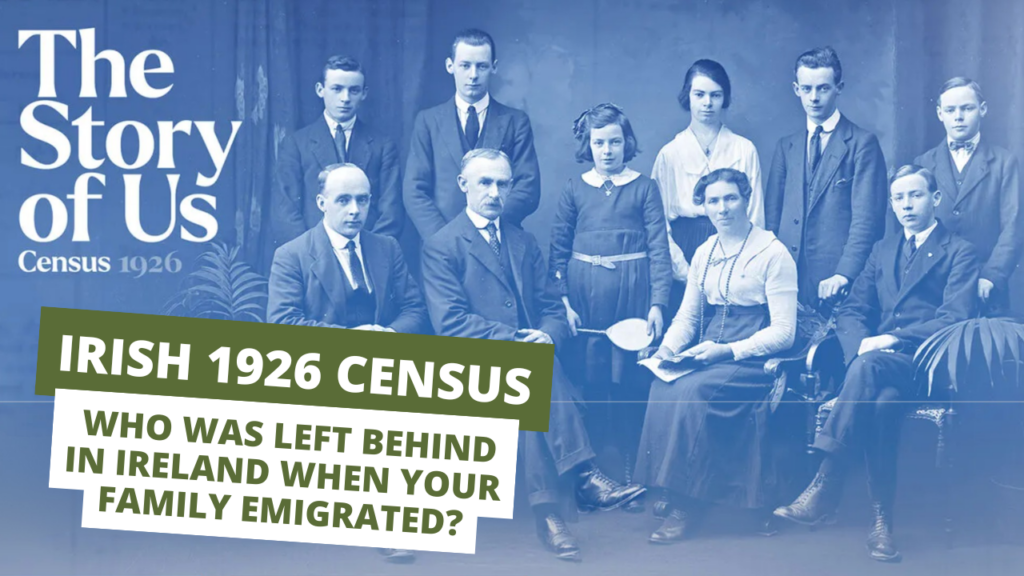
Ireland's 1926 Census Records to Be Released Online, Offering Genealogy Treasure Trove
Ireland's 1926 Census records are set to be released online, offering a major genealogy resource for the millions of people worldwide with Irish ancestry — with the records, covering the first census of the Irish Free State, set to help fill a significant gap in family history research caused by the destruction of earlier records in the Four Courts fire of 1922.
Background
The history of Irish census records is one marked by tragedy and loss. The destruction of the Public Record Office in the Four Courts in Dublin during the Civil War in 1922 resulted in the loss of most of Ireland's census records from the 19th century, including the censuses of 1821, 1831, 1841, and 1851. This catastrophic loss has left a gaping hole in the genealogical record for millions of people with Irish ancestry, making it exceptionally difficult to trace family histories beyond the early 20th century.
The 1901 and 1911 censuses are the only complete collections that have been available to the public, and they have been invaluable resources for family historians since their digitisation and online release. However, the 15-year gap between 1911 and 1926 — a period that encompassed the First World War, the 1916 Rising, the War of Independence, and the Civil War — has meant that tracing families through this turbulent period has been particularly challenging.
The 1926 Census was the first conducted by the Irish Free State, established in 1922, and it captured a snapshot of Irish society at a pivotal moment in the country's history. The records contain detailed information about individuals and households, including names, ages, occupations, and places of birth — exactly the kind of information that family historians need to piece together their ancestral stories. The release of these records online represents a landmark moment for genealogical research in Ireland and among the global Irish diaspora.
Key Developments
The 1926 Census records were scheduled to be made available online on 18 April 2026, a date that has been eagerly anticipated by the genealogy community for years. The release follows a period of digitisation and indexing work that has made the records searchable and accessible to anyone with an internet connection, regardless of where in the world they are based. For the estimated 70 million people worldwide who claim Irish ancestry — including large communities in the United States, Australia, the United Kingdom, and Canada — the release opens up new avenues for exploring their family histories.
The significance of the release is amplified by the destruction of earlier records. For many families, the 1926 Census will be the earliest surviving record of their ancestors in Ireland, providing a crucial anchor point from which to build a family tree. The records will also be of interest to historians and researchers studying Irish society in the early years of independence, offering a detailed statistical portrait of the country at a formative moment in its development.
Why It Matters
The release of the 1926 Census records matters because it reconnects people with their past. For the millions of Irish diaspora around the world — many of whose ancestors left Ireland during the Famine, the early 20th century emigration waves, or the economic hardships of later decades — the ability to trace their family histories is a matter of deep personal and cultural significance. Genealogy has become one of the most popular hobbies in the world, driven by the digitisation of historical records and the growth of DNA testing services, and the 1926 Census adds a major new resource to the Irish genealogical toolkit. For Ireland itself, the release is a reminder of the richness of the country's historical record and the importance of preserving and making accessible the documents that tell the story of its people.
Local Impact
For people in Northern Ireland and the Republic of Ireland, the release of the 1926 Census records is a particularly significant event. Many families on both sides of the border will find ancestors recorded in the census, and the records will help to illuminate the complex social and demographic landscape of Ireland in the years immediately following partition. For genealogists in Northern Ireland, the 1926 Census complements the records held at the Public Record Office of Northern Ireland (PRONI) and provides a new resource for tracing families who lived in the south of Ireland before or after the border was established. Local history societies, libraries, and genealogy groups across the island will be among the most enthusiastic users of the newly released records.
What's Next
The release of the 1926 Census records online is expected to generate significant interest from genealogists and family historians around the world, with the relevant online platforms likely to experience high levels of traffic in the days and weeks following the launch. Researchers and historians will also begin to mine the records for insights into Irish society in the 1920s, and it is likely that the release will prompt new discoveries and stories about Ireland's past. For more, see the Irish Genealogy website and the National Archives of Ireland.