Ireland Summons Russian Ambassador Over Leipzig Airport Drone Attack as EU Foreign Ministers Meet in Wicklow
The Irish government has summoned the Russian ambassador to a formal meeting at the Department of Foreign Affairs following an attempted drone attack on Leipzig/Halle Airport in Germany, as EU foreign ministers gathered in County Wicklow for an informal summit at which the incident and a potential new package of sanctions against Russia dominated the agenda.
Background
On 4 August 2026, an attempted act of sabotage occurred at Leipzig/Halle Airport in Germany, one of Europe's major cargo hubs and a facility used by Ukrainian aircraft, including those operated by the Antonov company. German investigators reported that drones carrying explosives were deployed in the attack: one device was discovered near a Ukrainian An-124 cargo aircraft and subsequently defused, while a second drone reportedly collided with a DHL cargo plane shortly thereafter.
German authorities, including Foreign Minister Johann Wadephul and Interior Minister Alexander Dobrindt, concluded that the technical configuration of the devices — including the explosives and detonators — matched patterns observed in previous Russian hybrid operations. The incident was characterised by German officials as a state-sponsored act of sabotage, and the European Union moved swiftly to coordinate a diplomatic response.
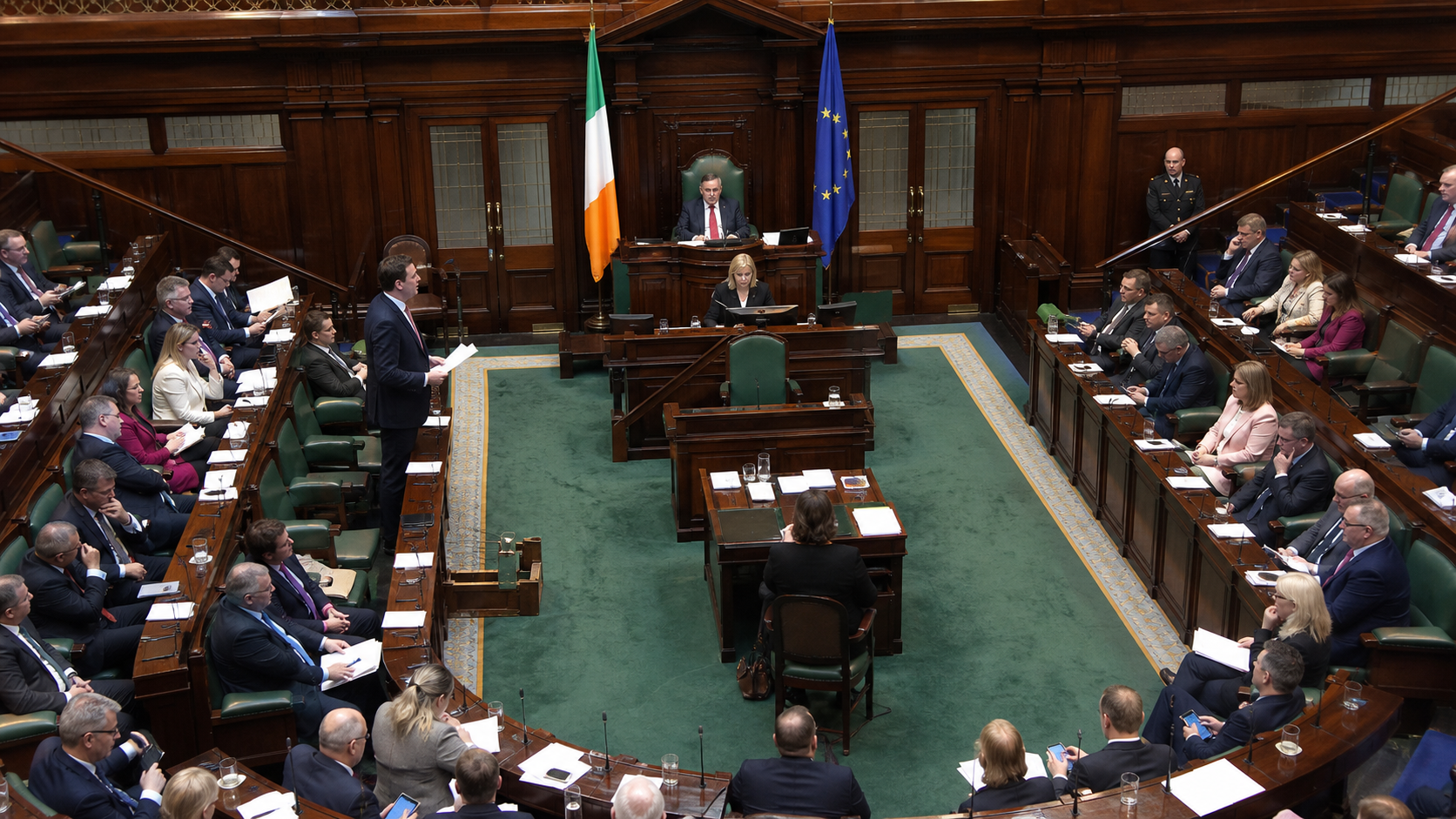
The informal gathering of EU foreign ministers in County Wicklow — hosted by Ireland as part of its rotating EU Council Presidency — provided a timely forum for member states to coordinate their response to the Leipzig attack and to discuss broader questions of European security in the context of the ongoing conflict in Ukraine. Ireland's EU Presidency, which runs until the end of 2026, has placed security and defence cooperation among its priority areas.
Key Developments
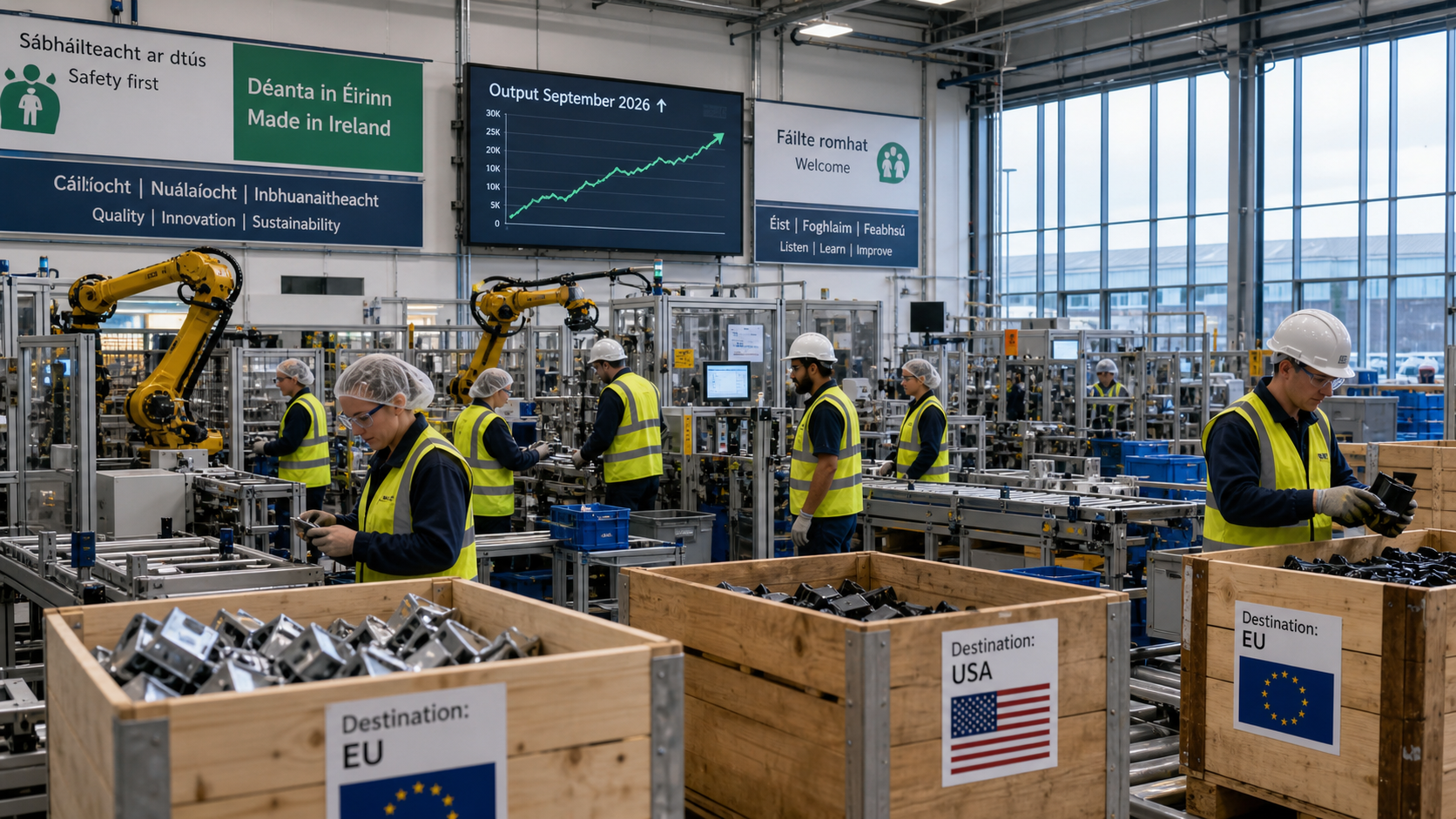
The Irish Department of Foreign Affairs ordered the Russian ambassador to Ireland, Yury Filatov, to attend a formal meeting at senior official level to receive a formal protest regarding the Leipzig attack. The summoning of an ambassador is a significant diplomatic signal, reserved for situations where a government wishes to express its strongest disapproval of another state's actions.
EU High Representative for Foreign Affairs and Security Policy Kaja Kallas, speaking ahead of the Wicklow meeting, characterised the Leipzig incident as having "all the hallmarks of state-sponsored terrorism." The EU summoned the Russian ambassador in Brussels, and France confirmed that Paris had summoned the Russian chargé d'affaires to lodge a formal protest. Germany announced the closure of a Russian consulate in Bonn and a Russian cultural centre in Berlin.
At the Wicklow meeting, EU foreign ministers discussed a potential new package of sanctions targeting approximately 1,600 Russian individuals and entities, as well as measures to increase pressure on Russia's "shadow fleet" — tankers suspected of transporting oil in violation of international sanctions. Russian officials, including President Vladimir Putin and Foreign Ministry spokesperson Maria Zakharova, rejected the allegations, labelling them as "contrived."
Why It Matters
The Leipzig attack represents a significant escalation in Russia's hybrid warfare campaign against European infrastructure and institutions. Previous incidents attributed to Russian state actors have included cyberattacks on government systems, sabotage of undersea cables, and interference in democratic processes. The use of explosive-laden drones against a major European airport — targeting a Ukrainian cargo aircraft — marks a new level of brazenness in Russia's hybrid operations on European soil.
For Ireland, the decision to summon the Russian ambassador is a significant step. Ireland has historically maintained a cautious approach to diplomatic confrontations with major powers, reflecting its tradition of military neutrality and its role as a facilitator of dialogue. The decision to join other EU member states in summoning the Russian ambassador signals that Ireland's approach to the Russia-Ukraine conflict has hardened considerably since the full-scale invasion of 2022.
The hosting of the EU foreign ministers' meeting in Wicklow also underscores Ireland's active engagement with European security issues during its Council Presidency. The choice of a venue in County Wicklow — away from the formal diplomatic environment of Dublin — reflects a deliberate effort to create an informal atmosphere conducive to frank discussion among ministers.
Local Impact
The EU foreign ministers' meeting in County Wicklow brought a significant security and logistical operation to the county, with An Garda Síochána and the Defence Forces providing protection for the visiting delegations. The meeting was held at a private venue in the Wicklow hills, with access roads temporarily closed to the public. The Department of Foreign Affairs has indicated that Ireland's EU Presidency will continue to prioritise European security cooperation, with further ministerial meetings planned for later in the year. The summoning of the Russian ambassador was handled at the Iveagh House headquarters of the Department of Foreign Affairs in Dublin's St Stephen's Green.
What's Next
The EU is expected to formally adopt the new sanctions package targeting Russian individuals and entities within the coming weeks, subject to agreement among all 27 member states. Ireland will play a key role in facilitating that agreement as Council Presidency holder. The Department of Foreign Affairs has indicated that it will continue to monitor the situation closely and will take further diplomatic action if warranted. The Russian ambassador's response to the formal protest has not been made public.