Ireland Signs €400m Military Radar Deal with France as Minister McEntee Confirms Acquisition Order
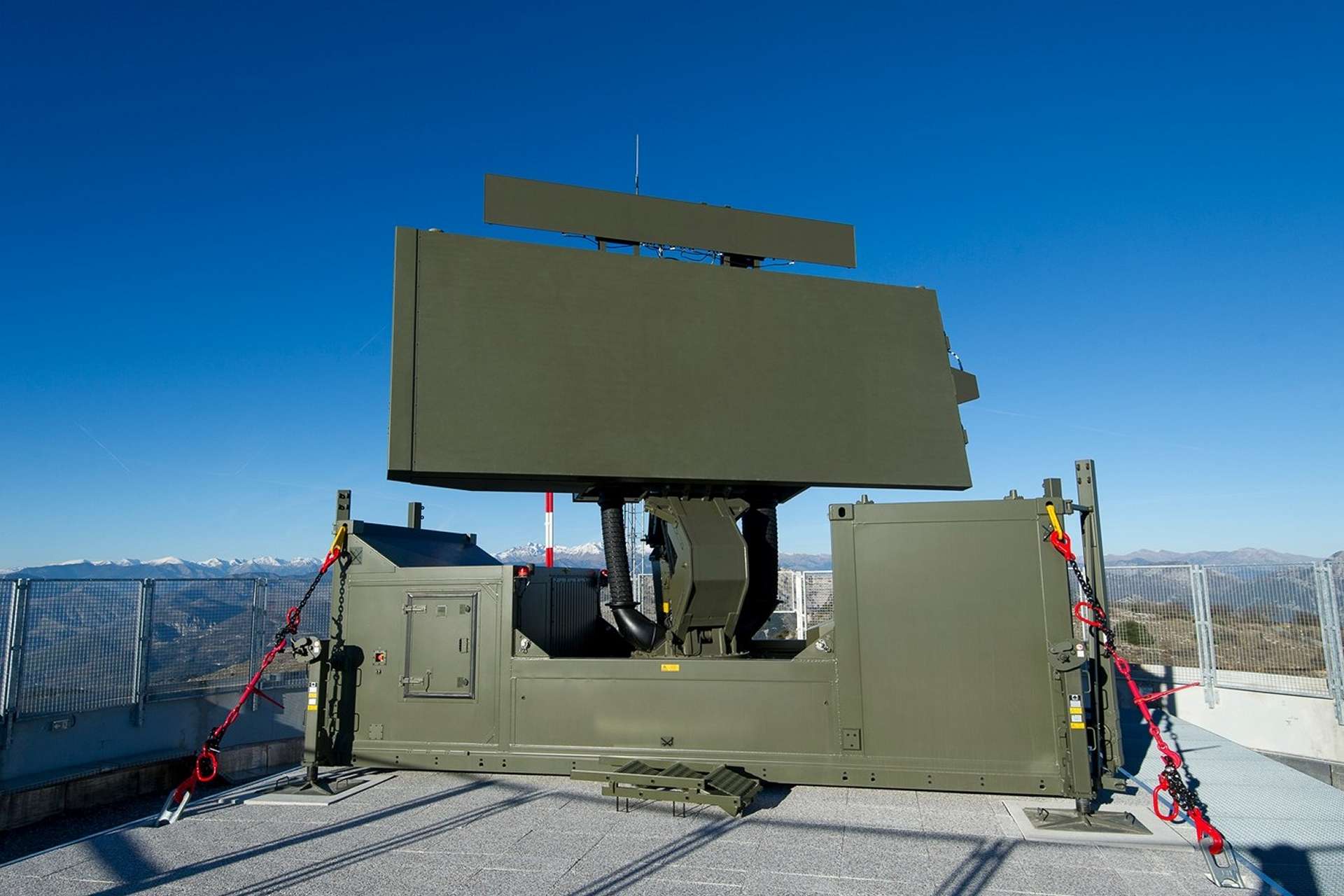
Minister for Defence Helen McEntee has confirmed that Ireland has formally signed an acquisition order with the French Ministry for the Armed Forces for a military radar and air defence package valued at between €300 million and €500 million, comprising five deployable long-range radar systems manufactured by Thales and ground-based air defence systems provided by MBDA, in the most significant expansion of Ireland's defence capabilities in a generation.
Background
Ireland's defence policy has been the subject of intense debate since Russia's full-scale invasion of Ukraine in February 2022. The invasion exposed the extent to which Ireland's military capabilities had been allowed to atrophy over decades of underinvestment, and the Commission on the Defence Forces — established in 2021 and reporting in 2022 — identified the absence of a recognised air picture as one of the most critical gaps in the state's security architecture.
A recognised air picture is the ability to monitor and track all aircraft operating in a country's airspace in real time. Without it, Ireland is effectively blind to what is happening in its own skies — a situation that has become increasingly untenable as the security environment in Europe has deteriorated. The Commission recommended the urgent procurement of long-range radar systems as a priority, and the government accepted that recommendation as part of a broader programme of defence investment.
The decision to procure from France through a government-to-government agreement with the Direction Générale de l'Armement — France's defence procurement agency — reflects both the quality of French defence technology and the strength of the bilateral relationship between Dublin and Paris. France has been one of Ireland's most consistent allies within the European Union, and the defence procurement deal deepens a partnership that extends across diplomatic, economic, and cultural dimensions.
Key Developments
Minister McEntee confirmed on Friday that the acquisition order had been signed, following the approval of the Military Radar Programme's final business case by the Cabinet in July 2026. The package comprises three primary components. Five deployable long-range radar systems, manufactured by the French company Thales, will provide Ireland with the ability to monitor its airspace independently for the first time. Ground-based air defence systems from MBDA will complement the radar capability, providing a means of responding to identified threats. A third element — maritime radar systems to track vessels off the Irish coast — is currently under development and will be procured separately.
Delivery of the long-range radar systems is scheduled to commence in 2027, with full operational capability targeted by the end of 2028. The government has not disclosed the specific locations at which the radar systems will be deployed, but has confirmed that strategic sites across the country have been evaluated. The systems are described as "deployable," meaning that they can be relocated as operational requirements change.
The deal also includes provisions for the accelerated roll-out of Counter-Unmanned Aerial Systems, which are already being deployed as part of Operation Fianna — the military operation providing security for Ireland's EU Council presidency. The proliferation of commercial drones has created new security challenges for major public events and critical infrastructure, and the C-UAS capability will address that threat directly.
Why It Matters
The radar deal represents a fundamental shift in Ireland's approach to its own security. For decades, Ireland's defence policy was characterised by a form of strategic ambiguity — the state maintained a policy of military neutrality while relying implicitly on the security umbrella provided by NATO allies and the European Union. The deterioration of the security environment in Europe has made that position increasingly difficult to sustain, and the radar procurement is a concrete acknowledgement that Ireland must take greater responsibility for its own defence.
The deal is also significant in the context of Ireland's EU Council presidency. As the state chairing the Council of the EU, Ireland has a particular responsibility to demonstrate that it takes European security seriously. The radar procurement sends a clear signal to partners that Ireland is committed to contributing to the collective security of the Union, even if it remains outside NATO.
Critics of the deal, including some members of Sinn Féin and the Social Democrats, have questioned whether the investment represents the best use of public funds at a time when housing, health, and education are under severe pressure. The government has countered that the radar programme is a necessary investment in national security that cannot be deferred indefinitely.
Local Impact
The deployment of radar systems at strategic sites across Ireland will have implications for communities in the areas selected. While the government has not disclosed specific locations, it is expected that sites in the west and north-west of the country — which offer the best coverage of the Atlantic approaches — will be among those chosen. Local planning processes will be required for any permanent installations, and the government has indicated that it will engage with affected communities before finalising deployment decisions.
The deal is also expected to generate some economic activity in Ireland, with provisions for technology transfer and local maintenance contracts included in the agreement with the French government. The Defence Forces will require additional trained personnel to operate the new systems, and a recruitment and training programme is expected to be announced in the coming months.
What's Next
The first deliveries of long-range radar systems are expected in 2027. The government will publish a detailed implementation plan for the Military Radar Programme in the coming weeks, setting out the timeline for deployment, the training requirements for Defence Forces personnel, and the arrangements for ongoing maintenance and support. The maritime radar element of the package is expected to be the subject of a separate procurement process, with a decision anticipated in 2027.