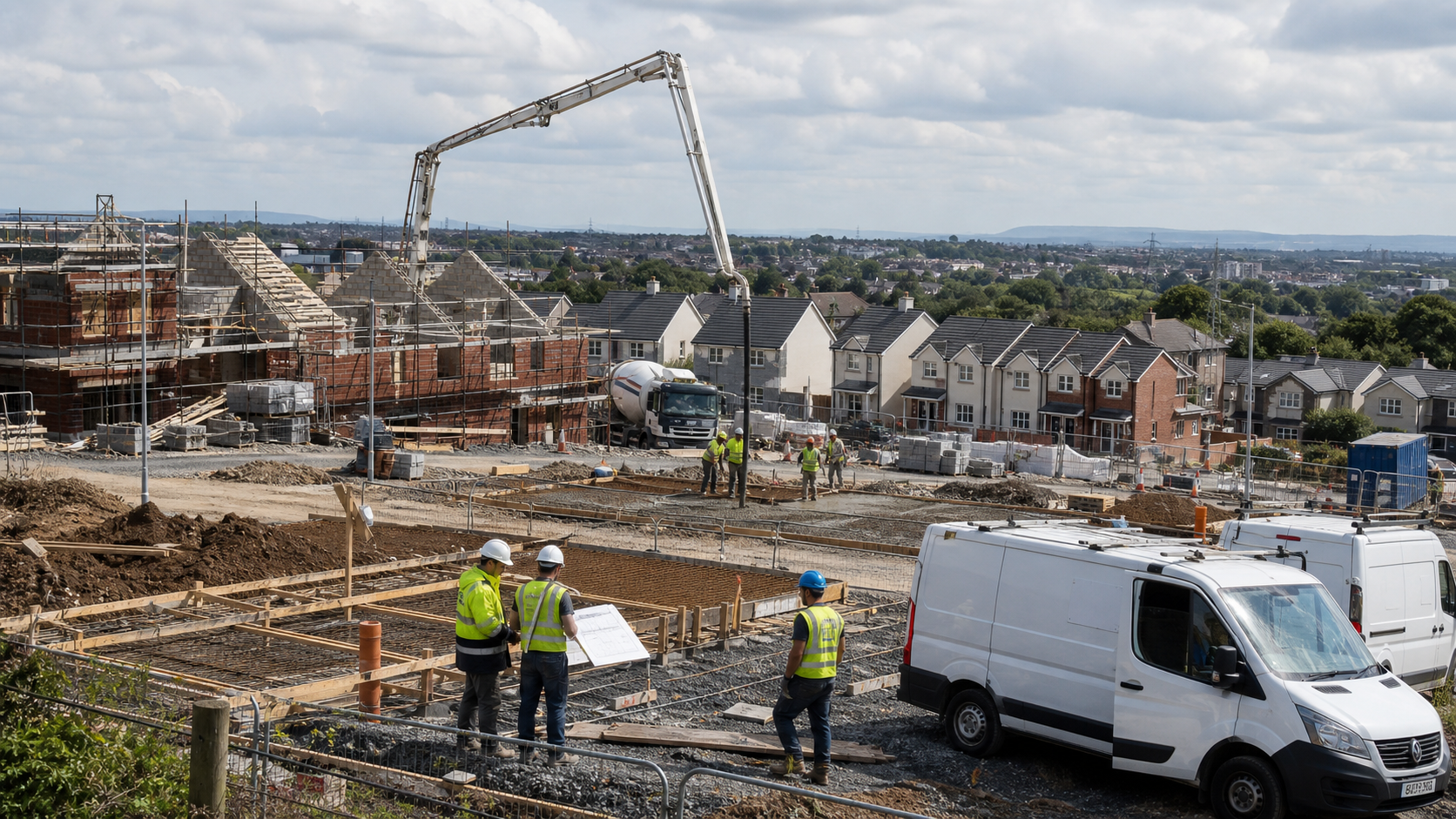
Ireland Records 3,028 New Home Commencements in July in Second-Highest Monthly Total Since Records Began
Ireland recorded 3,028 new home commencements in July 2026, a 169% increase on the 1,125 homes commenced in the same month last year, bringing the year-to-date total to 18,974 — the second-highest figure for this period since national recording began in 2014 — in data that signals a significant acceleration in housing construction even as the country continues to grapple with a severe shortage of available homes.
Background
Ireland's housing crisis has been the defining domestic policy challenge of the past decade. A combination of factors — including the collapse of the construction sector during the financial crisis, restrictive planning regulations, high development costs, and a surge in population driven by immigration and natural growth — has produced a chronic shortage of housing that has pushed rents and purchase prices to levels that are among the highest in Europe. The government's Housing for All plan, and its successor framework, set a target of delivering 300,000 homes by 2030 — an ambition that requires a sustained and significant increase in construction activity.
The commencement data, published by the Department of Housing, provides one of the most reliable leading indicators of future housing supply. A commencement notice is filed when construction begins on a new home, meaning that the July 2026 figures represent homes that will be completed and available for occupation in the coming twelve to eighteen months. The acceleration in commencements over the first seven months of 2026 is therefore a genuinely positive signal for housing supply in 2027 and 2028.
The broader construction sector has also been showing signs of renewed momentum. The AIB construction purchasing managers' index for July 2026 reached 53.0 — a sharp rise from the 45.4 recorded in June, and a figure that signals clear sector growth. The GeoDirectory Residential Buildings Report for the second quarter of 2026 found that 30,508 residential buildings were under construction across Ireland, an increase of 27.8% compared to the same period in 2025.
Key Developments
The July 2026 commencement data breaks down as follows: 1,612 homes within multi-unit developments, 1,004 apartments, and 412 one-off houses. Approximately one quarter of the July commencements were located in Dublin, reflecting the concentration of demand and development activity in the capital. The year-to-date total of 18,974 commencements represents a 152% increase over the same period in 2025 — a figure that, if sustained, would put Ireland on course to exceed its annual housing targets for the first time in several years.
The data on completions is more mixed. The Central Statistics Office reported that 7,856 new homes were completed in the first quarter of 2026 — the highest figure for a first quarter since 2011. However, the second quarter of 2026 saw a decline in completions, with 8,823 units recorded — a figure lower than the same period in 2025. This apparent contradiction between strong commencements and weaker completions reflects the time lag between starting and finishing construction, as well as ongoing challenges with labour supply and materials costs in the construction sector.
Minister for Housing Darragh O'Brien welcomed the commencement data, describing it as "clear evidence that the government's housing policies are working." He acknowledged the gap between commencements and completions but expressed confidence that the pipeline of homes under construction would translate into significantly higher completion numbers in 2027.
Why It Matters
The acceleration in housing commencements is genuinely significant, but it needs to be contextualised carefully. Ireland needs to build approximately 50,000 homes per year to meet current demand — a figure that accounts for population growth, household formation, and the need to address the existing backlog of unmet housing need. The 18,974 commencements recorded in the first seven months of 2026 suggest an annualised rate of roughly 32,000 — well below the target, but significantly higher than the rates recorded in 2024 and 2025.
The apartment commencement figures are particularly noteworthy. The 1,004 apartments commenced in July alone represents a significant increase on historical norms, reflecting the impact of government measures to support apartment viability — including the Croí Cónaithe scheme and changes to planning regulations. Apartments are essential to meeting housing demand in urban areas, particularly Dublin, where land costs make lower-density development economically unviable.
Local Impact
The geographic distribution of commencements reflects the concentration of housing demand in the greater Dublin area, with significant activity also recorded in Cork, Galway, and Limerick. In Dublin, the areas seeing the highest levels of new construction include the Docklands, Clongriffin, Cherrywood, and the Naas Road corridor. In Cork, the Marina Quarter and the Ballincollig-Carrigaline Municipal District are seeing significant apartment development. In Galway, the Ardaun Local Area Plan area east of the city is the focus of major residential development. For communities in these areas, the construction activity brings both the promise of new housing supply and the disruption of large-scale building works — a trade-off that local residents and councils are managing with varying degrees of success.
What's Next
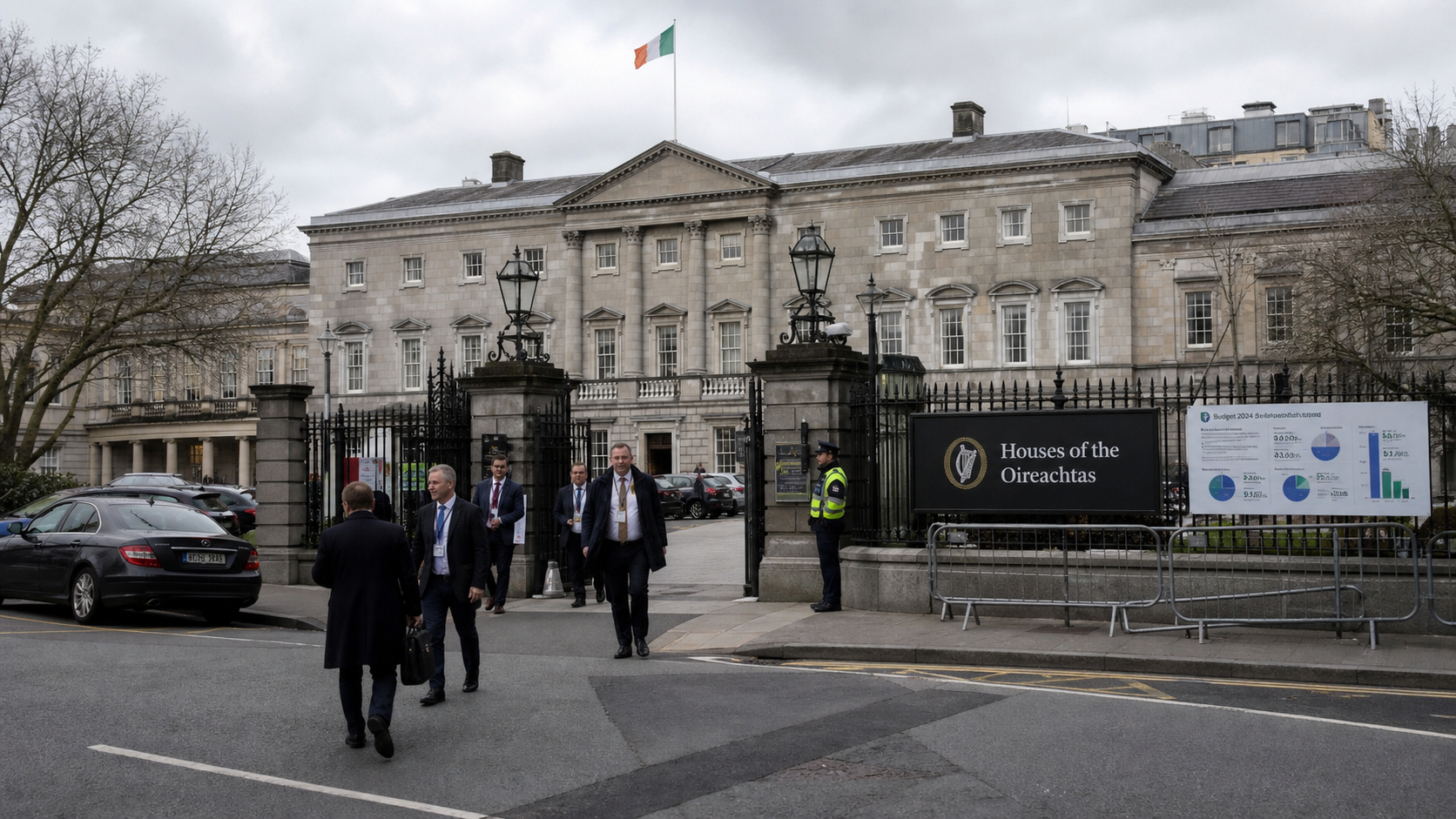
The Department of Housing will publish the August commencement data in late September. The Budget in October will include measures to support housing delivery, with the government expected to extend and enhance the Croí Cónaithe scheme and to announce additional funding for social and affordable housing. The Housing Commission's final report, which is expected before the end of the year, will provide an independent assessment of progress toward the 300,000 homes target and recommendations for further policy action. Planning reform legislation, currently before the Oireachtas, is also expected to be enacted before the end of the year, with the potential to accelerate the planning process for large-scale residential developments.