Ireland Defeat Israel 3-0 in Debrecen as Symbolic Gestures Define a Night of Profound Discomfort
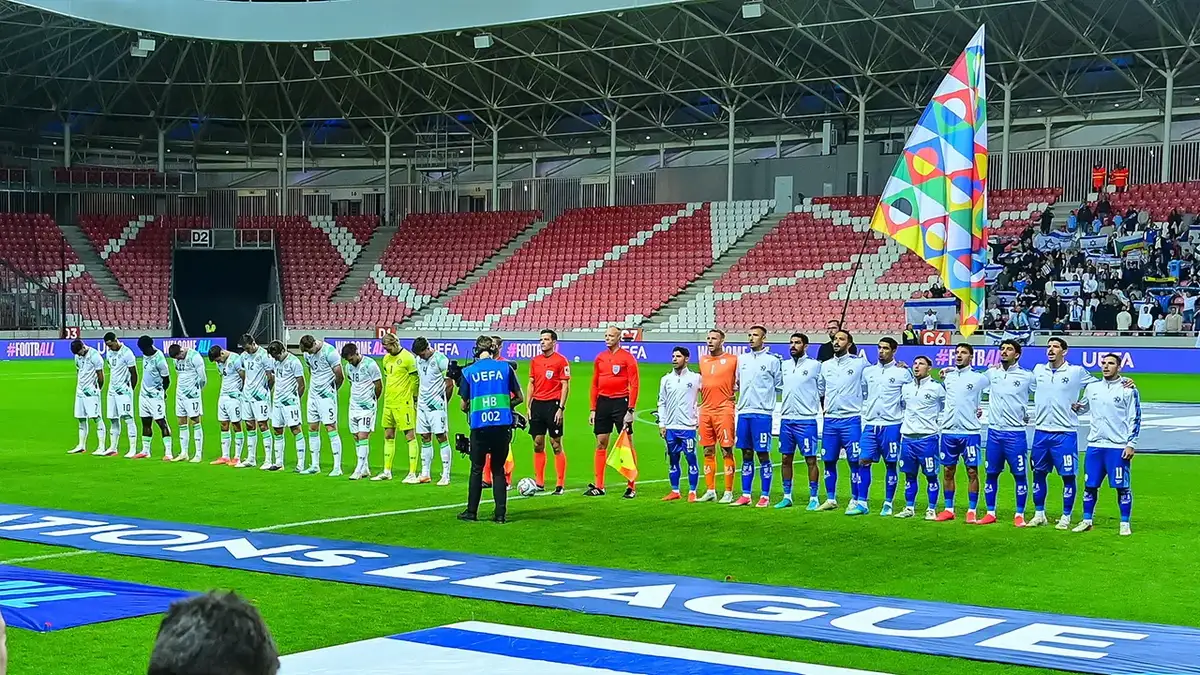
The Republic of Ireland defeated Israel 3-0 in a UEFA Nations League fixture played at a near-empty stadium in Debrecen, Hungary, on Sunday night, with Troy Parrott, Adam Idah, and Jack Moylan scoring all three goals inside the first 25 minutes. The match was played under a cloud of controversy that had dominated Irish public life for the preceding week, with players wearing black armbands, refusing pre-match handshakes, and bowing their heads during the Israeli national anthem in a series of carefully choreographed symbolic gestures.
Background
The fixture had been the subject of intense debate in Ireland for weeks before a ball was kicked. Calls for the FAI to withdraw from the match — on the grounds that playing Israel normalised the Israeli state's conduct in Gaza — grew louder as the date approached, and the Irish squad itself was divided. Goalkeeper Gavin Bazunu withdrew from the squad ahead of the match, stating publicly that it would be "wrong to participate" given his personal beliefs about the loss of innocent life in the conflict. His withdrawal was the first public act of dissent by an Irish player and prompted a wave of public discussion about the responsibilities of athletes in politically charged situations.
The FAI maintained throughout that the decision to fulfil the fixtures was made to avoid potential sanctions from UEFA, which had made clear that a withdrawal would result in significant financial and sporting penalties. A vote among the squad reportedly produced a 14-8 majority in favour of playing, though the precise figures were not officially confirmed. Manager Heimir Hallgrímsson described the process as one of the most difficult he had experienced in his career.
RTÉ, the national broadcaster, took the unusual step of providing stripped-back coverage of the game — no studio analysis, no commentary on the international feed, and no advertising or sponsorship associated with the broadcast. The decision was widely praised as a principled response to an impossible situation.
Key Developments
The match itself was played in a near-empty Debrecen stadium, with the Israeli team's supporters largely absent. Before kick-off, the Irish players refused to participate in the traditional pre-match handshake and exchange of pennants, and bowed their heads in silence during the playing of the Israeli national anthem. The gestures were visible to the global television audience and were widely interpreted as a statement of solidarity with the people of Gaza.
On the pitch, Ireland were clinical in the opening quarter-hour. Parrott opened the scoring in the 14th minute, Idah added a second in the 16th, and Moylan completed the scoring in the 25th minute — kissing his black armband as he celebrated. The remainder of the match was played out in a subdued atmosphere, with Ireland managing the game comfortably without adding to their tally.
A racism allegation emerged after the match, with Jayson Molumby informing the referee of chants from Israeli fans aimed at Adam Idah. UEFA confirmed that the allegation could not be investigated due to the absence of sufficient evidence, a decision that drew criticism from the FAI and from anti-racism campaigners. Ireland are scheduled to play Israel again on 4 October in a match relocated to Serbia and played behind closed doors.
Why It Matters
The Ireland-Israel fixture has become one of the most politically charged sporting events in Irish history, and its significance extends well beyond the result. The decision to play — and the manner in which the players chose to express their discomfort — has forced a national conversation about the relationship between sport and politics, and about the responsibilities of public figures in times of international crisis. The FAI's position, that the fixtures must be fulfilled to avoid sanctions, was legally and financially defensible but left many Irish people feeling that the organisation had prioritised institutional interests over moral clarity.
The players' symbolic gestures — the black armbands, the bowed heads, the refusal to shake hands — were a genuine attempt to navigate an impossible situation with dignity. Whether those gestures were sufficient is a matter of legitimate debate. What is not in doubt is that the events of the past week have changed the way Irish football is perceived, both at home and abroad.
Local Impact
Across Ireland — in living rooms in Dublin's Liberties, in pubs in Cork's Leeside, in community centres in Galway's Claddagh — the match was watched with a mixture of pride in the players' conduct and profound unease about the circumstances. The FAI has indicated that it will engage with UEFA about the broader question of how international football should respond to conflicts involving member associations. The second fixture, on 4 October in Serbia, will be watched with equal intensity.
What's Next
Ireland face Israel again on 4 October in a match relocated to Serbia and played behind closed doors. The FAI has indicated that the same protocols — black armbands, no handshakes — will apply. Sinn Féin, the Social Democrats, and the Greens have called for the FAI board to step aside following the controversy, arguing that the organisation's handling of the situation was inadequate. The FAI has rejected those calls, with president Paul Cooke stating that the build-up "went as well as could be expected."