IDA Ireland Secures 190 Investment Projects and 10,400 Jobs in Strong H1 2026 Performance
IDA Ireland secured 190 foreign direct investment projects in the first half of 2026, a 6% increase on the same period in 2025, with commitments to create 10,410 new jobs, according to the agency's mid-year report. The results demonstrate Ireland's continued resilience in attracting high-value capital despite intensifying global competition, with key investments including Novo Nordisk's €432 million Athlone expansion, Qualcomm's €125 million Cork AI hub, and OpenText's €105 million Cork and Galway investment.
Background
IDA Ireland, the state agency responsible for attracting foreign direct investment to Ireland, has been operating in an increasingly competitive global environment. The combination of rising geopolitical uncertainty, the ongoing restructuring of global supply chains, and intensifying competition from other European countries and emerging markets has made the task of attracting and retaining high-value investment more challenging than at any point in the past decade.
Against this backdrop, the H1 2026 results represent a significant achievement. The 190 investments secured include a diverse range of activities: 54 first-time investors, 39 expansions of existing operations, 57 research, development, and innovation projects, 31 talent development initiatives, and nine green capital investments. The breadth of this portfolio reflects the maturity of Ireland's FDI ecosystem, which has evolved from a model based primarily on attracting manufacturing operations to one that encompasses the full range of high-value business activities.
The United States continues to be the primary source of FDI, accounting for approximately 65% of the total investments. This concentration reflects Ireland's deep economic and cultural ties with the US, as well as the country's role as the European base of choice for many of America's largest technology and pharmaceutical companies. However, the agency has been working to diversify its investor base, with growing activity from European, Asian, and Middle Eastern companies.
Key Developments
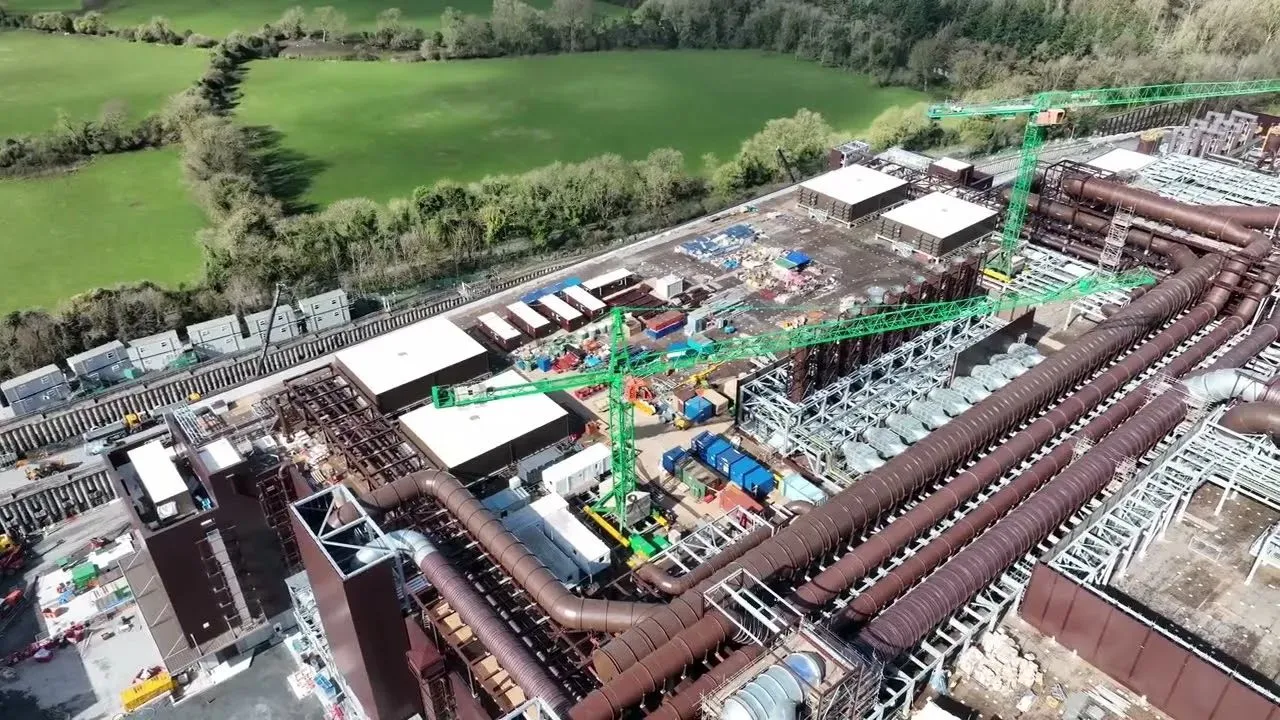
The headline investments of the first half reflect the sectors where Ireland has developed genuine competitive strengths. Novo Nordisk's €432 million investment to expand its manufacturing capacity in Athlone is the largest single investment of the period and reflects the pharmaceutical giant's confidence in Ireland's life sciences ecosystem. Qualcomm's €125 million commitment to transform its Cork site into a strategic AI pillar for the company's global chipmaking operations reflects the growing importance of artificial intelligence as a driver of FDI. OpenText's €105 million investment across Cork and Galway, creating 400 jobs focused on agentic AI and sovereign cloud capabilities, is another example of this trend.
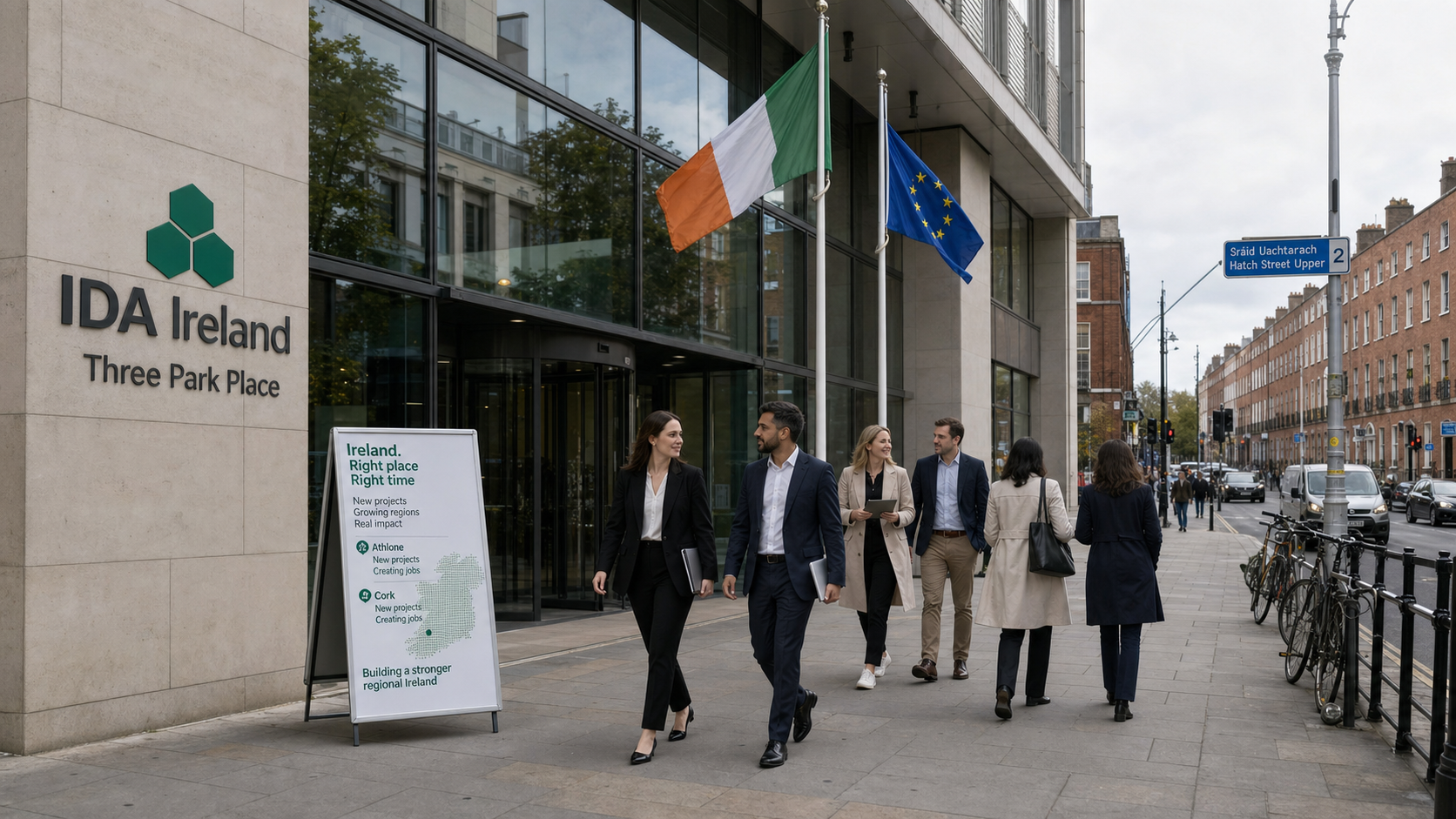
Regional development remains a core focus of the agency's strategy. Of the 190 investments, 98 — representing 52% of the total — are located outside of Dublin. This regional spread is a deliberate policy objective, reflecting the government's commitment to ensuring that the benefits of FDI are distributed across the country rather than concentrated in the capital.
IDA CEO Michael Lohan and Chair Feargal O'Rourke described the results as "stellar" while cautioning that continued focus on "enabling conditions" is essential to sustaining the momentum. These conditions include addressing capacity constraints in housing, energy, and water infrastructure, and maintaining a streamlined planning and regulatory environment.
Why It Matters
The H1 2026 results are significant for several reasons. They demonstrate that Ireland's FDI model remains competitive despite the challenges of the global environment. They confirm that the country's strengths in life sciences, technology, and financial services continue to attract high-value investment. And they provide evidence that the regional development strategy is delivering results, with more than half of all investments located outside Dublin.
However, the agency's own analysis suggests that the era of rapid employment growth may be moderating. While job creation remains robust, the overall employment picture is becoming more mixed due to ongoing tech sector redundancies, which have affected several major IDA client companies in recent months. The net employment impact of FDI — taking account of both new jobs created and jobs lost through restructuring — is a more nuanced picture than the headline figures suggest.
Local Impact
The regional distribution of H1 2026 investments reflects the IDA's strategy of developing clusters of activity in specific sectors across different regions. In Athlone, the Novo Nordisk expansion builds on an existing life sciences cluster that includes several other major pharmaceutical companies. In Cork, the Qualcomm and OpenText investments add to a technology ecosystem that already includes Apple, Dell, and numerous other major employers. In Galway, the OpenText investment complements existing activity in medical devices and technology. The agency's regional offices in Cork, Galway, Limerick, and other cities play a key role in supporting these regional clusters, providing local knowledge and relationship management that complements the national-level engagement with investors.
What's Next
IDA Ireland will publish its full-year results in January 2027. The agency's "Adapt Intelligently" five-year strategy, which runs to 2029, sets targets for investment volumes, job creation, and regional distribution that will be assessed against the H1 2026 performance. The agency is also monitoring the impact of global trade policy developments — including the ongoing uncertainty around US tariffs and the EU's trade relationships with major partners — on investor sentiment and decision-making.