Ireland's EU Presidency Opens New Economic Doors as Single Market Agenda Targets €500 Billion Growth Opportunity
Ireland's assumption of the EU Council Presidency is opening significant economic opportunities for Irish businesses and the broader economy, with the Presidency's competitiveness agenda targeting a €500 billion growth opportunity through the deepening of the EU single market. Irish business groups, including Ibec and the Irish Business and Employers Confederation, are positioning to influence key legislative priorities during the six-month term, while the Presidency itself is generating tens of millions of euros in direct economic activity through conferences, ministerial meetings, and diplomatic events across the country.
Background
The EU single market — the world's largest integrated economic area, encompassing 450 million consumers and 27 member states — is the foundation of Ireland's economic model. As a small, open economy with a disproportionately large export sector, Ireland depends on frictionless access to European markets to a degree that few other member states can match. The single market allows Irish companies to sell goods and services across the EU without tariffs, quotas, or regulatory barriers, and it provides the framework within which Ireland's multinational sector — the US technology and pharmaceutical companies that have made Ireland their European base — operates.
Despite its achievements, the single market remains incomplete in several important areas. Services — which account for the majority of economic activity in modern economies — are far less integrated than goods, with significant regulatory barriers remaining in sectors including financial services, professional services, and digital services. The capital markets union, which aims to create a more integrated European financial market, has been in development for a decade without reaching its full potential. And the digital single market, which is critical for the technology sector, continues to be fragmented by national regulations and enforcement approaches.
The Irish Presidency's competitiveness agenda, built around the "One Europe, One Market" roadmap, aims to address these gaps and to unlock what economists estimate could be a €500 billion annual growth opportunity if the single market were fully completed. For Ireland, which has more to gain from a deeper single market than almost any other member state, this agenda is not merely a diplomatic priority — it is an economic imperative.
Key Developments
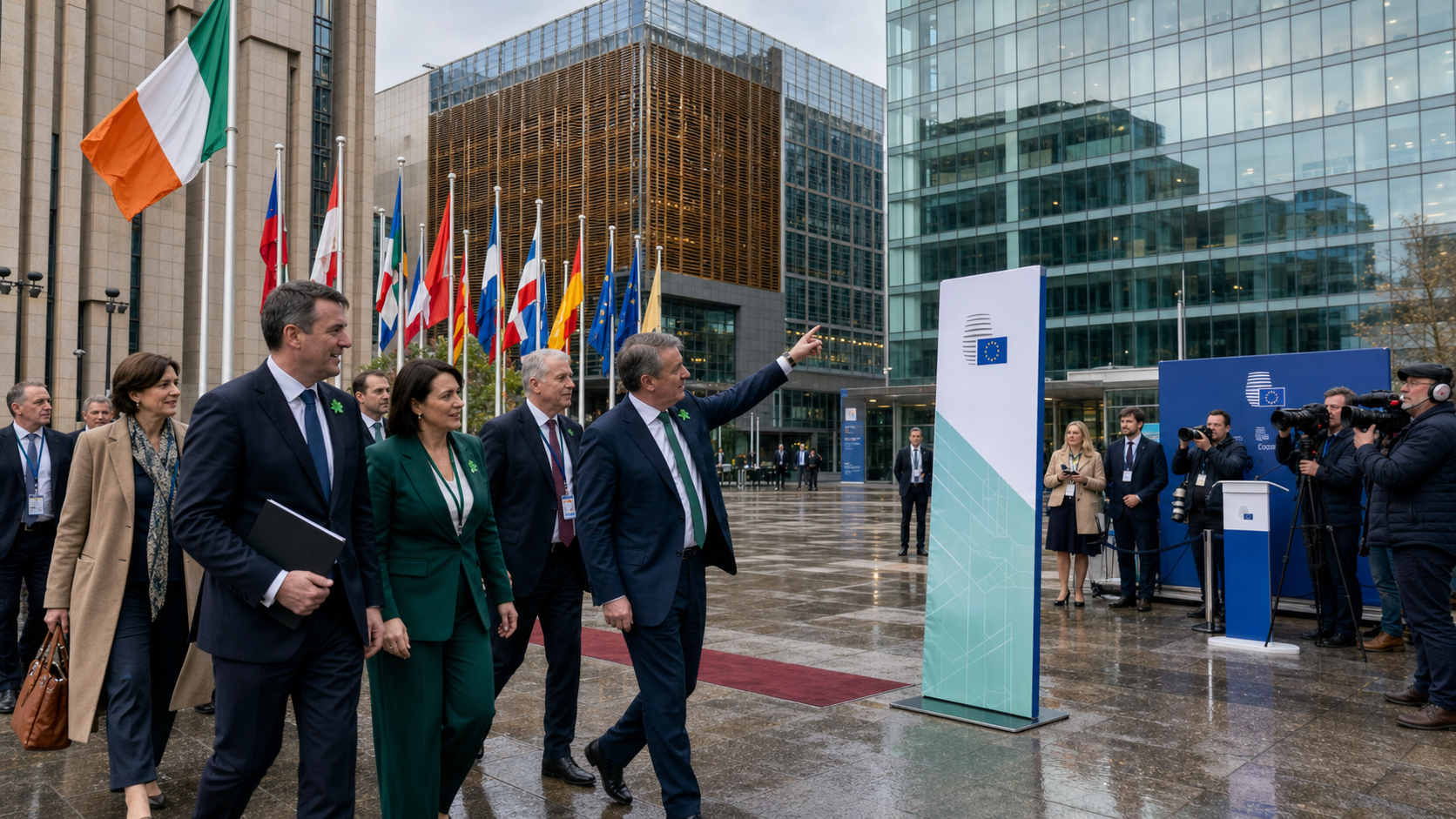
The Presidency's economic agenda is being driven forward through a series of Council meetings and ministerial gatherings that are bringing EU finance ministers, trade ministers, and digital ministers to Dublin and other Irish cities throughout the six-month term. The Economic and Financial Affairs Council (ECOFIN), which brings together the finance ministers of all 27 member states, has already met in Dublin, with discussions focused on the capital markets union and the Multiannual Financial Framework negotiations.
Irish business groups have been quick to engage with the Presidency's agenda. Ibec, which represents Irish businesses across all sectors, has published a detailed submission to the Presidency setting out its priorities for the single market agenda, including the completion of the services single market, the development of a genuine European capital markets union, and the harmonisation of digital regulation across member states. The Irish Business and Employers Confederation has similarly engaged with the Presidency's competitiveness agenda, arguing that a deeper single market is essential for Irish businesses to compete effectively in the global economy.
The Presidency is also generating significant direct economic activity. The government has estimated that the six-month term will generate tens of millions of euros in economic activity through conferences, ministerial meetings, diplomatic events, and the associated hospitality and services spending. Dublin's hotels, restaurants, and conference facilities are operating at near-capacity during the Presidency period, and cities including Cork, Galway, and Limerick are also benefiting from the programme of events being held outside the capital.
Why It Matters
The economic significance of the Irish Presidency extends well beyond the direct spending it generates. As Presidency holder, Ireland has an opportunity to shape the EU's legislative agenda in ways that serve Irish economic interests — to advance the single market agenda, to influence the design of the Multiannual Financial Framework, and to ensure that EU regulation of the technology and pharmaceutical sectors — both critical to Ireland's economy — is proportionate and evidence-based. That influence is not unlimited, but it is real, and Irish business groups are working hard to ensure that it is used effectively.
The Presidency also provides an opportunity to showcase Ireland's economic strengths to a European and global audience. The concentration of high-level diplomatic and business activity in Ireland over the six-month period brings decision-makers and investors to the country who might not otherwise visit, and the positive impression that Ireland makes as a Presidency holder — efficient, constructive, well-organised — reinforces its reputation as a reliable and attractive location for investment.
Local Impact
The economic impact of the Presidency is being felt across the country. In Dublin, the hospitality and conference sectors are experiencing one of their busiest periods in years, with hotels reporting high occupancy rates and conference facilities booked solid for months ahead. In Cork, the College of Commissioners visit in early July generated significant media coverage and visitor spending. In Galway, Limerick, and other cities hosting ministerial meetings and conferences, the Presidency is providing a welcome boost to local economies that are still recovering from the disruption of the pandemic years. The government has estimated that the total economic impact of the Presidency, including direct spending and the longer-term reputational benefits, will be in the hundreds of millions of euros.
What's Next
The coming months will see a series of major Council meetings and ministerial gatherings in Ireland, with the Multiannual Financial Framework negotiations expected to intensify in September and October. The Presidency's competitiveness agenda will be advanced through a series of legislative proposals and Council conclusions, with the aim of making tangible progress on the single market agenda before the end of the six-month term. Irish business groups will continue to engage with the Presidency's work programme, and the government has indicated that it will publish a mid-term assessment of the Presidency's achievements in October, setting out what has been accomplished and what remains to be done in the final two months of the term.