Hundreds of Objections Filed Against Plans for Ireland's Largest New Town as Housing Debate Intensifies
Hundreds of formal objections have been lodged against planning proposals for what would be Ireland's largest new town, with opponents raising concerns about infrastructure capacity, environmental impact, and the adequacy of public consultation, in a controversy that has become a focal point for the broader national debate about how Ireland should address its chronic and deepening housing crisis.
Background
Ireland's housing crisis has been the defining domestic policy challenge of the past decade, with successive governments struggling to deliver sufficient housing supply to meet the needs of a growing population. The gap between housing demand and supply has driven rents and house prices to levels that have placed homeownership beyond the reach of a generation of working people, and has contributed to a homelessness crisis that shows little sign of abating. Against this backdrop, the concept of building entirely new towns — rather than incrementally expanding existing settlements — has gained traction among planners, economists, and some politicians as a potential mechanism for delivering housing at the scale and speed required.
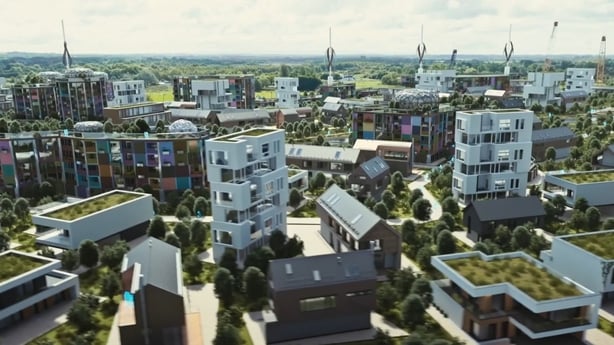
The proposal for Ireland's largest new town represents the most ambitious expression of this thinking to date. The development, which would be built on a greenfield site, is designed to accommodate tens of thousands of residents in a purpose-built urban environment with its own commercial, educational, and recreational infrastructure. Proponents argue that only developments of this scale can make a meaningful dent in the housing deficit, and that the alternative — piecemeal infill development in existing towns and cities — will never deliver the volume of homes required.
The planning application has been submitted to An Bord Pleanála, the national planning authority, which has the power to grant or refuse permission for strategic infrastructure developments of this scale. The application has been accompanied by extensive environmental impact assessments and infrastructure studies, but the volume of objections received suggests that the proposal has generated significant public concern.
Key Developments
The objections filed with An Bord Pleanála cover a wide range of concerns. Infrastructure capacity — particularly the adequacy of road, rail, and water services to support a development of this scale — features prominently in many submissions. Critics argue that the existing transport network in the area is already under strain and that the proposed new town would exacerbate congestion and reduce quality of life for existing residents. Environmental concerns, including the impact on local habitats, watercourses, and agricultural land, have also been raised by conservation groups and individual landowners.
Some objectors have questioned the adequacy of the public consultation process, arguing that the scale and complexity of the proposal required a more extensive engagement with affected communities than was provided. Others have raised concerns about the governance arrangements for the new town — specifically, how it will be managed and funded in the years before it generates sufficient rate revenue to support its own services.
Supporters of the development, including housing advocacy groups and some local politicians, have argued that the objections, while understandable, reflect a "not in my backyard" mentality that has consistently frustrated attempts to address the housing crisis. They point to the human cost of inaction — the families in emergency accommodation, the young people unable to afford to rent or buy — and argue that the discomfort of existing residents must be weighed against the urgent need for new homes.
Why It Matters
The controversy over Ireland's proposed largest new town encapsulates the central dilemma of Irish housing policy: the recognition that radical action is needed to address the housing crisis, combined with the political and community resistance that radical action invariably generates. Ireland has a long history of ambitious planning proposals that have been delayed, diluted, or abandoned in the face of objections, and the housing crisis has deepened with each passing year of inaction. The outcome of this planning process will be closely watched as an indicator of whether Ireland's planning system is capable of delivering the transformative change that the housing situation demands, or whether the system's inherent conservatism will once again prevail over the imperative for action.
Local Impact
The communities closest to the proposed development site have been most directly engaged in the objection process, with local residents' associations, environmental groups, and individual landowners all submitting detailed submissions to An Bord Pleanála. Local councillors have been inundated with representations from constituents on both sides of the debate, and the issue has become a significant factor in local political calculations ahead of the next local elections. Irish Rail and Bus Éireann have both been asked to provide assessments of the transport infrastructure implications of the proposed development, and their responses will be a key factor in An Bord Pleanála's deliberations.
What's Next
An Bord Pleanála is expected to hold an oral hearing on the planning application in the autumn of 2026, at which objectors and supporters will have the opportunity to present their cases in person. A decision is not expected before early 2027. If permission is granted, the development is likely to face further legal challenges, which could delay the start of construction by several additional years. The government has indicated that it is monitoring the planning process closely and is prepared to consider legislative changes to streamline the approval process for strategic housing developments if the current system proves inadequate to the scale of the challenge.