HSE to Extend Bowel Cancer Screening to 50-54 Age Group in Landmark Health Move
Ireland's Health Service Executive (HSE) has announced plans to extend its national BowelScreen programme to include men and women aged between 50 and 54, following a recommendation from the National Screening Advisory Committee and an assessment by the Health Information and Quality Authority (HIQA) — a landmark decision that could save hundreds of lives annually once fully implemented.
The expansion, which will be implemented on a phased basis, comes as incidence rates for bowel cancer are rising among those aged between 50 and 60, making earlier detection increasingly critical. The announcement has been welcomed by cancer charities and medical professionals as a significant step forward in Ireland's approach to cancer prevention and early detection.
Background
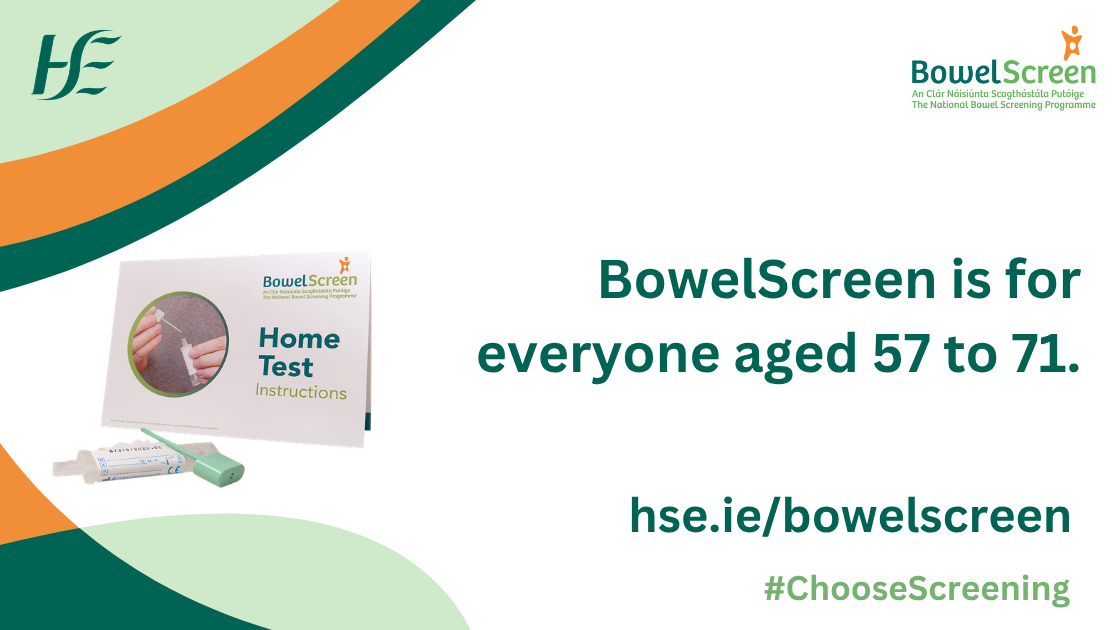
BowelScreen is a free at-home test (FIT kit) that can detect signs of cancer before symptoms appear. The programme has been steadily expanding since October 2023, when it began inviting those aged 59. As of 1 April 2026, the programme now covers everyone aged 57 to 71, adding 116,000 people to its eligible population. The planned extension to the 50-54 age group will increase the eligible population by a further 27%, bringing the total number of people eligible for BowelScreen to approximately 1.5 million.
Bowel cancer — also known as colorectal cancer — is one of the most common cancers in Ireland, with approximately 2,800 new cases diagnosed each year. It is also one of the most treatable cancers when detected early: survival rates for bowel cancer diagnosed at Stage 1 are above 90%, compared to less than 10% for cancers diagnosed at Stage 4. Screening programmes that detect cancer at an early stage, or identify pre-cancerous polyps before they develop into cancer, are therefore among the most cost-effective interventions available to health systems.
The FIT (Faecal Immunochemical Test) kit used in BowelScreen is a simple, non-invasive test that can be completed at home and returned by post. It detects traces of blood in the stool that may indicate the presence of cancer or pre-cancerous polyps. Participants who receive a positive result are referred for a colonoscopy, which can both confirm the diagnosis and, in many cases, remove polyps before they develop into cancer. The test has a high level of accuracy and is well-tolerated by participants, making it an effective tool for population-level screening.
Key Developments
HIQA's assessment concluded that extending screening to the 50-54 cohort would likely be clinically beneficial and cost-effective, and would reduce deaths from bowel cancer. Minister for Health Jennifer Carroll MacNeill highlighted that incidence rates for bowel cancer are increasing in those aged between 50 and 60, emphasising that screening offers an opportunity for earlier detection leading to easier and more successful treatment. The Minister has requested an ambitious implementation plan from the HSE to facilitate the expansion on a phased basis.
However, HIQA has also identified existing capacity issues within the services required for bowel screening, including colonoscopy services. The extension must be done "in a way that does not negatively impact the current screening programme or the wider symptomatic services," the authority advised. The HSE has committed to working with hospital groups and community health organisations to expand colonoscopy capacity in advance of the programme extension, with additional investment in endoscopy equipment and staffing expected to be announced in the coming months.
Why It Matters
Bowel cancer is one of the most common and most preventable cancers in Ireland, and the extension of BowelScreen to the 50-54 age group represents a significant investment in the nation's health. Early detection through screening, often at Stage 1 or 2, significantly increases the chance of a cure compared to cancers detected outside of screening programmes. Extending the programme to a younger cohort could save hundreds of lives annually once fully implemented, and could also reduce the burden on the health system by detecting cancers at an earlier, more treatable stage when treatment is less intensive and less costly. The decision also reflects a growing recognition that bowel cancer is not solely a disease of older age, with incidence rates rising among those in their fifties — a trend that has been observed across Europe and North America and is thought to be linked to changes in diet, lifestyle, and the gut microbiome.
Local Impact
In Ireland, the extension of BowelScreen to the 50-54 age group will have a significant impact on the hundreds of thousands of people in this age cohort who will now be eligible for free screening. For many, the programme will provide reassurance and peace of mind; for some, it will lead to the early detection of cancer or pre-cancerous conditions that might otherwise have gone undetected until a later, less treatable stage. Cancer charities and patient advocacy groups have welcomed the announcement and called on the HSE to implement the expansion as quickly as possible, while ensuring that the quality and accessibility of the existing programme is maintained. The expansion is also expected to have a positive impact on health equity, as bowel cancer disproportionately affects people from lower socioeconomic backgrounds who may be less likely to seek medical attention for symptoms.
What's Next
Planning for the expansion to 50-54-year-olds is expected to begin in 2026, with the National Screening Service committed to rolling out the extension safely and sustainably. The HSE is expected to publish a detailed implementation plan in the coming months, setting out the timeline for the expansion and the steps being taken to address capacity constraints in colonoscopy services. Sources: The Irish Times, HSE BowelScreen, HIQA Health Technology Assessment