HSE Rolls Out Six New Health Regions in €29 Billion Overhaul of Irish Healthcare Delivery
The HSE's National Service Plan for 2026 marks the most significant structural reform of Irish healthcare in a generation, with the formal establishment of six new Health Regions designed to transform the way services are planned, funded, and delivered across the country. Operating with a budget of €29 billion — the largest in the organisation's history — the plan sets out an ambitious programme of investment in community and acute services, digital transformation, and workforce development that its architects say will deliver measurable improvements in patient outcomes and waiting times. Health advocates have welcomed the scale of the investment but are calling for robust accountability mechanisms to ensure that the structural reform translates into tangible improvements for the patients who need them most.
Background
The HSE has been the subject of sustained criticism for years over its centralised, bureaucratic structure, which many health professionals and patient advocates have argued is ill-suited to the delivery of responsive, community-based healthcare. The organisation, which was established in 2005 to replace the regional health boards that preceded it, has been characterised by a top-down management culture, poor coordination between different parts of the system, and a persistent failure to shift resources from acute hospital care to the community and primary care settings where most health needs can be more effectively and efficiently met.
The establishment of six new Health Regions is the most significant attempt yet to address these structural problems. The regions — which cover the north-east, north-west, west, mid-west, south, and Dublin/Midlands areas — will each have their own executive team with the authority to make decisions about service planning and resource allocation within their area. The intention is to create a more responsive, locally accountable system that can adapt to the specific health needs of different populations rather than applying a one-size-fits-all approach from the centre.
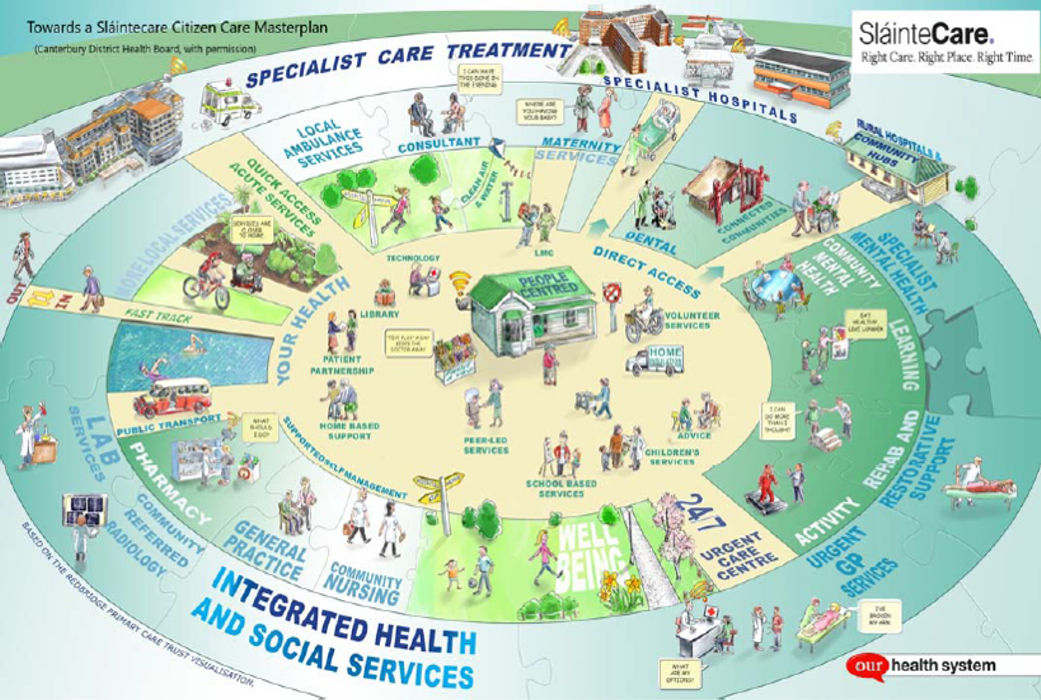
The reform draws on the recommendations of the Sláintecare report, which was published in 2017 and which set out a ten-year plan for transforming the Irish health system. Sláintecare called for a shift from a hospital-centred model to a community-based one, for the elimination of the two-tier public-private divide in healthcare, and for a significant increase in investment in primary and community care. The 2026 National Service Plan represents the most concrete expression yet of the government's commitment to implementing those recommendations.
Key Developments
The 2026 National Service Plan sets out a range of specific targets and commitments across the six new Health Regions. Among the most significant are the delivery of 428 new community beds — a key element of the shift from acute hospital care to community-based services — and 177 new acute beds to address the chronic shortage of hospital capacity that has been one of the most visible symptoms of the health system's difficulties. The plan also commits to the opening of five new surgical hubs, which are designed to reduce waiting times for elective procedures by providing additional capacity outside the main acute hospitals.
The digital transformation programme is another major element of the plan. The rollout of a Shared Care Record system — which will allow different parts of the health system to access a patient's medical history in real time — is one of the most significant digital health initiatives in the HSE's history. The system, which has been in development for several years, will initially be rolled out in a number of pilot sites before being extended across the country. The plan also includes the introduction of an electronic health record for maternity services, addressing a long-standing gap in the digital infrastructure of one of the most important areas of healthcare.
The plan's commitment to disability services is particularly notable. A record €3.8 billion — a 20% increase on the previous year — has been allocated to disability services, reflecting the government's recognition of the significant gaps in provision that have been highlighted by advocacy groups and by the findings of various inquiries and reviews.
Why It Matters
The establishment of the six new Health Regions is significant because it represents a genuine attempt to address the structural problems that have plagued the Irish health system for decades. The centralised, bureaucratic model that the HSE has operated under since 2005 has been widely criticised, and the shift to a more regionally accountable structure has the potential to deliver real improvements in the responsiveness and quality of services. But the history of health reform in Ireland is littered with initiatives that promised transformation and delivered disappointment, and the test of the new structure will be whether it actually changes the experience of patients and healthcare workers on the ground.
The scale of the investment — €29 billion in a single year — is also significant. Ireland is spending more on healthcare than at any point in its history, and the question of whether that investment is being used effectively is one that deserves serious scrutiny. The new Health Regions will need to demonstrate that they can deliver better outcomes for patients, not just better management structures, if the reform is to be judged a success.
For patients across Ireland, the most immediate concern is waiting times. Ireland has some of the longest waiting times for elective procedures in Europe, and the opening of five new surgical hubs and the delivery of additional community and acute beds are the most direct responses to that problem. Whether these investments will be sufficient to make a meaningful difference to waiting times — which have been a source of public frustration for years — will be one of the key tests of the 2026 plan.
Local Impact
The impact of the new Health Regions will be felt differently in different parts of the country. In the north-west — the area served by the new North-West Health Region, covering Donegal, Sligo, Leitrim, and parts of Roscommon and Mayo — the reform is particularly significant. This region has historically been one of the most underserved in terms of healthcare infrastructure, with long distances to acute hospitals and limited community services. The new regional structure, with its own executive team and budget, offers the prospect of a more focused and responsive approach to the specific health needs of the north-west population.
In Dublin, the new Dublin/Midlands Health Region will be responsible for the largest and most complex healthcare system in the country, covering the capital and the surrounding counties. The challenge for the new regional executive will be to manage the enormous complexity of Dublin's healthcare system while also addressing the specific needs of the more rural midlands counties that are included in the region. The opening of new surgical hubs in the Dublin area will be particularly important for reducing the waiting times that have been a persistent source of frustration for patients in the capital.
What's Next
The six new Health Regions are now operational, with their executive teams in place and their service plans for 2026 agreed. The HSE will publish quarterly performance reports against the targets set out in the National Service Plan, providing a mechanism for public accountability. Health advocacy groups including the Irish Patients Association and the Irish Cancer Society have indicated that they will monitor the implementation of the plan closely and will hold the HSE and the government to account for the commitments made. The first real test of the new structure will come in the autumn, when the impact of the summer months on waiting times and service capacity will provide an early indication of whether the reform is delivering the improvements that patients need.