HSE Recruitment Freeze Hits Dublin and Southeast as €37 Million Budget Deficit Bites
The Health Service Executive has imposed a recruitment pause across non-frontline, non-critical posts in the Dublin and Southeast region and the Southwest region, following a year-to-date budget deficit of €37.4 million that has placed the regions under formal financial escalation — raising fears among healthcare unions that a broader embargo on hiring may be imminent.
Background
The HSE's financial management has been under sustained pressure for several years, driven by a combination of demographic change, rising demand for services, and the structural costs of a health system that has expanded rapidly without a commensurate increase in its funding base. The organisation's approved maximum staff figure stands at 129,753 for the HSE and Section 38 agencies — a figure that includes 3,310 new service development posts approved as part of the Pay and Numbers Strategy finalised earlier this year.
The recruitment freeze is not a new phenomenon. A significant hiring pause was implemented in late 2023 and continued into 2024, generating fierce criticism from healthcare unions and opposition politicians. The Irish Medical Organisation described the 2023 freeze as shocking, warning that it would negatively impact patient care and exacerbate existing staffing shortages, particularly for non-consultant hospital doctors already working excessive hours. The Psychiatric Nurses Association highlighted critical shortages in mental health services. The freeze created particular difficulties for nurses and midwives returning from career breaks, who found themselves unable to return to work despite agency staff being used in their workplaces.
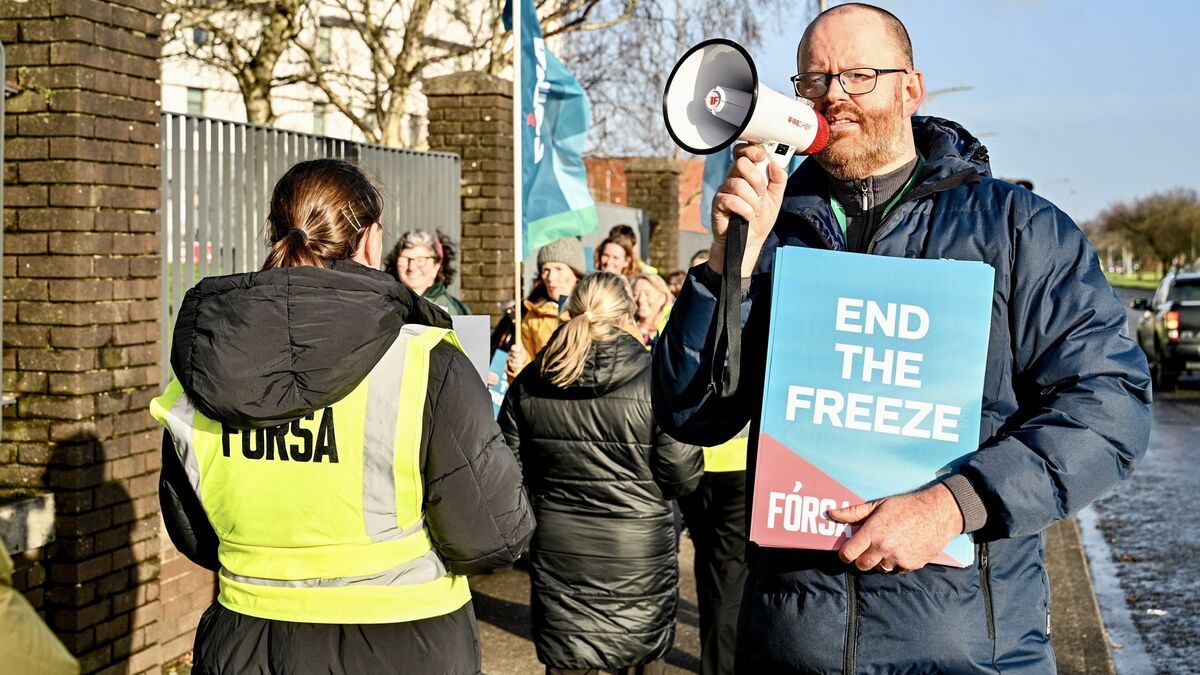
The current regional pause, communicated to managers on 30 April 2026, is more targeted than the 2023 freeze — applying to non-frontline management and administrative staff rather than clinical roles. But healthcare unions are treating it as a warning sign, with the Irish Nurses and Midwives Organisation warning that continuous stop-start recruitment policies could force healthcare professionals to emigrate.
Key Developments
Internal memos seen by the Irish Independent reveal that the Dublin and Southeast region reported a year-to-date deficit of €37.4 million against its budget, leading to the region being placed under financial escalation. Managers have been directed to review pay allocations, agency staff usage, overtime, and exceptional payments. Agency engagements, extensions, and conversions now require prior approval, and agency spend is subject to a 2026 annual cap.
Exceptions to the recruitment pause will only be considered with a documented business case and central approval. Clinical frontline posts are noted as being protected for the moment — a qualification that unions have noted with concern, given that "for the moment" implies the protection may not be permanent.
The HSE's overall financial position reflects a €250 million overspend against its 2026 budget, a figure that has prompted the organisation to take action across multiple regions. The Southwest region has also been placed under similar restrictions, though the scale of its deficit has not been publicly disclosed.
Why It Matters
The HSE recruitment freeze matters because it arrives at a moment when Ireland's health service is already under severe strain. Waiting lists for outpatient appointments, elective procedures, and mental health services remain at historically high levels. The Sláintecare reform programme, which was intended to shift care from acute hospitals to community settings, has made progress but has not yet delivered the reduction in hospital demand that was projected. A recruitment pause — even a targeted one — risks undermining the capacity of the system to deliver on its commitments.
For context, Ireland spends more per capita on healthcare than most comparable European countries, yet consistently underperforms on key outcome measures. The problem is not primarily one of resources but of system design and workforce planning. The stop-start approach to recruitment — hiring aggressively when budgets allow, then freezing when deficits emerge — is precisely the kind of short-term thinking that Sláintecare was designed to replace.
Local Impact
In Dublin, where the HSE Dublin and Southeast region covers some of the most densely populated and socially deprived communities in the country, the recruitment pause will be felt most acutely in community health services, mental health teams, and disability services. In Cork and Kerry, covered by the Southwest region, similar pressures apply. For patients waiting for appointments or assessments, any reduction in administrative capacity — even in non-clinical roles — can slow the processing of referrals and the scheduling of appointments, with knock-on effects throughout the system.
What's Next
The HSE is expected to present a revised financial plan to the Department of Health in the coming weeks, setting out how it intends to bring expenditure back within budget for the remainder of 2026. Health Minister Stephen Donnelly has been briefed on the situation and is expected to make a statement to the Dáil. The INMO and other healthcare unions have requested an urgent meeting with HSE management to discuss the implications of the regional pause and to seek assurances about the protection of frontline clinical posts.
Sources: Irish Independent, Irish Examiner