HSE Drugs Group Recommends Against Funding Skyclarys for Friedreich's Ataxia as Families Await Final Decision
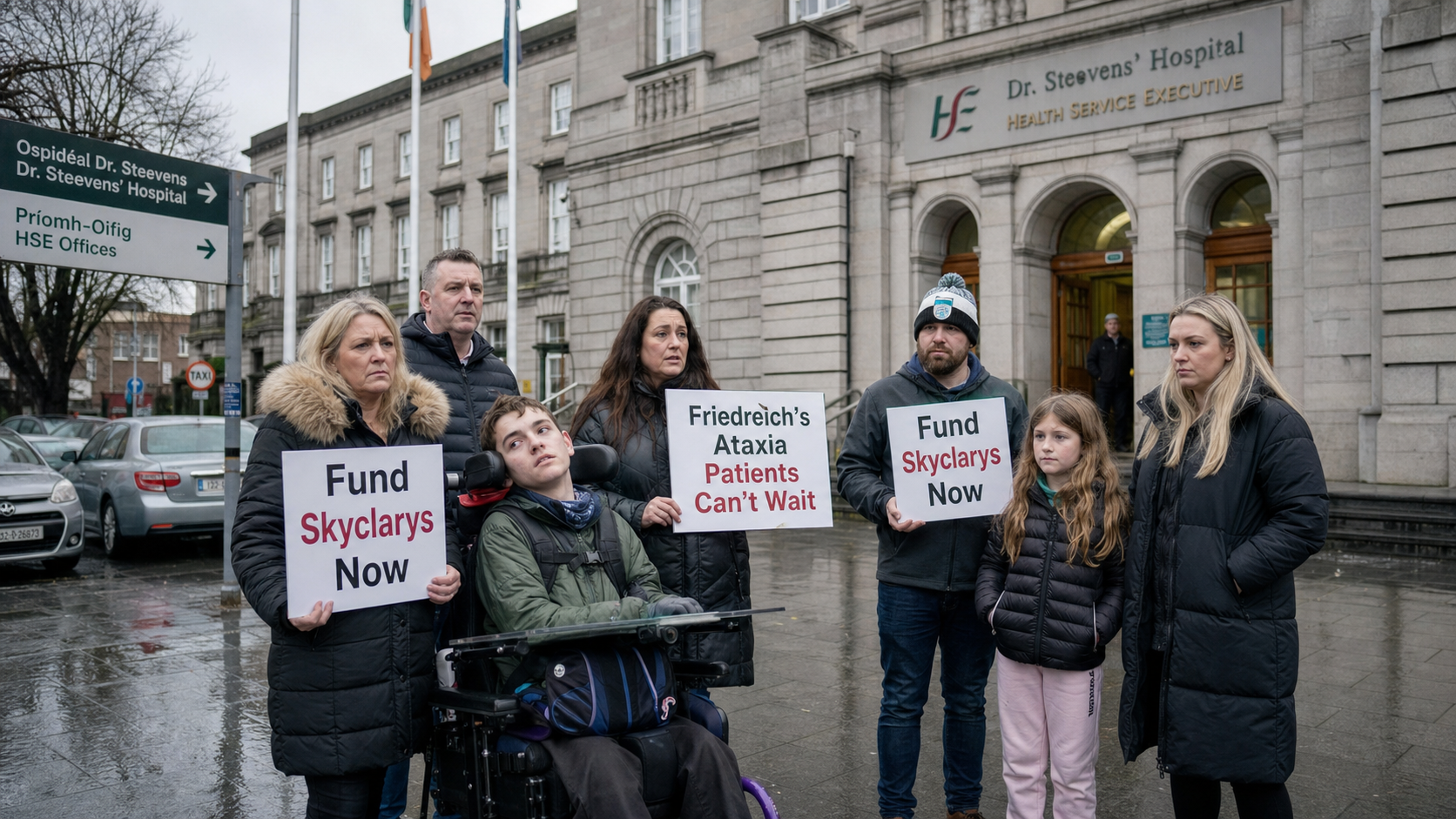
The HSE Drugs Group has formally recommended against reimbursing Skyclarys for the treatment of Friedreich's ataxia in Ireland, citing the drug's annual cost of approximately €280,000 per patient and a projected five-year budget impact of €130 million, leaving approximately 200 Irish patients and their families facing an anxious wait for a final decision by HSE senior management on 25 August.
Background
Friedreich's ataxia is a rare, progressive, and life-limiting neuromuscular condition that typically begins in childhood or adolescence and causes progressive damage to the nervous system, leading to difficulties with coordination, balance, and speech, as well as heart problems that are the most common cause of death. There is no cure for the condition, and until the development of Skyclarys — known generically as omaveloxolone — there was no approved pharmacological treatment capable of slowing its progression. Approximately 200 people in Ireland are living with Friedreich's ataxia, a small patient population by the standards of the pharmaceutical market but one whose need is acute and whose quality of life is profoundly affected by the disease.
Skyclarys, manufactured by Biogen, received approval from the US Food and Drug Administration in 2023 and from the European Medicines Agency subsequently, making it the first approved treatment for Friedreich's ataxia. The drug works by activating a cellular pathway that helps protect nerve cells from the oxidative stress that drives the disease's progression. Clinical trial data showed that patients treated with Skyclarys experienced a statistically significant slowing of neurological decline compared to those receiving a placebo, though the magnitude of the benefit and its long-term durability remain subjects of ongoing research.
The HSE Drugs Group, which advises on the reimbursement of medicines in Ireland, has been assessing Skyclarys since its European approval. The National Centre for Pharmacoeconomics, which provides health technology assessment advice to the HSE, concluded that the drug's current price is substantially higher than what is typically considered cost-effective in the Irish healthcare system, and that the available clinical evidence contains limitations and uncertainties that make it difficult to quantify the drug's long-term benefit with confidence.
Key Developments
The HSE Drugs Group's recommendation against reimbursement, published in August 2026, is not the final word on the matter. The decision now passes to HSE senior management, who will make a final determination on 25 August. Senior management has the authority to approve reimbursement even where the Drugs Group has recommended against it, though this is relatively uncommon and typically requires exceptional circumstances. Patient advocacy groups and political figures have been lobbying intensively for a positive outcome, arguing that the small patient population and the severity of the condition justify a different approach to cost-effectiveness assessment than would apply to a more common disease.
The recommendation has been met with significant disappointment from patient advocacy groups and from the families of those living with Friedreich's ataxia. Sinn Féin leader Mary Lou McDonald and Independent Ireland leader Michael Collins have both criticised the decision and called for transparency and further scrutiny of the assessment process. A patient named Emily Felix was granted permission by the High Court in early August to challenge the HSE regarding delays in accessing the treatment, adding a legal dimension to what has become a highly charged public debate.
The international context is relevant. Scotland and the Netherlands have also declined to fund Skyclarys, with both jurisdictions suggesting that significant price reductions would be necessary for the drug to be considered cost-effective. The FDA approval in the United States has made the drug available to American patients, though access depends on insurance coverage and the drug's high cost means that many patients face significant out-of-pocket expenses even with insurance.
Why It Matters
The Skyclarys case illustrates the fundamental tension in healthcare systems between the imperative to provide effective treatments to patients with serious conditions and the need to allocate limited resources in a way that maximises overall health benefit. For the 200 people in Ireland living with Friedreich's ataxia, the HSE's decision is not an abstract policy question but a matter of profound personal consequence. The disease is progressive and irreversible, meaning that delays in accessing treatment translate directly into additional neurological damage that cannot be undone. The case also raises broader questions about how Ireland's health technology assessment system handles rare diseases, where the small patient population makes it inherently difficult to generate the large-scale clinical trial data that standard cost-effectiveness models require.
Local Impact
The families of those living with Friedreich's ataxia are spread across Ireland, from Dublin and Cork to rural counties where specialist neurological services are difficult to access. For these families, the HSE's decision will determine whether their loved ones can access a treatment that has been approved by the world's leading regulatory agencies and that has demonstrated clinical benefit in trials. The Irish Friedreich's Ataxia Association, which has campaigned tirelessly for access to Skyclarys, has described the Drugs Group's recommendation as devastating and has called on HSE senior management to take a different view. The association has also called for the establishment of a specific rare disease funding mechanism that would allow treatments for conditions like Friedreich's ataxia to be assessed on different criteria than those applied to common diseases.
What's Next
The HSE senior management team will make its final decision on Skyclarys reimbursement on 25 August 2026. If the recommendation against reimbursement is upheld, patient advocacy groups have indicated they will pursue all available legal and political avenues to challenge the decision. The High Court challenge by Emily Felix is expected to proceed regardless of the outcome of the 25 August decision. Biogen, the drug's manufacturer, has been in negotiations with the HSE about a potential price reduction, and it is possible that a revised commercial arrangement could change the cost-effectiveness calculation before the final decision is made.